Mosques and Travel to Luxor

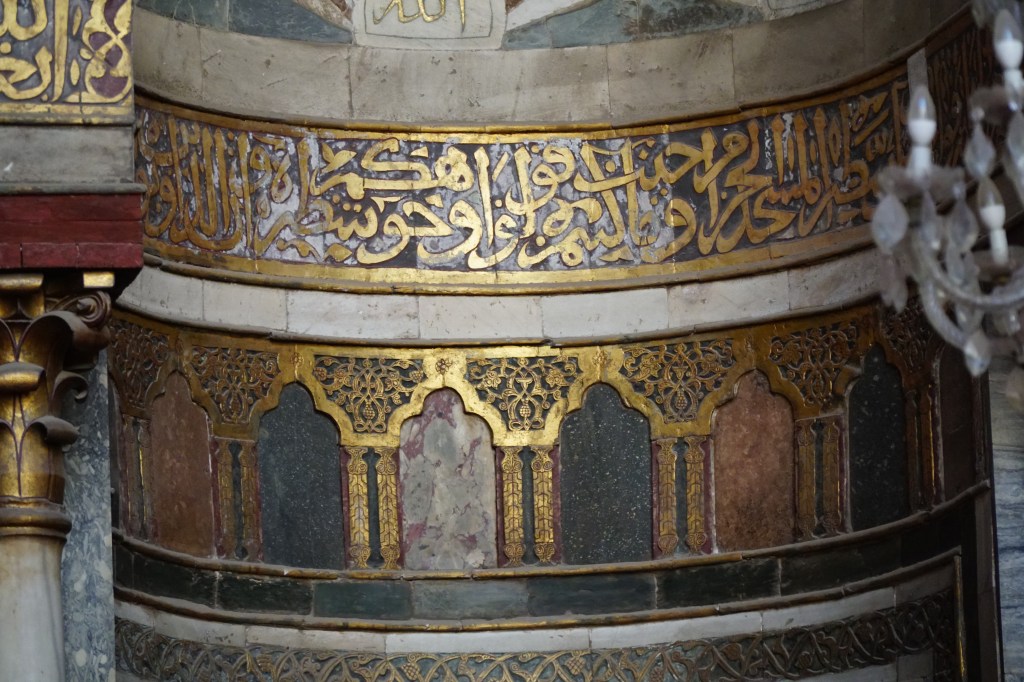
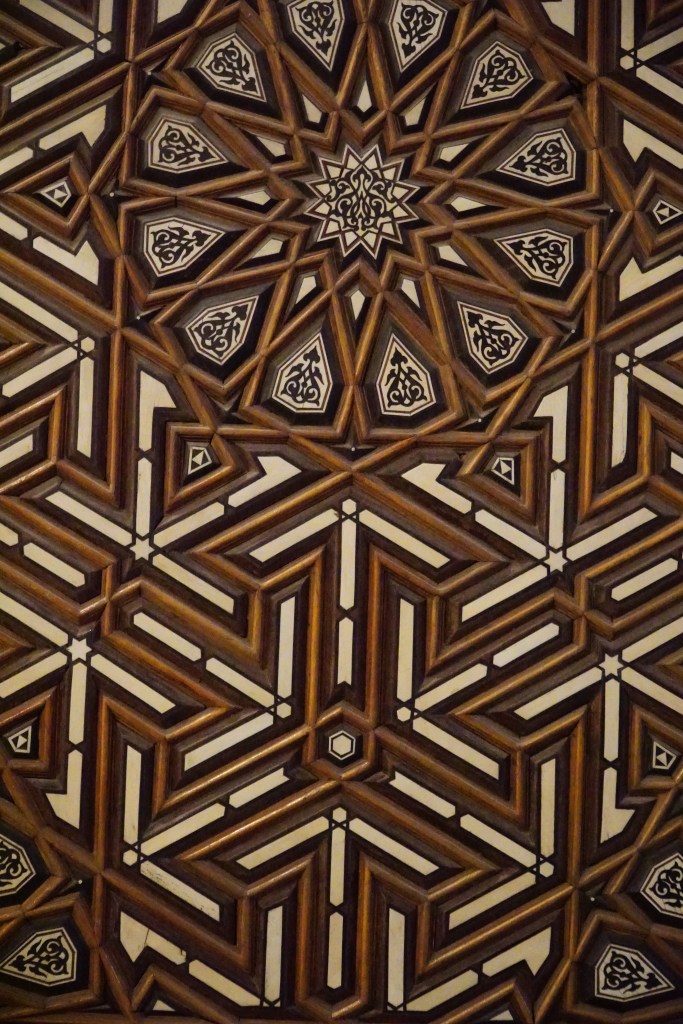
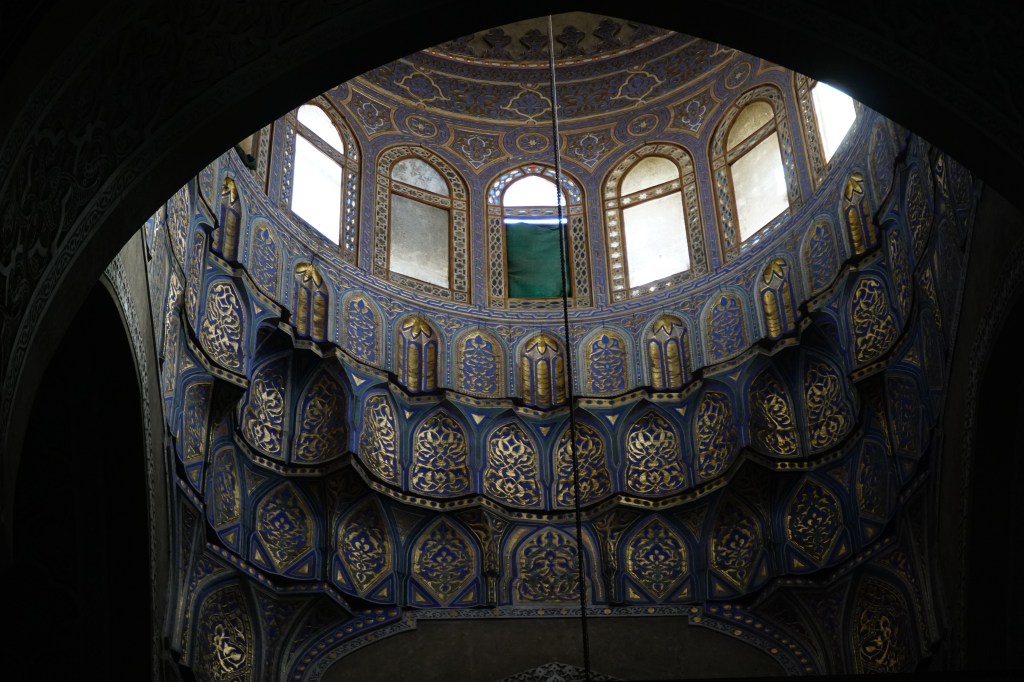
We visited two historic mosques in Cairo today. One from the 14th century and one from the early 1900’s. We admired the architecture and learned a bit about Islam. Our tour guide asked the imam to do the call to prayer for us. It was an interesting experience.

Call to prayer

Here are a few more photos of the mosques.
We have a one hour flight to Luxor. We are staying at the historic Winter Palace Hotel. This is the hotel that William Carter’s announced the discovery of King Tut’s tomb in 1922.
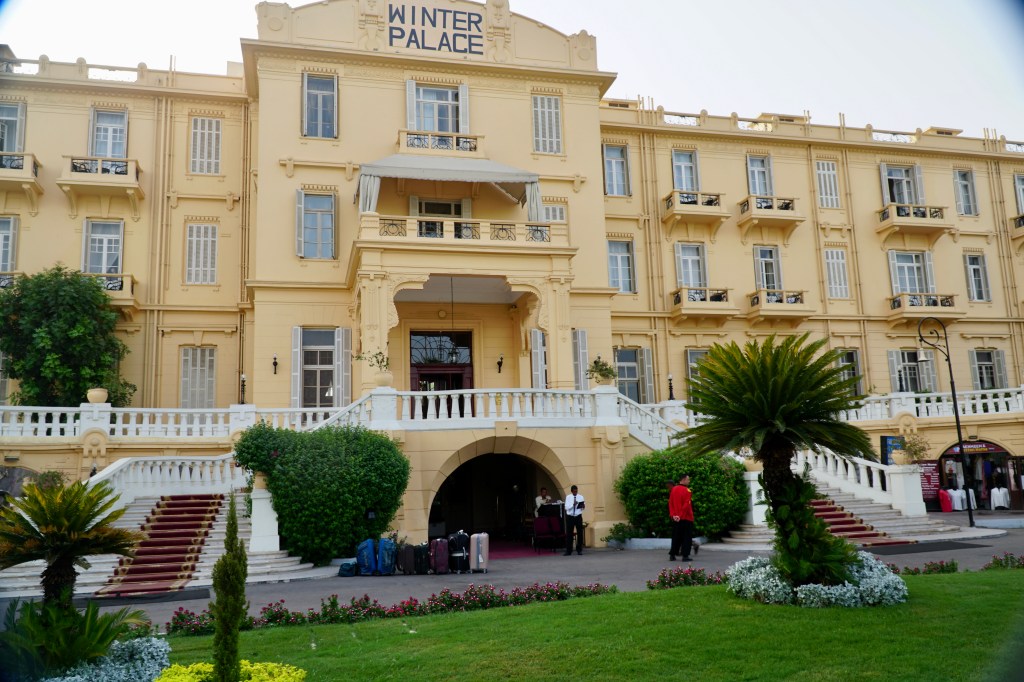
The Winter Palace

In the evening we had dinner with a local family in Luxor. They are vegetable farmers.
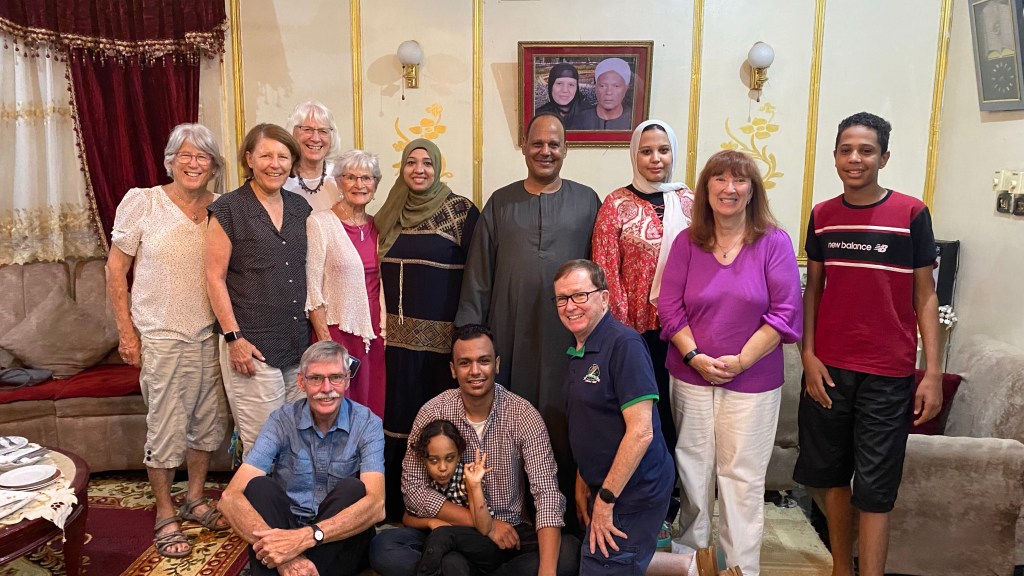
Mohammad and his family and seven in our group

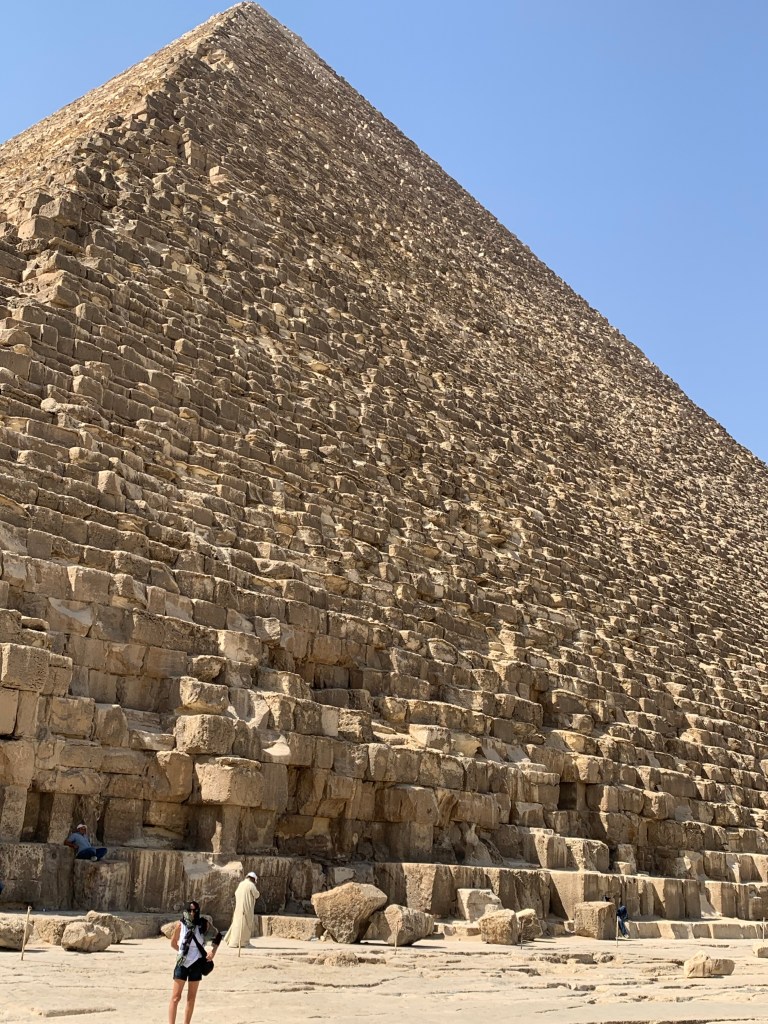
The Pyramids of Giza

Us at the pyramids

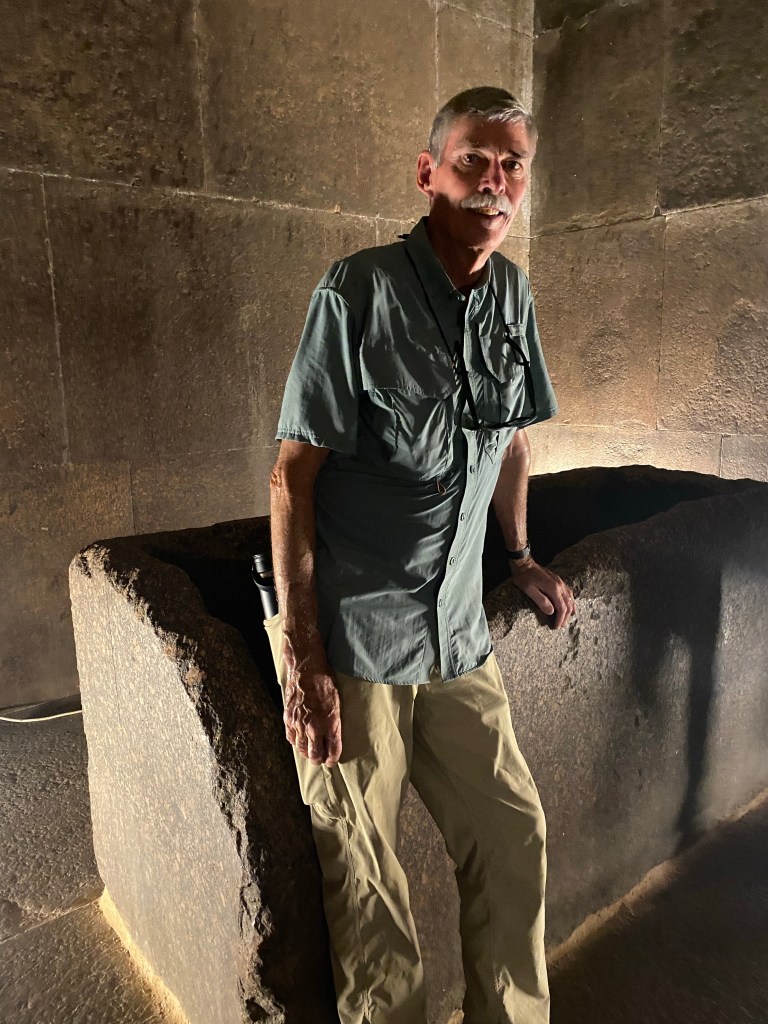
Wow! What a day! The pyramids are not far outside the city of Cairo. We began our day with a visit to the Great Pyramid of King Khufu. Tim climbed inside to visit his tomb. It is very hot here. Over 100 degrees every day. So hats, neck coolers and umbrellas are essential to survival. 🥵

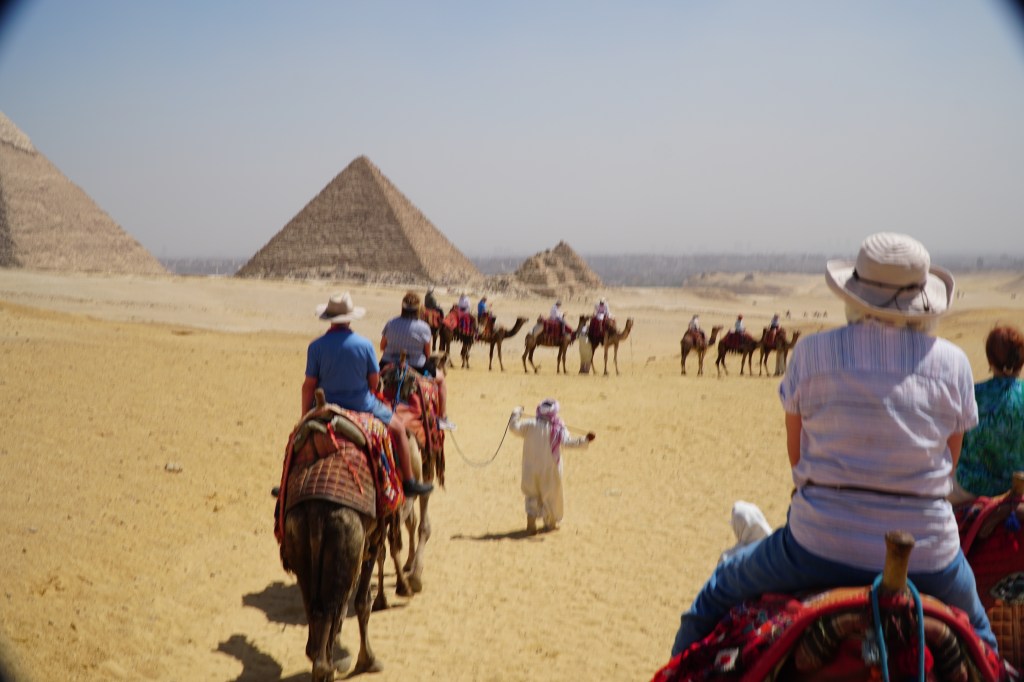
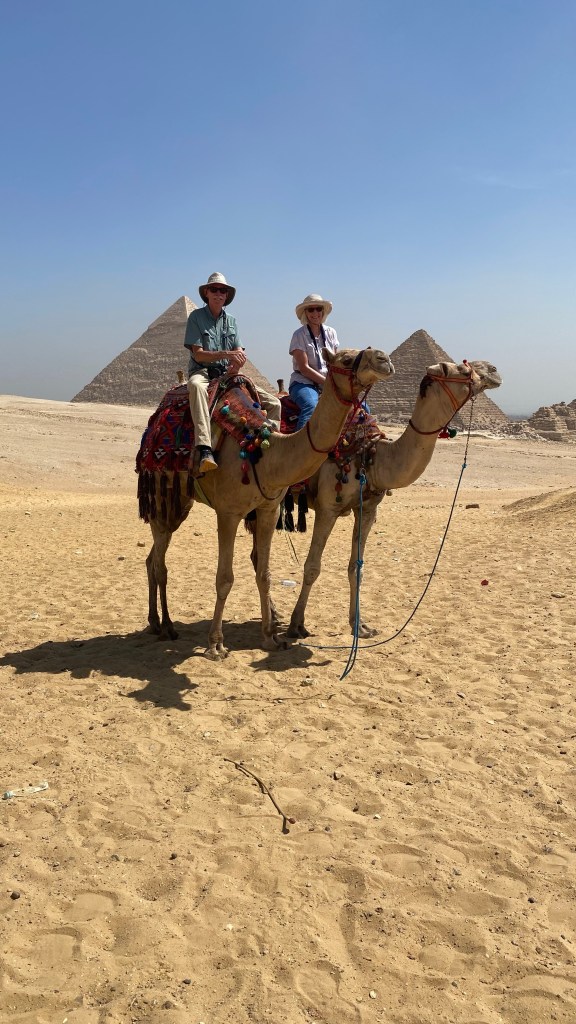
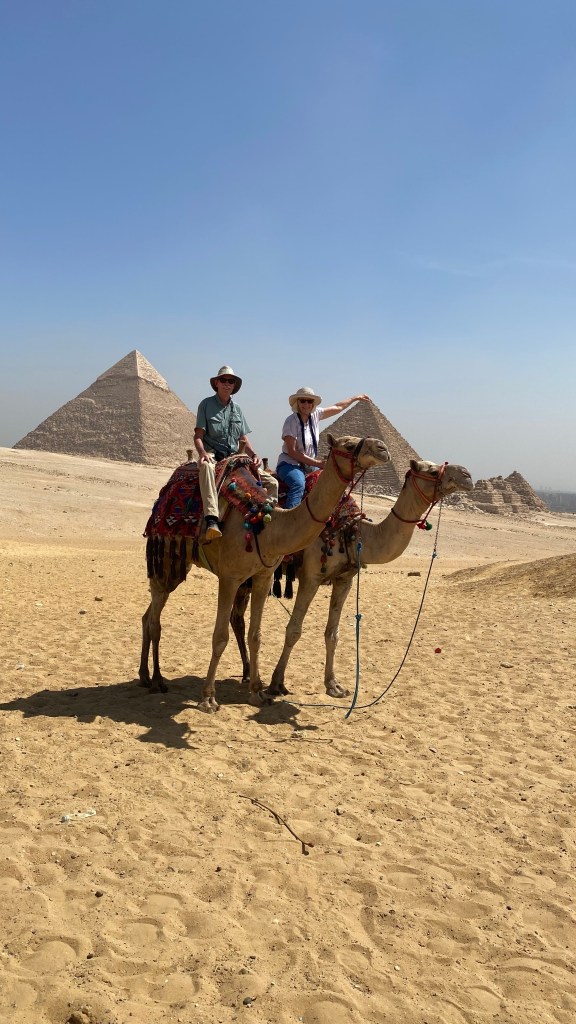
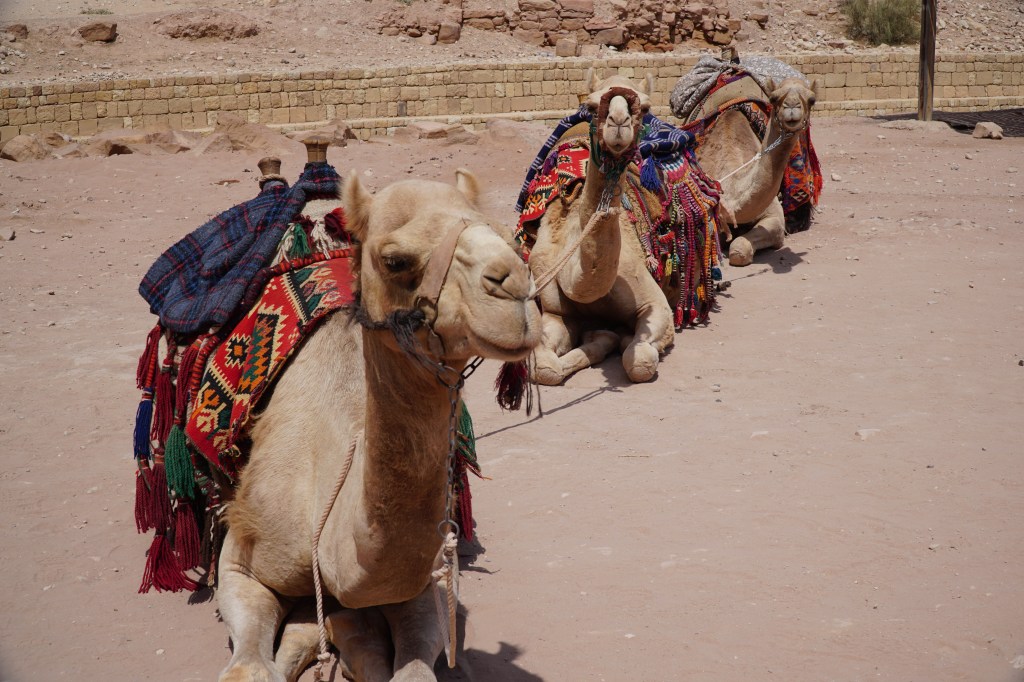
We drove to a panorama spot to see all three pyramids and to Mount camels for a ride to the small pyramid.

Our group heading toward the small pyramid

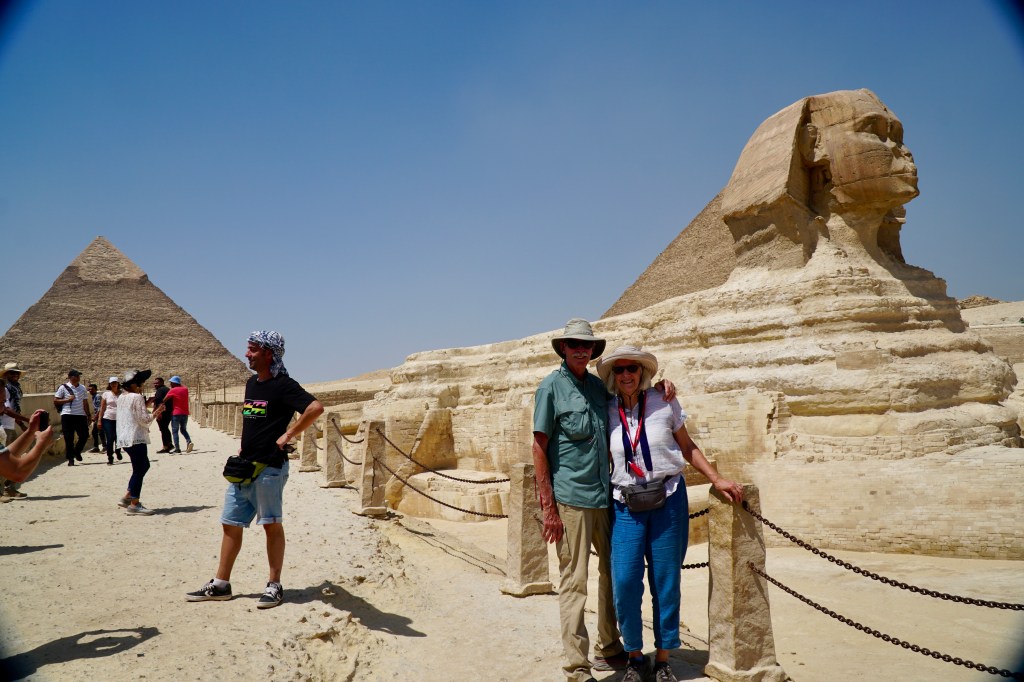
Next stop, The Sphinx!

For lunch we stopped at a nice restaurant known for their chicken. While eating, an Egyptian and his wife asked our tour guide if we were Americans. He was so happy to see tourists coming to Egypt again that he bought us two bottles of wine. (There are 14 in our tour with Overseas Adventure Travel).

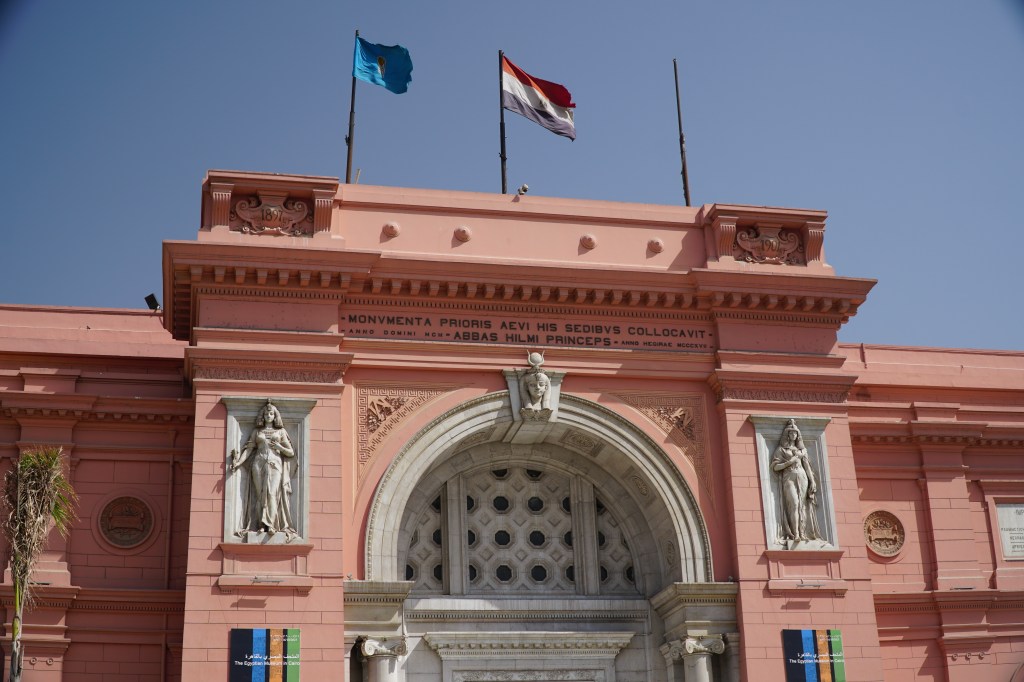
Egyptian Museum in Cairo

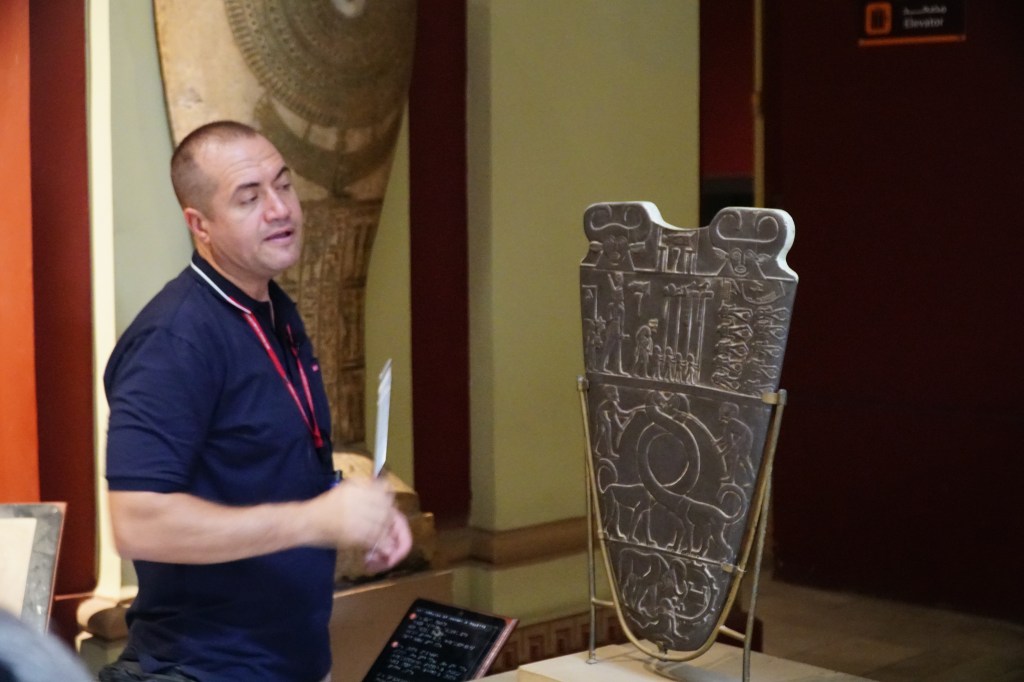
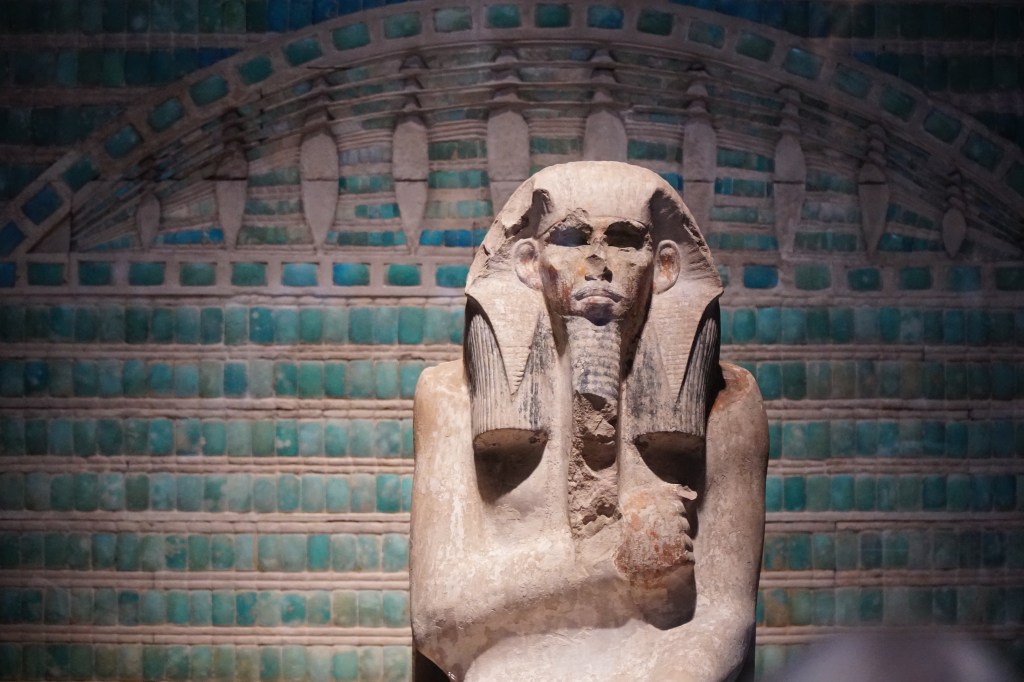
The Egyptian Museum is in transition at the moment as they are awaiting the opening of the Grand Egyptian Museum next year. Many of the antiquities have been moved to the new museum, but our guide explained that the major items have been left in the old museum for tourists to see.

Egypt has a rich and long history and many artifacts from the tombs of pharaohs and nobles. The Rosetta Stone, which is in the British Museum, was discovered in Egypt and was the break through in interpreting the Egyptian hieroglyphics.

Builder of the smallest pyramid, Menkaure.
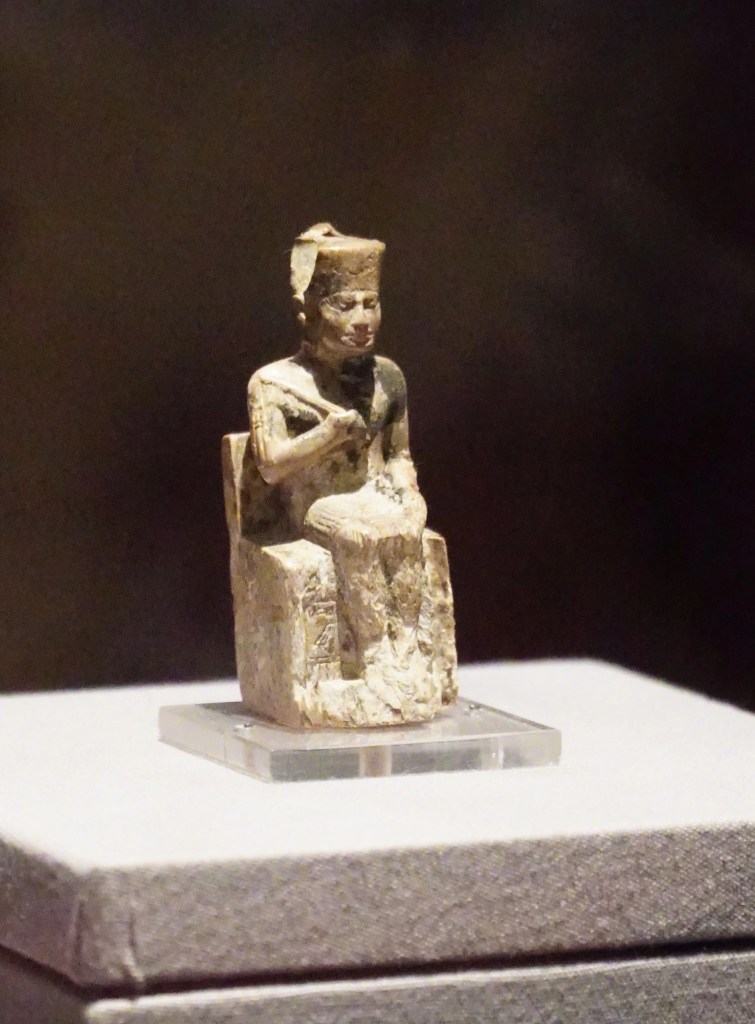
King Khufu, builder of the Great Pyramid
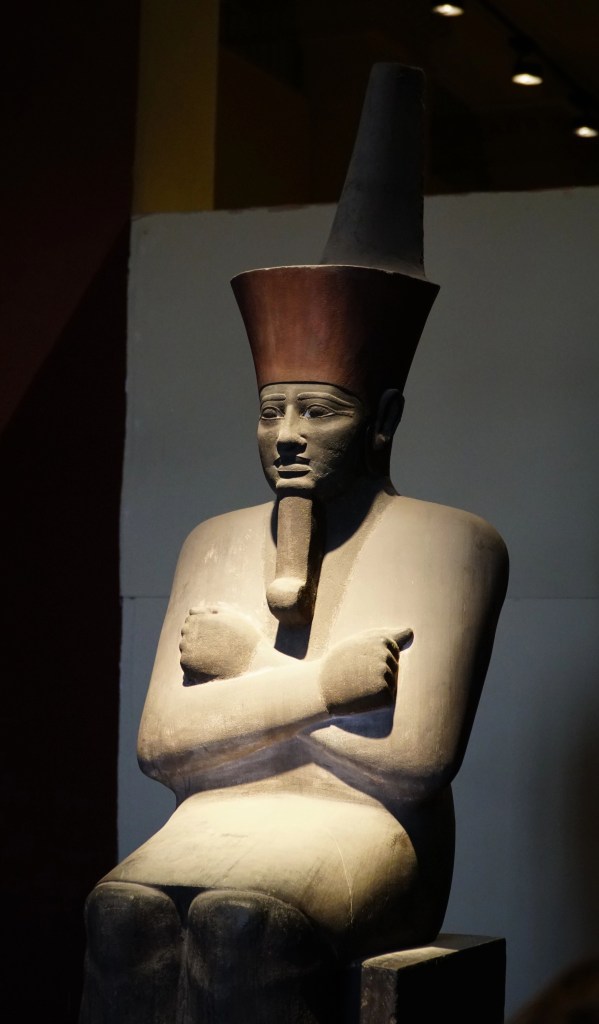
Mentuhotep, reunited Upper and Lower Egypt

We also saw some of the the reassures from King Tutankhamun, but we’re not allowed to photograph them.

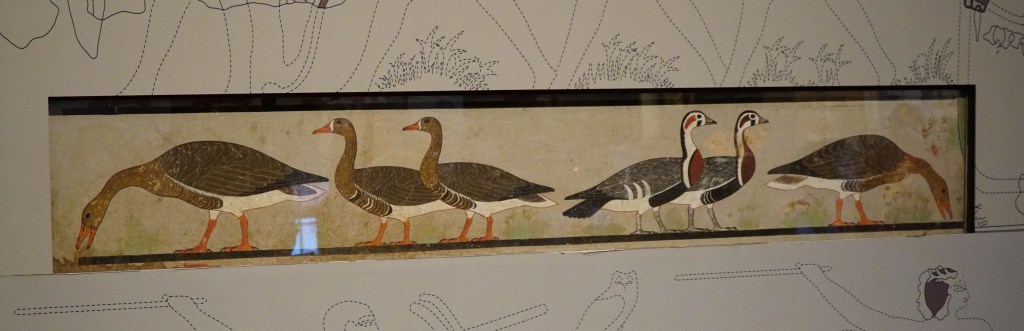
Painting found in a 4600 year old tomb

Coffee

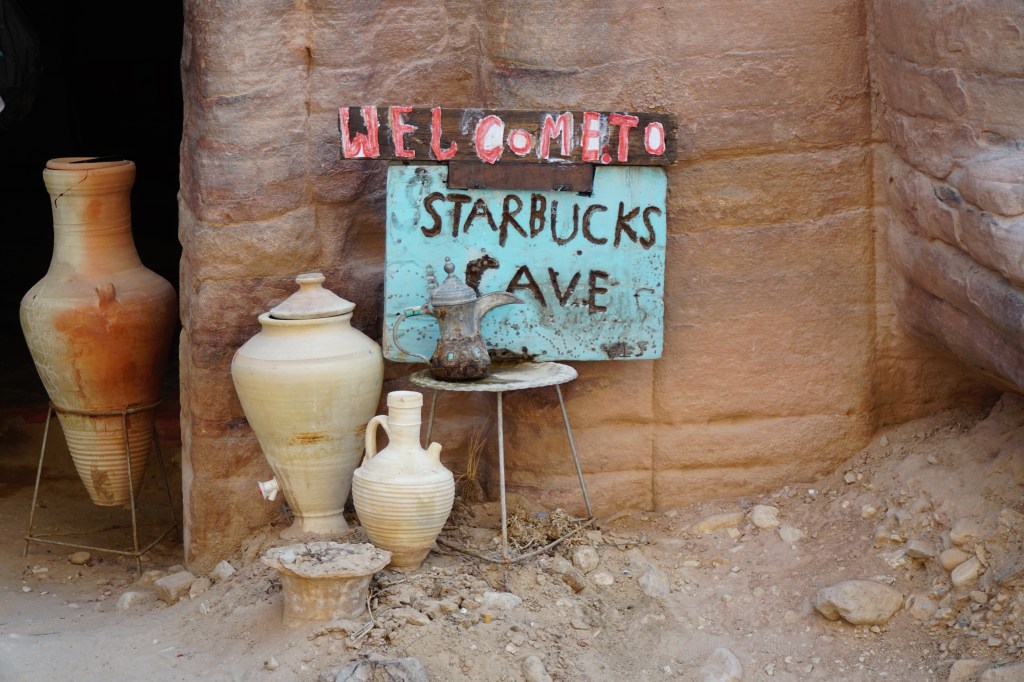
For you coffee lovers, both Jordan and Egypt have a very strong coffee culture. There seems to be small coffee shops always available wherever we were. Even along the road as we traveled.

These neighborhood gathering places seem to be an important part of the fabric of life. There was a time when these community gathering places were outlawed due to the fear of political unrest.

The Arabica coffee bean seems to be the most common and usually roasted either medium or dark. The coffee at breakfast in our hotels has been very good, rich in flavor and not bitter. Due to the schedule so far I have not stopped in to any of the local shops.

A common brew follows the Turkish style. Water, a little sugar, finely ground freshly roasted beans, and cardamom are boiled for several minutes. It’s is then poured into the cup through a strainer.

When we were in the home of a local family in Jordan, they provided coffee when we first arrived. It was prepared in the Turkish style and served in small cups. Very good! They explained how to hold the cup in a specific way if you wanted a refill.

Petra!

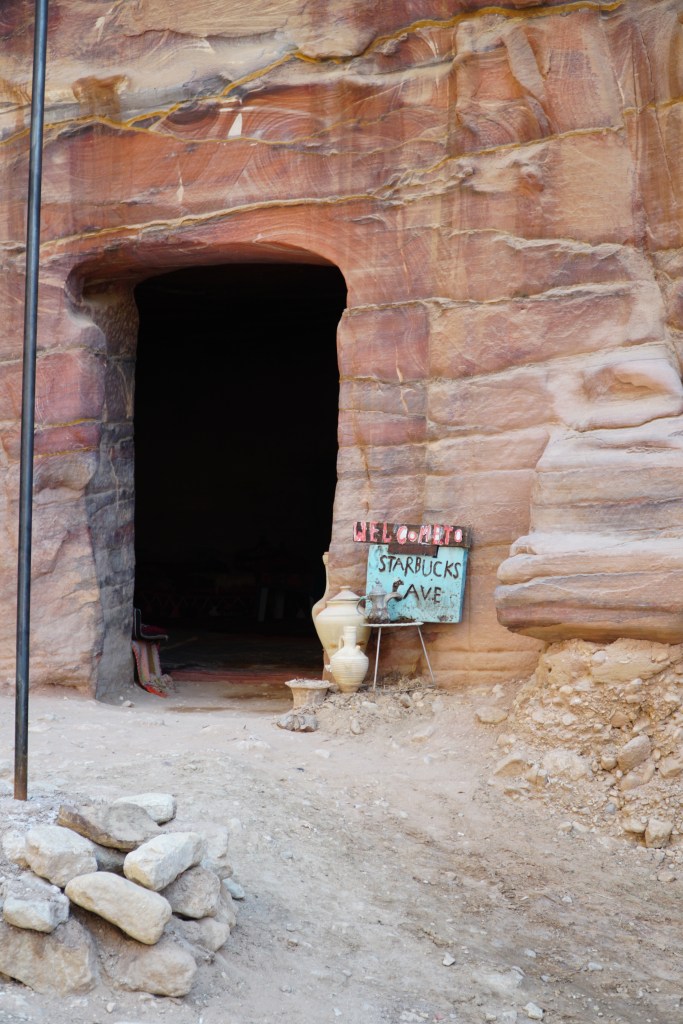
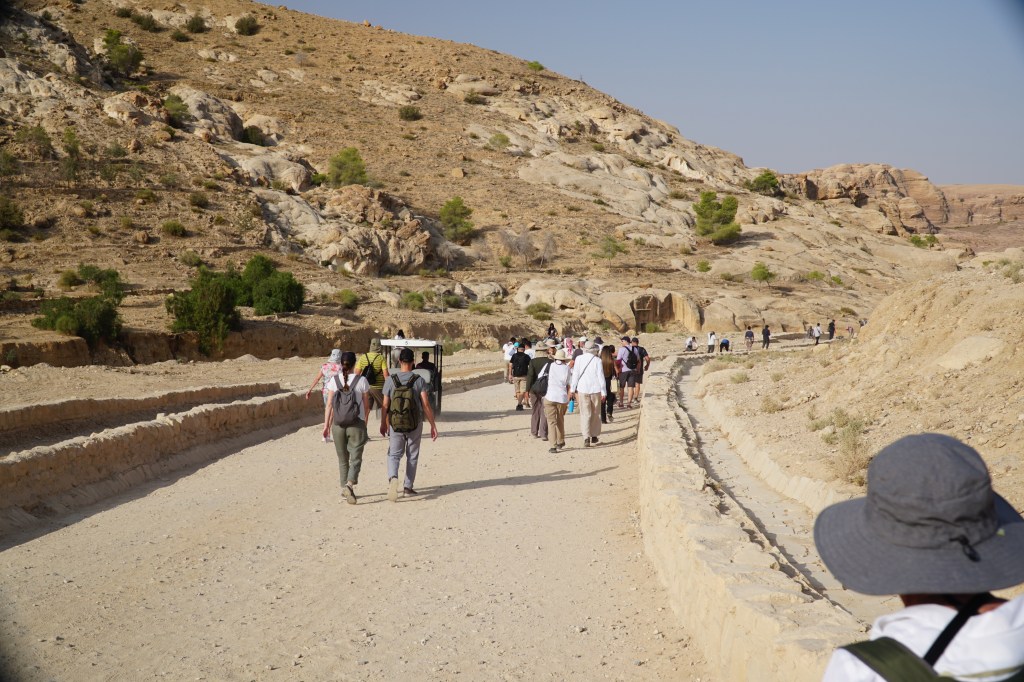
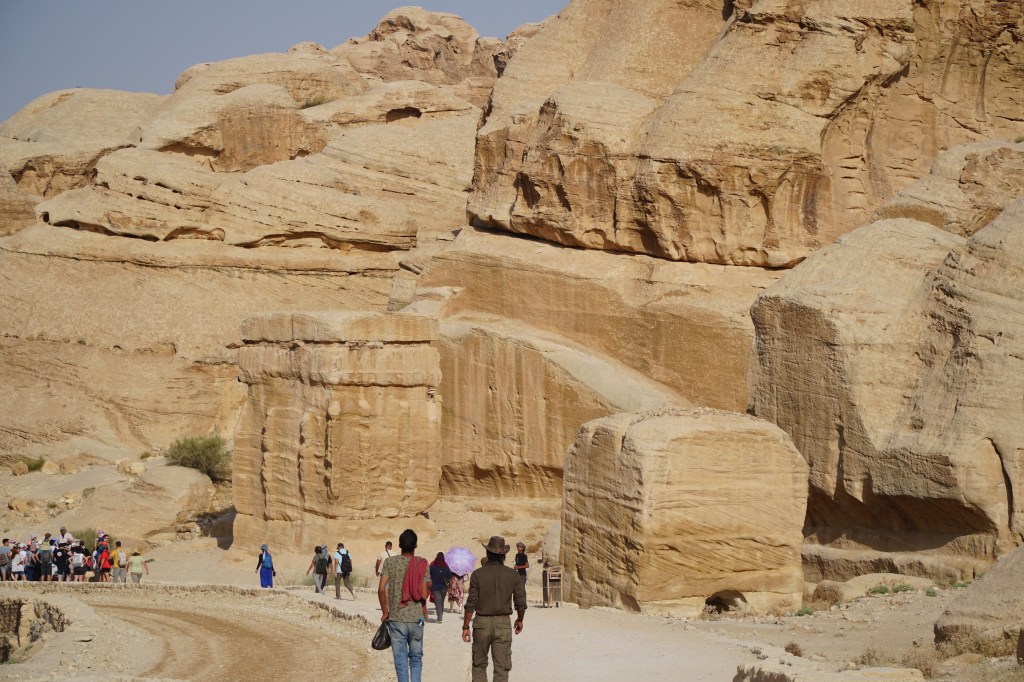
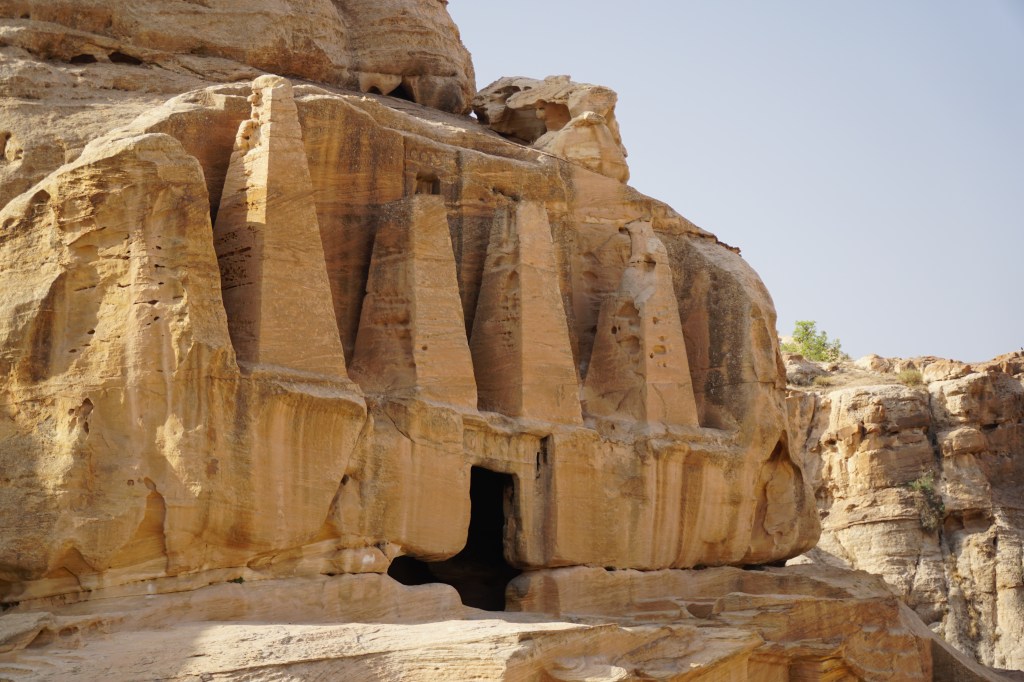
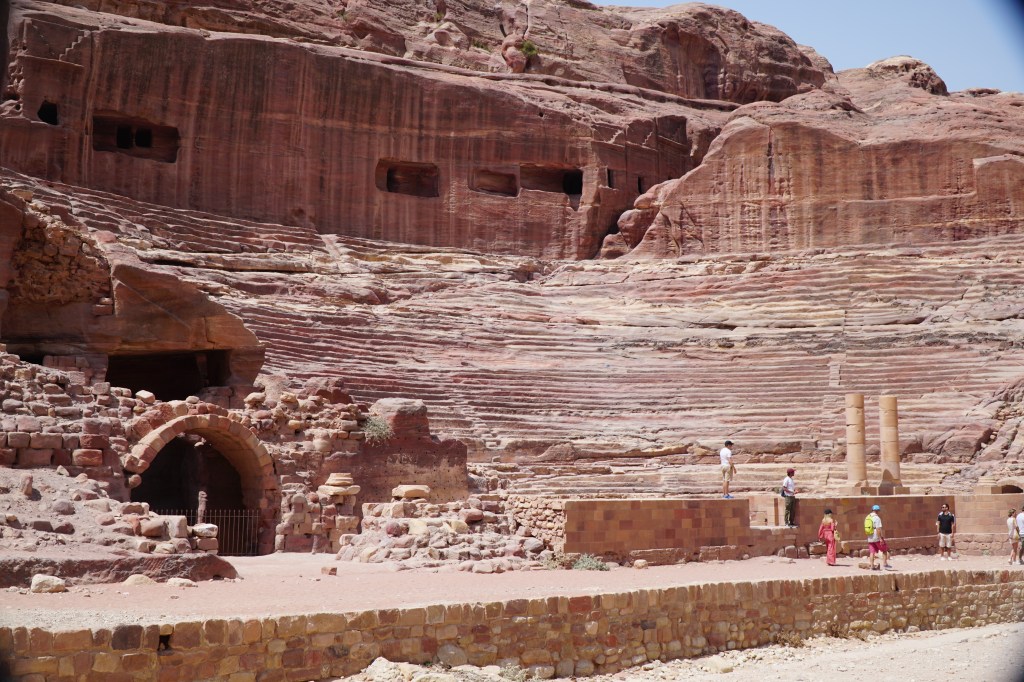
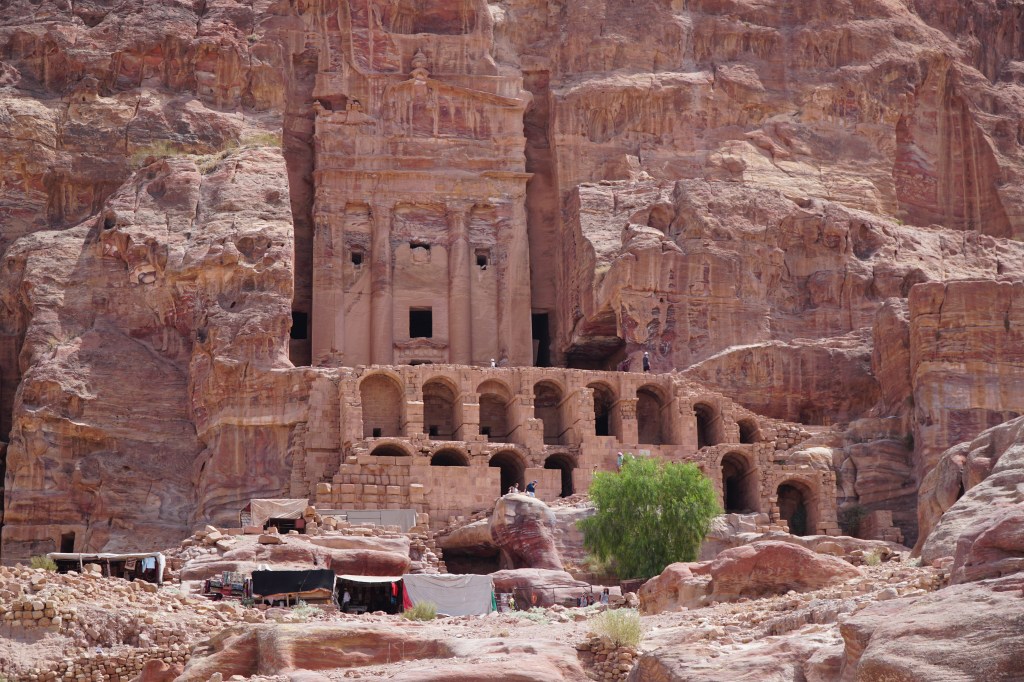
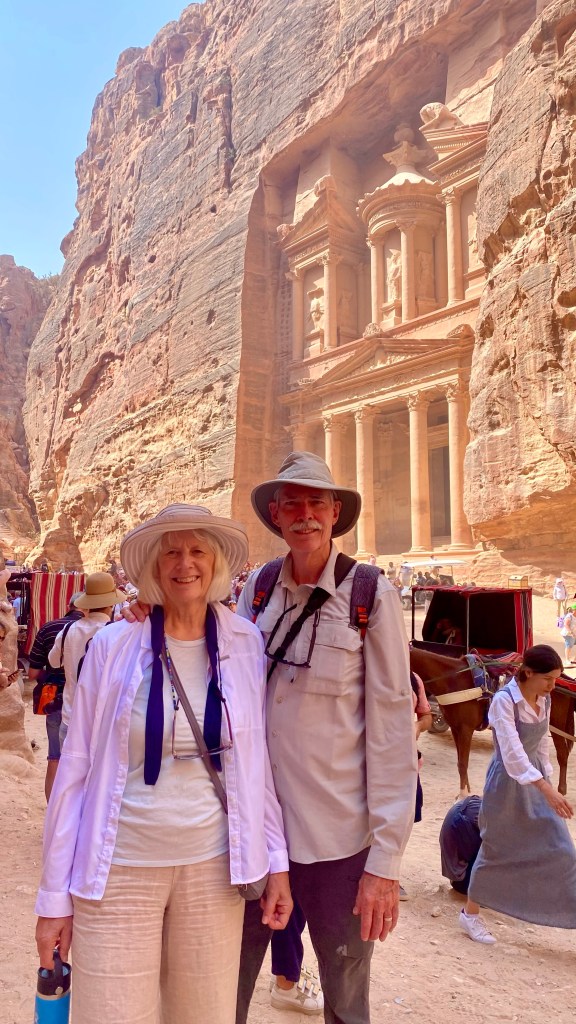
Petra is an historic site that is over 2000 years old. It is an entire city carved out of sandstone. It was inhabited by the Nabateans and it prospered in the 1st century BC through the 1st century AD. The Nabateans were traders so the city was situated along a major trading route. I’m going to post some of Tim’s photos because my descriptions will fall short. The walk in and out was about seven miles.

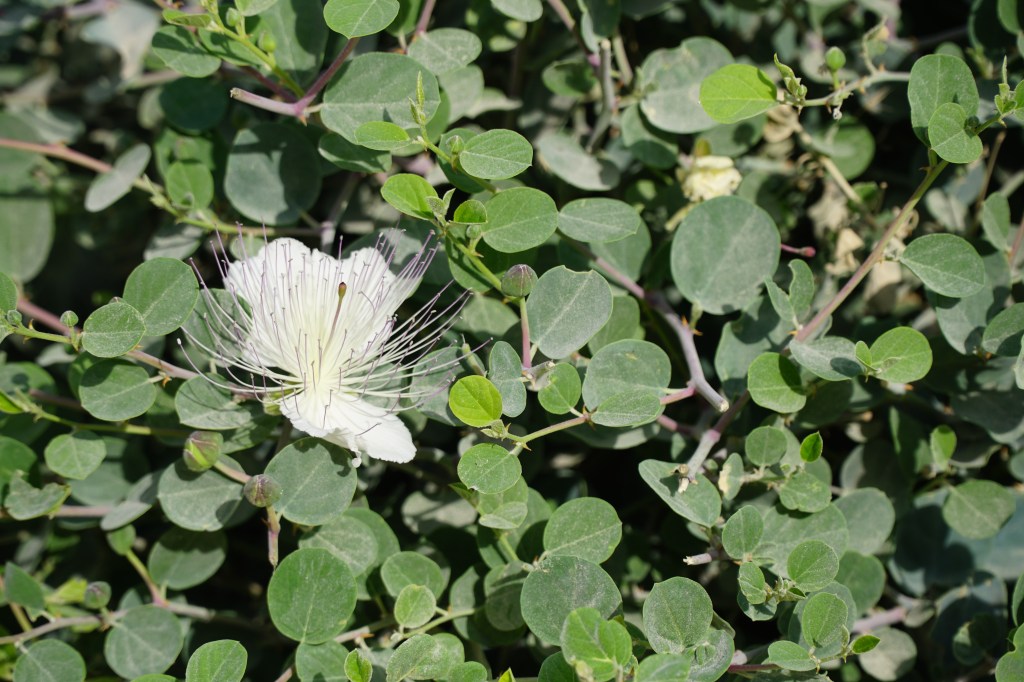
Our tour leader grew up in Petra. Bedouins inhabited the caves in Petra until the mid 1980’s when Petra became a UNESCO World Heritage Site. His family lived in one of the caves until he was 12. His mother would send him out to pick capers. He also rode the donkey to school each day.
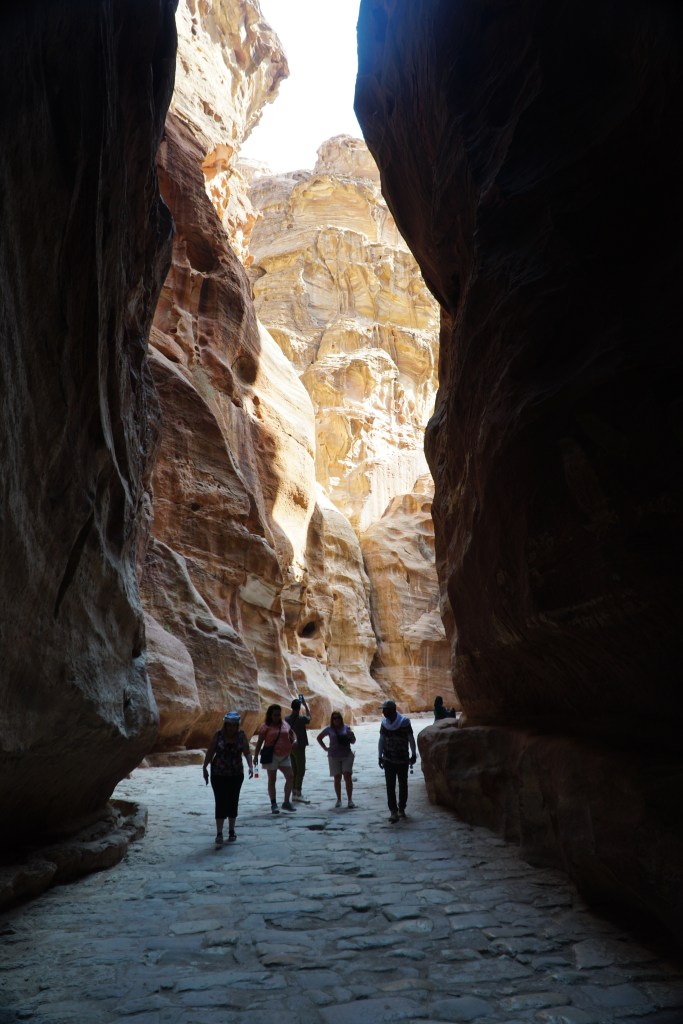
Walking through the slot canyon or Siq
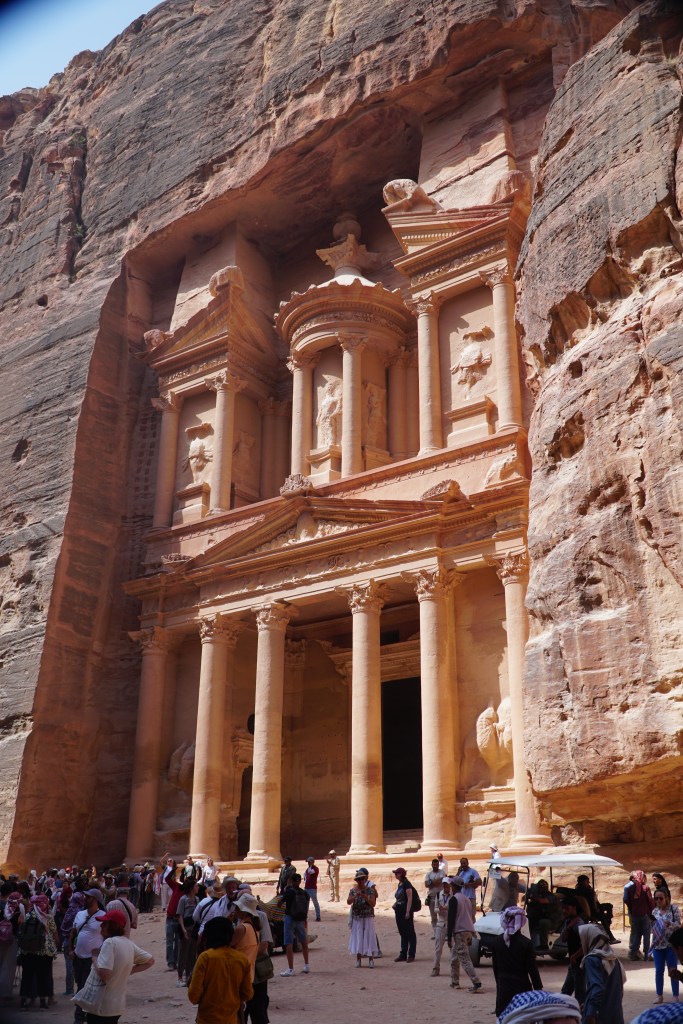
The Treasury, thought to be a leader’s tomb

This post could be very long with all the photos that Tim took. It was an amazing and unique site.

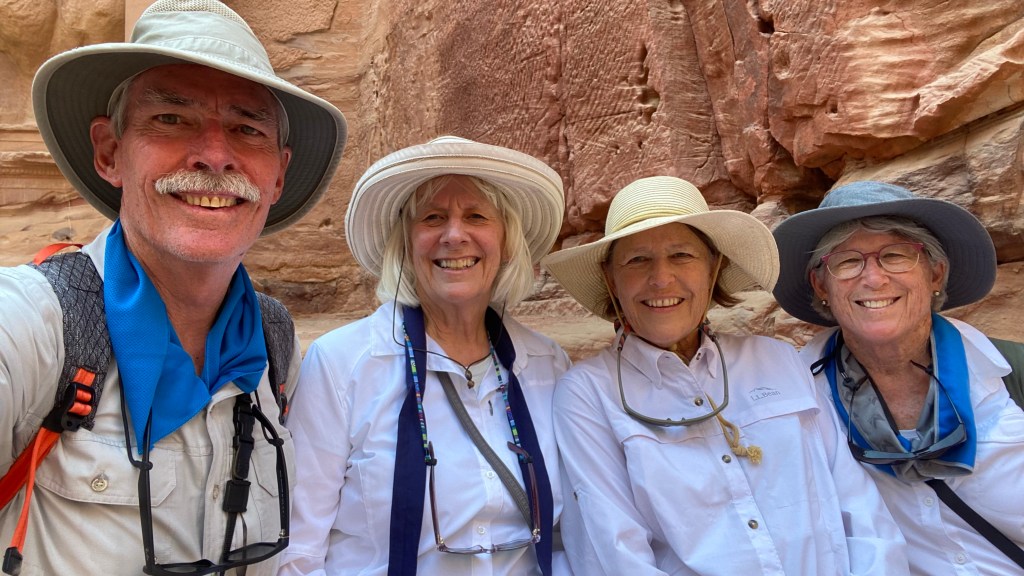
Selfie with Nancy and Kathy

Along the Kings Highway

We travel along the Kings Highway with our ultimate destination of Petra. But we had a few interesting sites along the way.

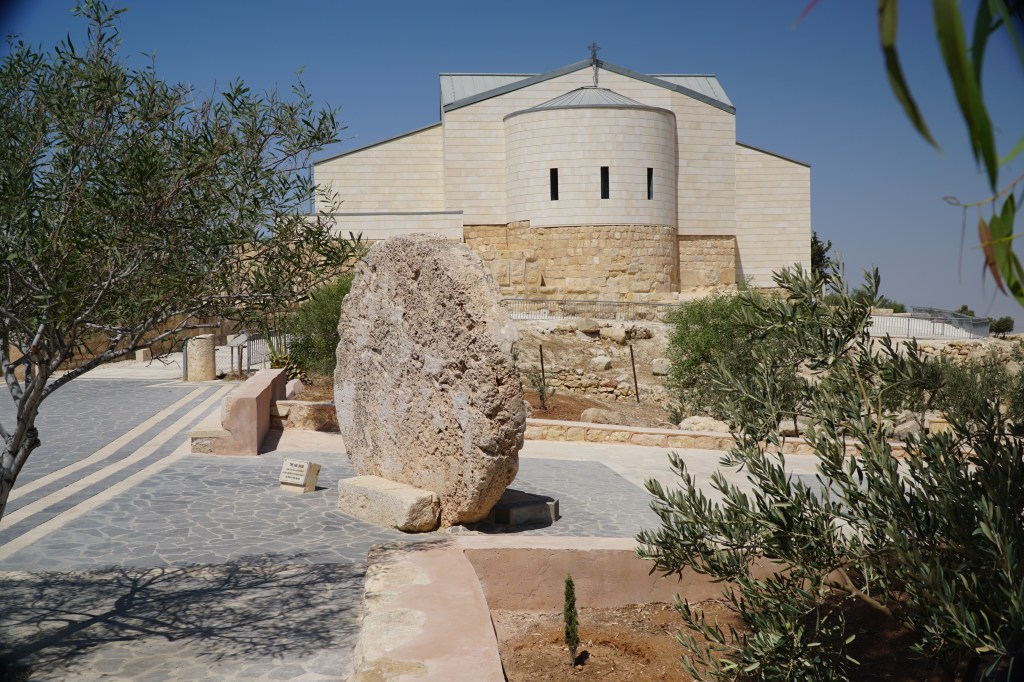
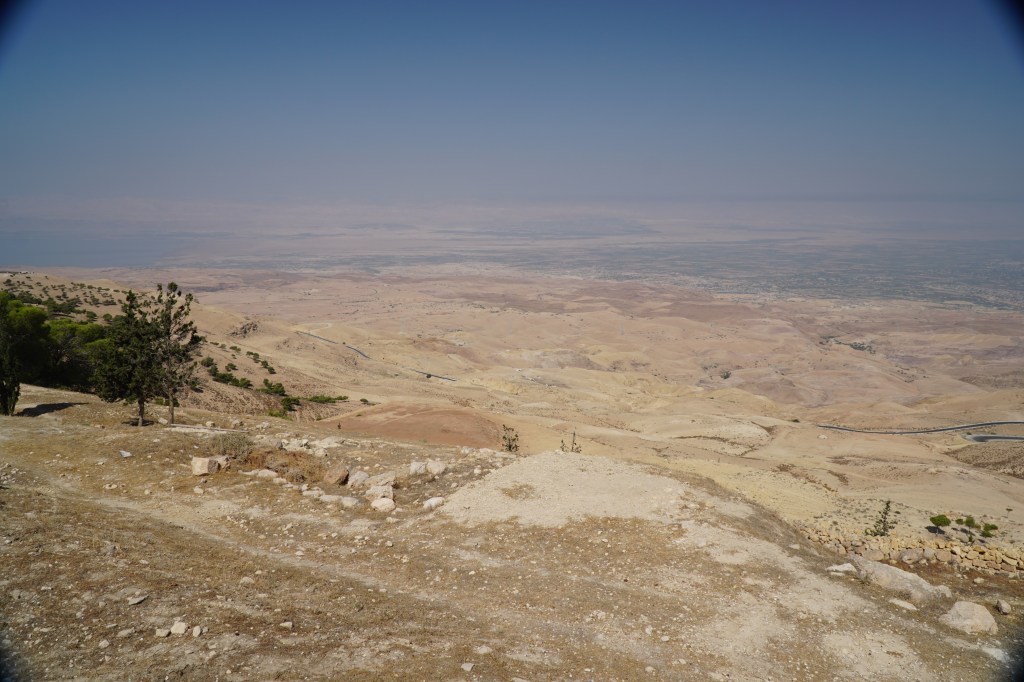
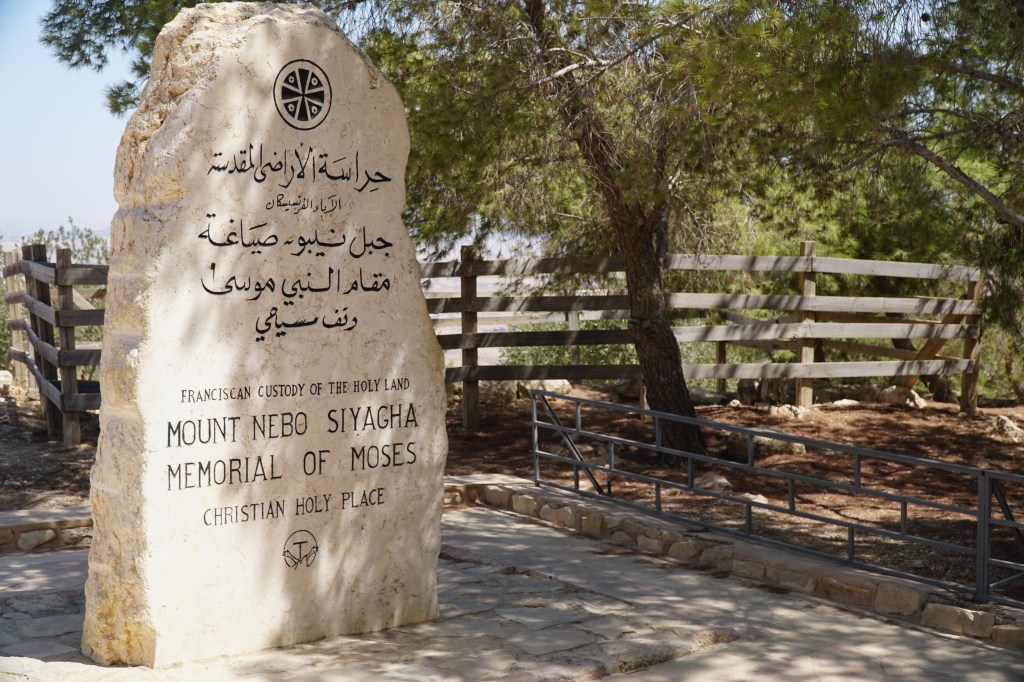
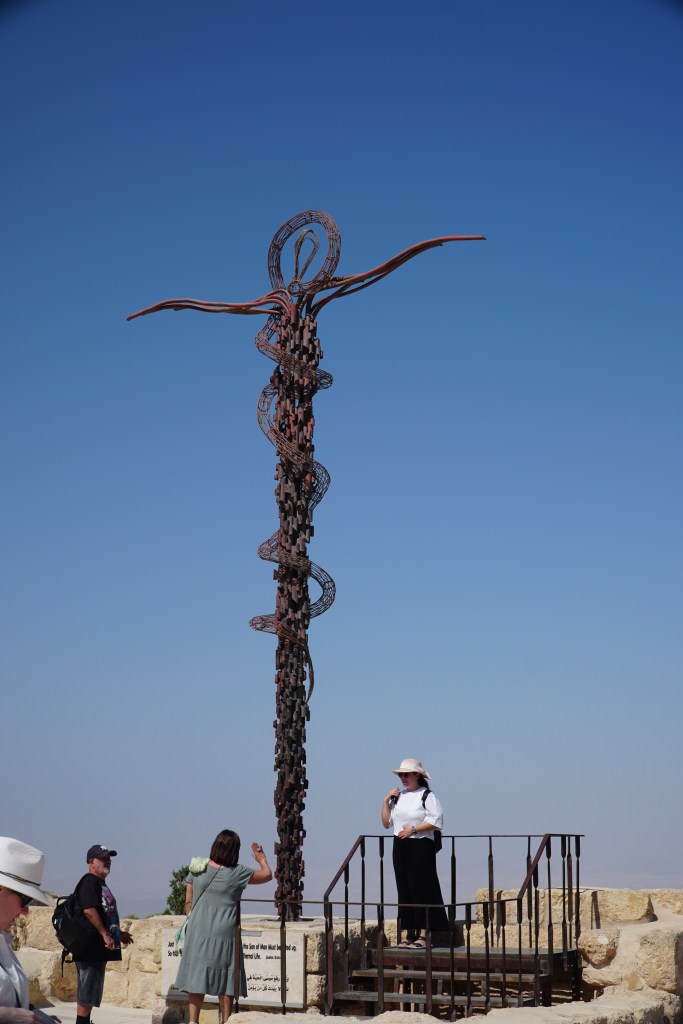
Our first stop is Mount Nebo. This is where Moses stood and got his view of the Promised Land as noted in Deuteronomy 34. Moses was not allowed to enter the land, God gave him the view. Moses died in the land of Moab at 120 years old. It was special to stand where he stood and view the Jordan River, Jericho and the Dead Sea. We could also see Jerusalem.

Hazy view from Mount Nebo The Dead Sea is to the left. The Jordan River divides Israel and Jordan. Jericho is in the center.

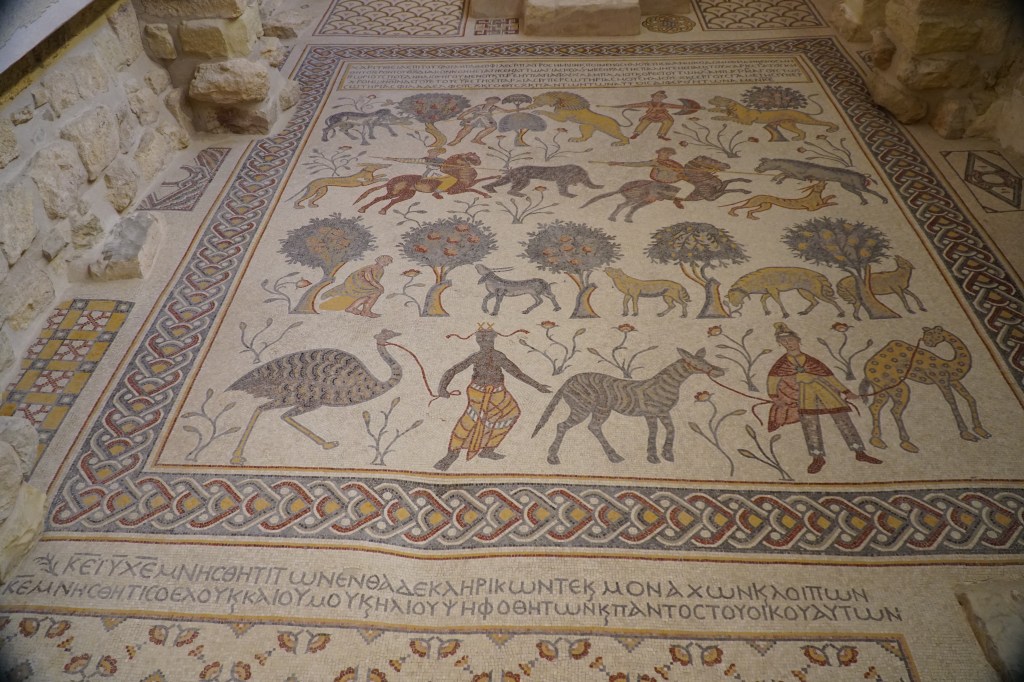
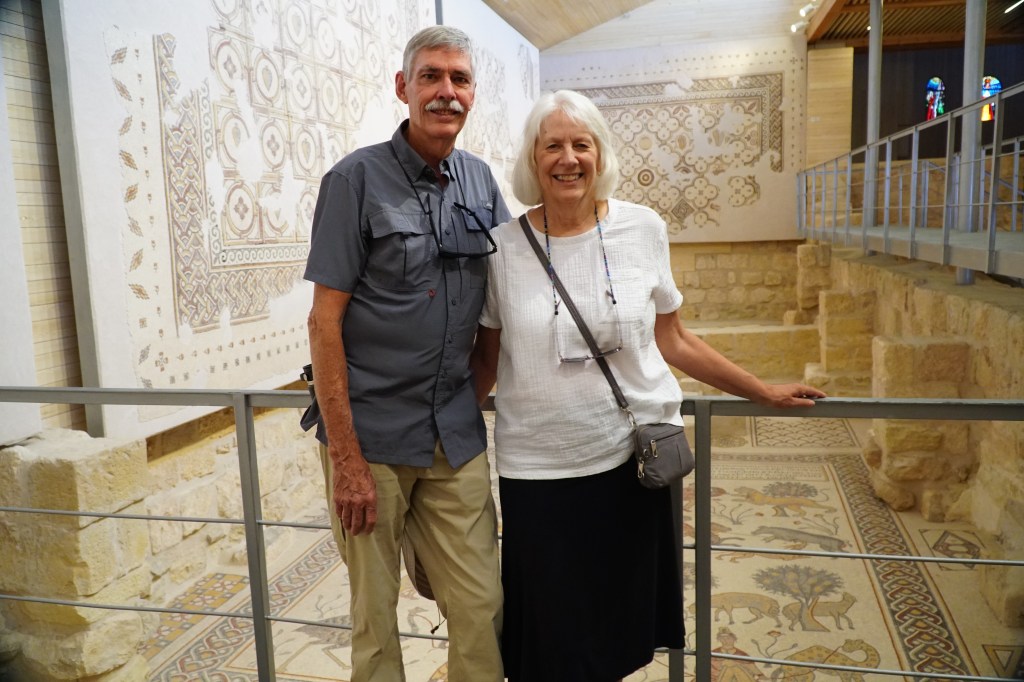
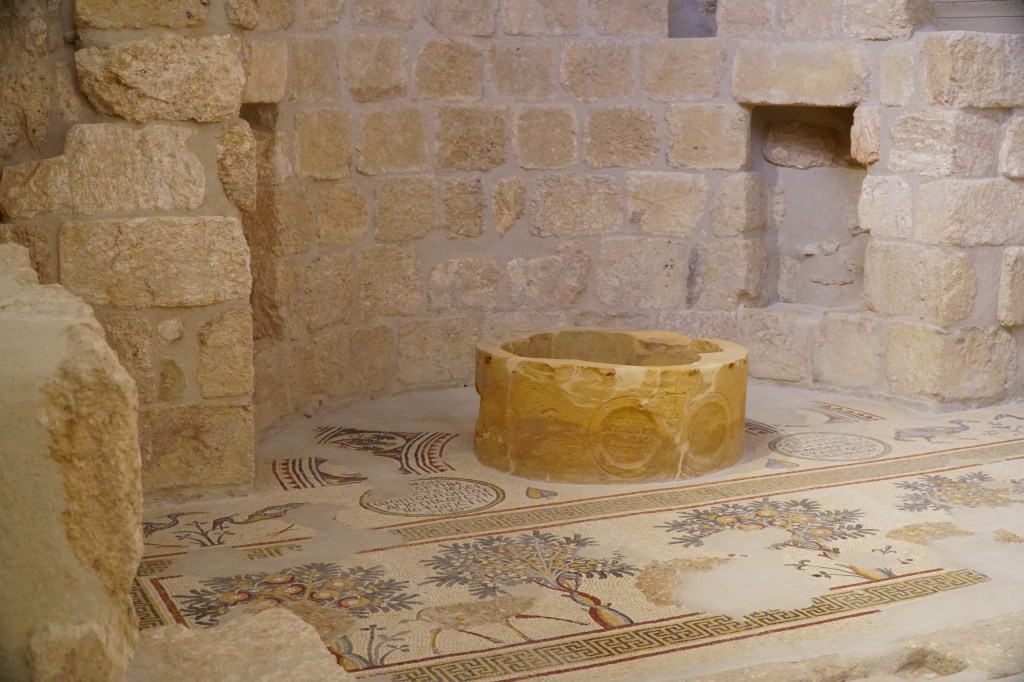
The original church on Mount Nebo is from the 5th century. A mosaic dated from 530 AD was found in perfect shape. It was an amazing work of art.

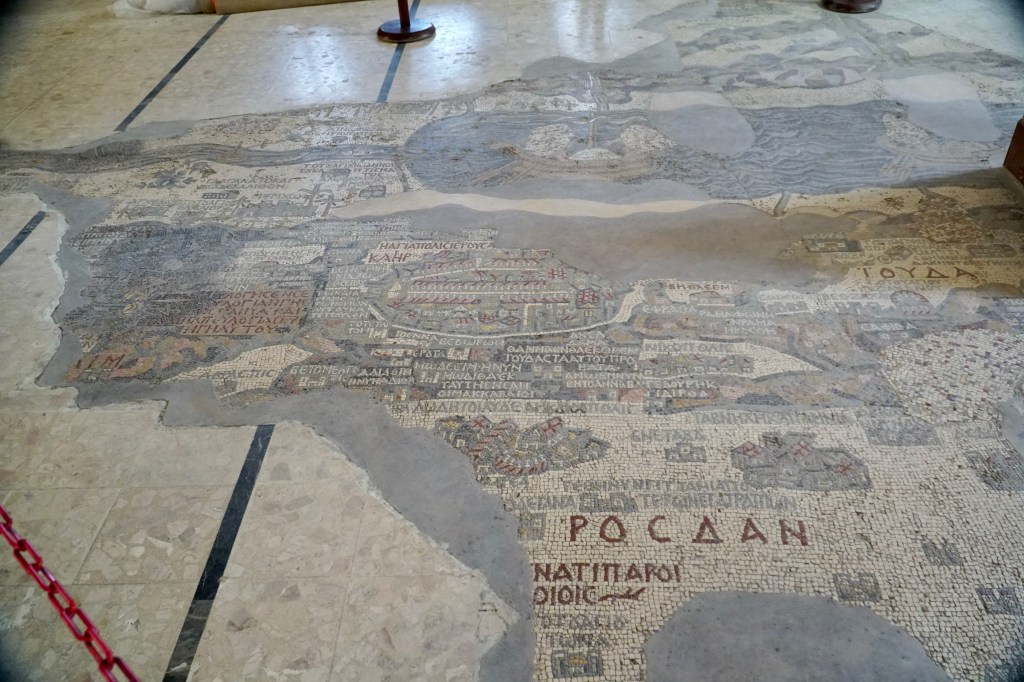
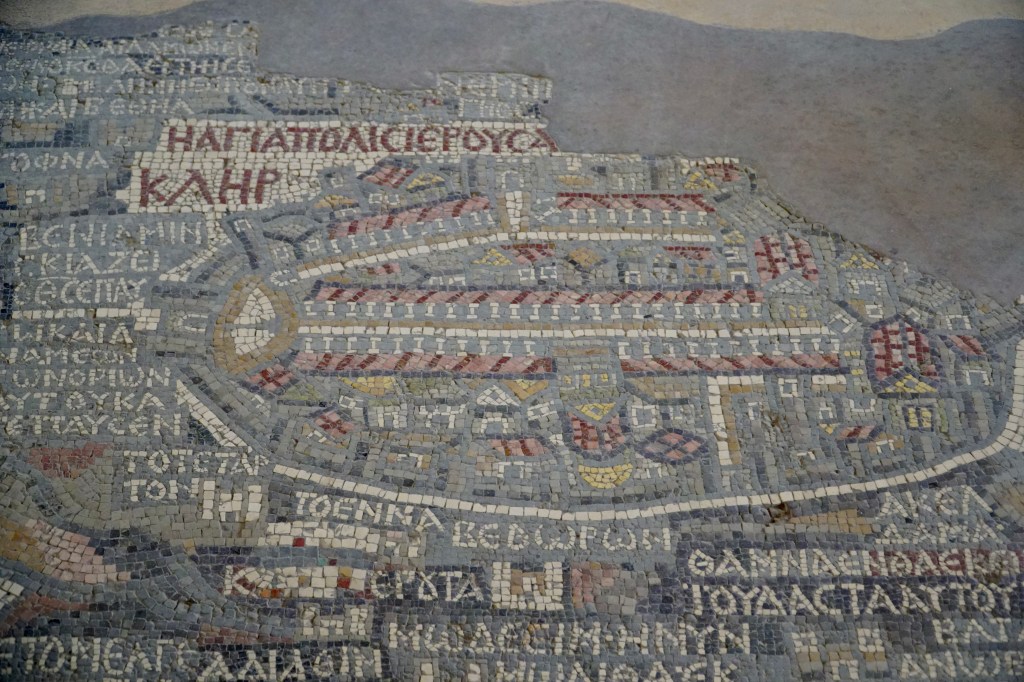
Our next stop is the town of Madaba. It has a fairly high population of Christians. It is the home of Saint George Orthodox Church. The church contains one of the oldest maps of the Holy Land on a mosaic on the floor.

Jerusalem

I think this is in Greek. The locations on the map were labeled in Greek allowing the experts to figure out the map.

Home Hosted Dinner

Part of our tour was to experience a meal with a local Jordanian family. We had a lovely time at the home of Ahmed and Lena. The family was very welcoming and their children were a delight to visit with us.

The main dish was like an upside down cake of rice, chicken and potatoes
The family with us and fellow travelers

Jerash Historical Site

About one hour north of Amman is the city of Jerash. Just outside the city is an amazing archeological site of the Roman city from around the second century. It is a very large site with well preserved ruins.

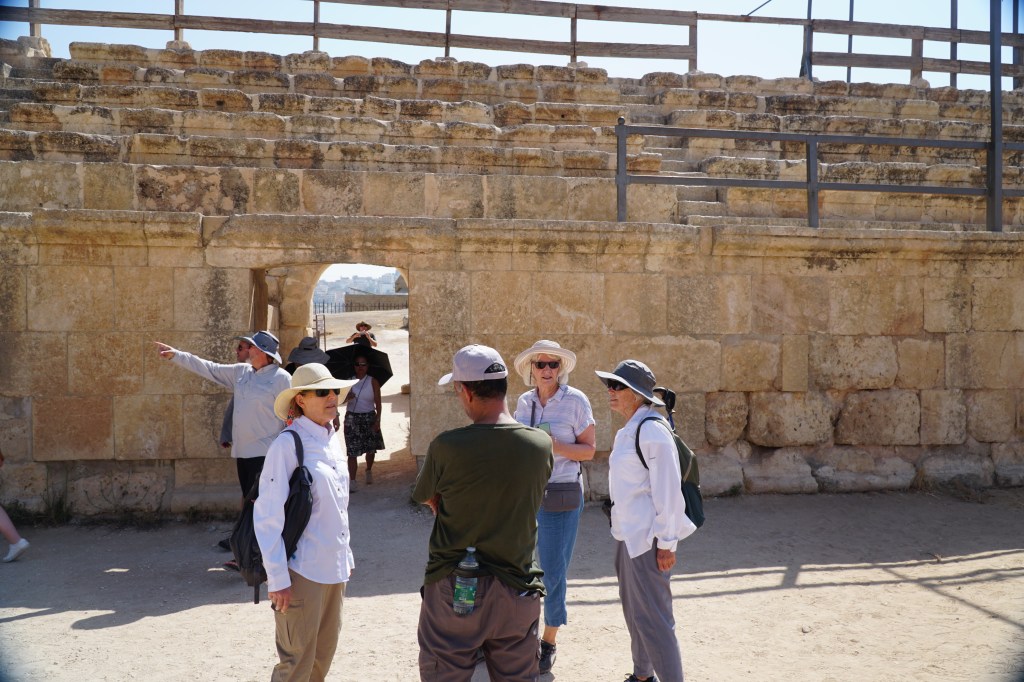
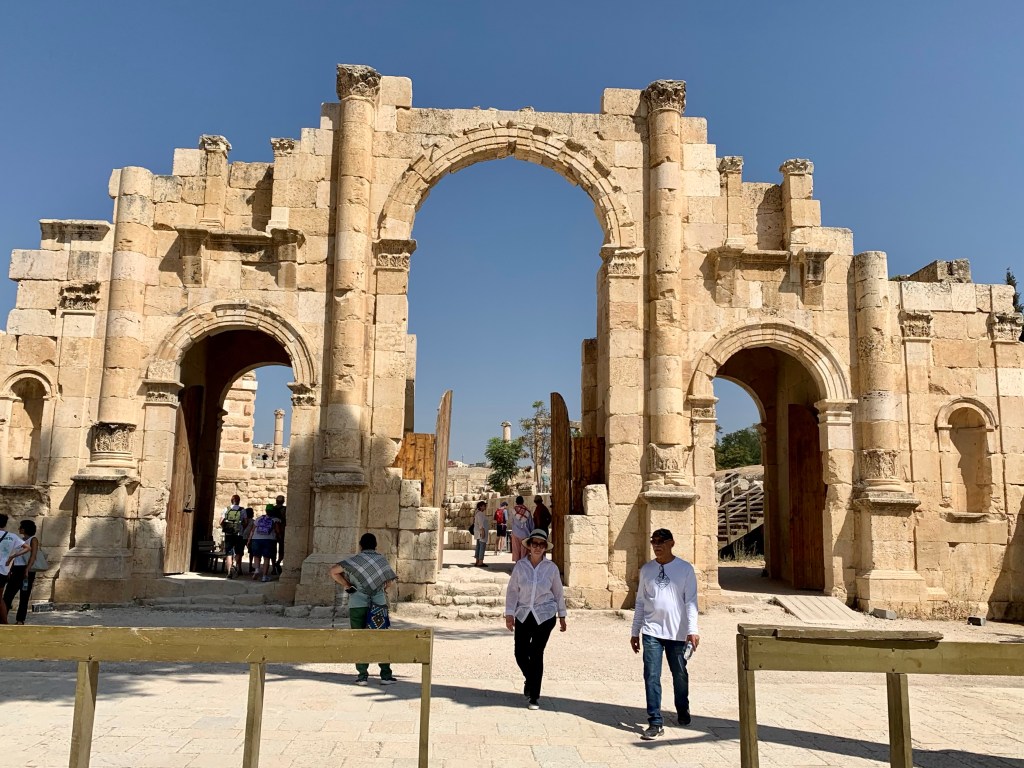
Beginning our tour we enter through Hadrian’s Arch, built in 129 AD. Next we explore the ruins of the hippodrome where the Romans games took place.

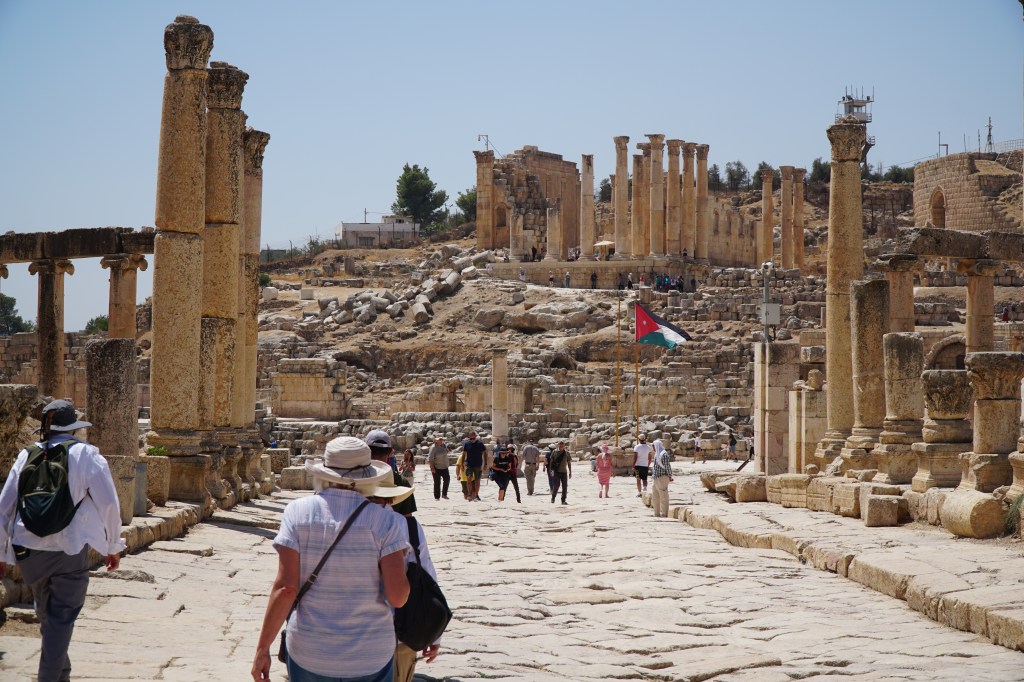
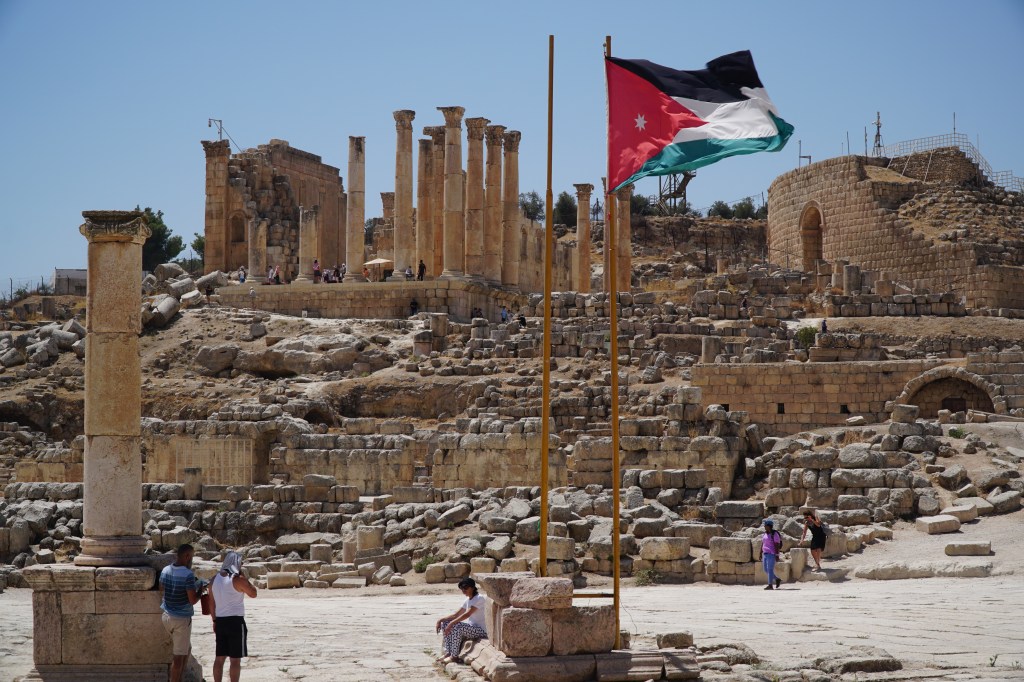
We enter the city through the South Gate into an oval forum surrounded by columns. From here you can see the Temple of Zeus on the hill.

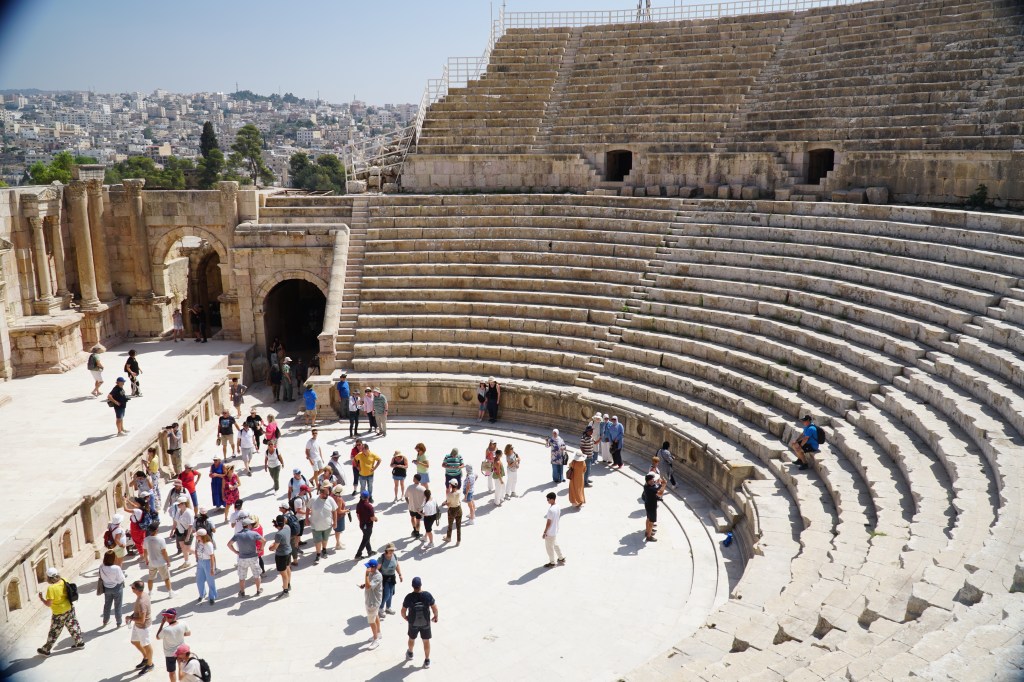
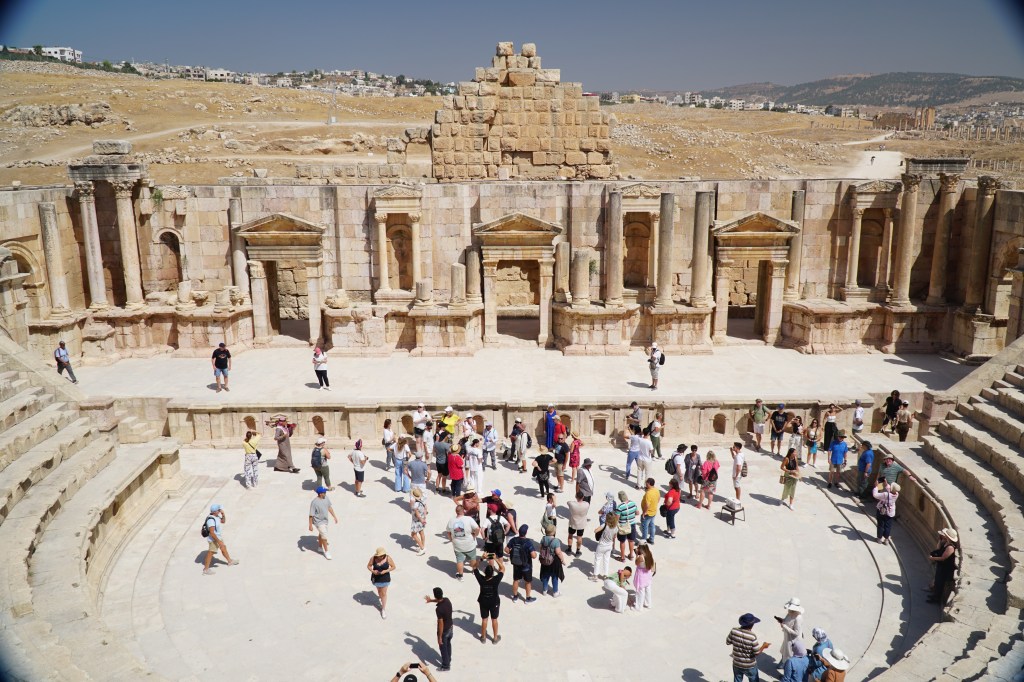
The Roman Theater is amazing. Here are some photos.

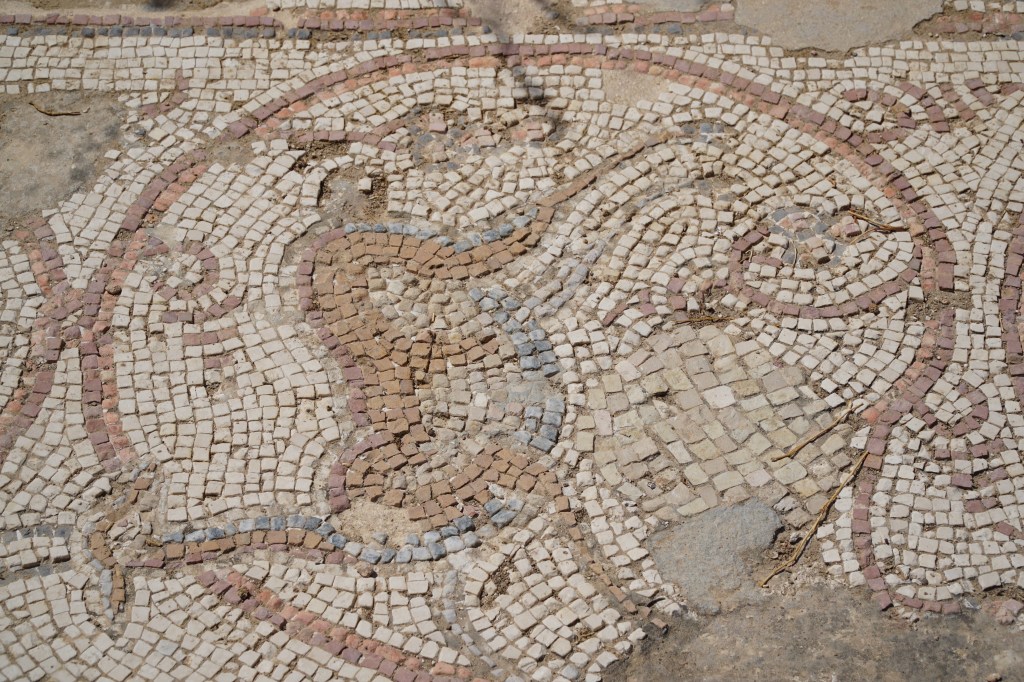
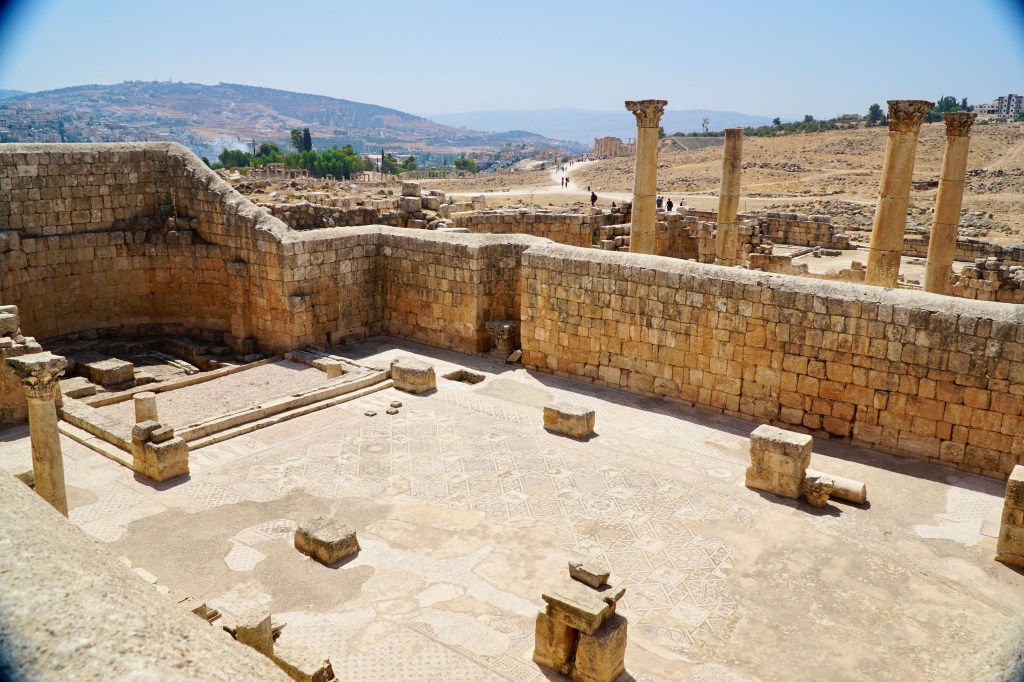
There are the remains of several Christian churches from the 5th and 6th century with nice mosaics on the floor.

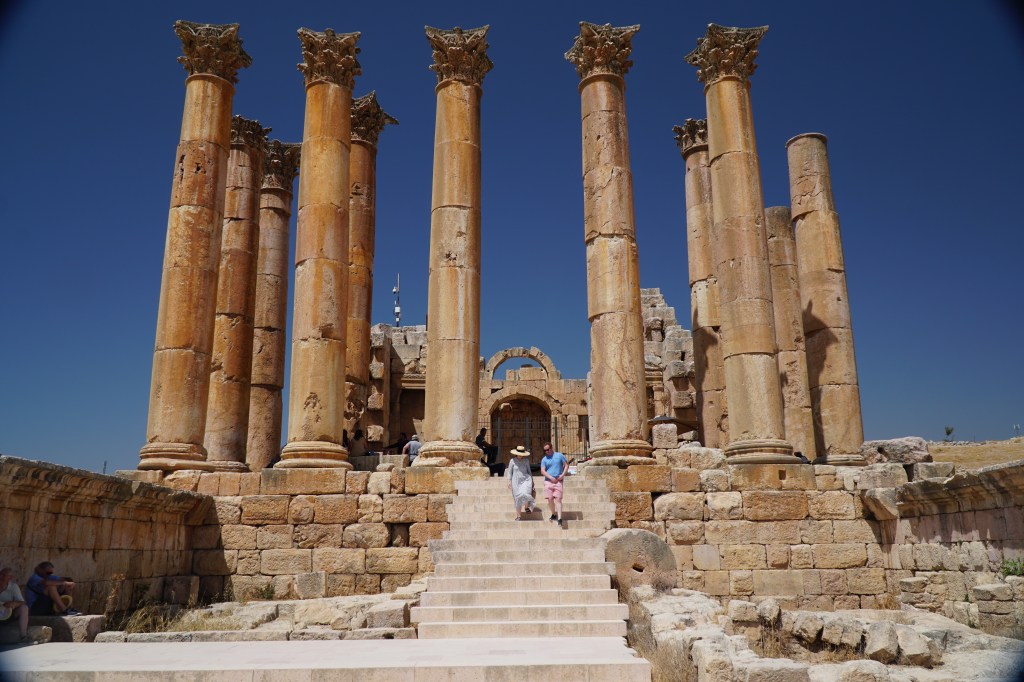
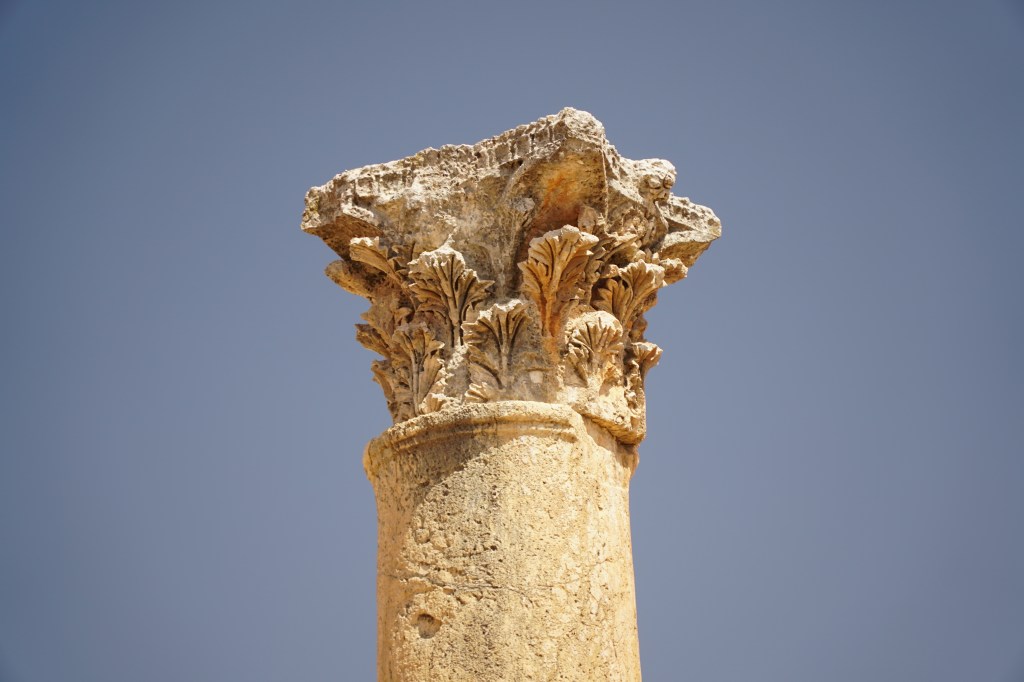
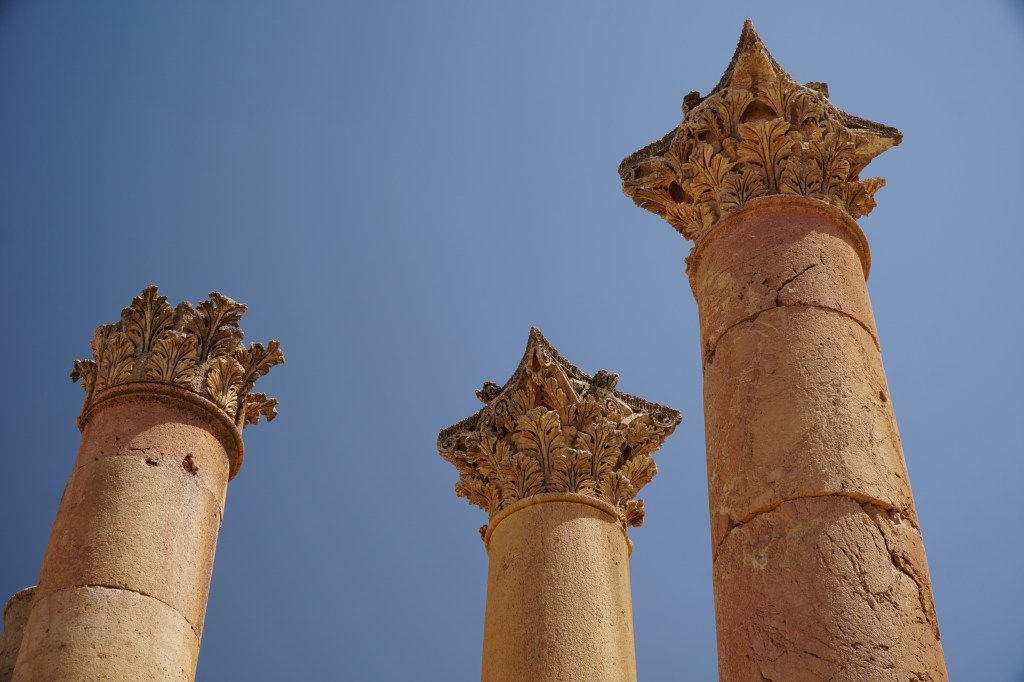
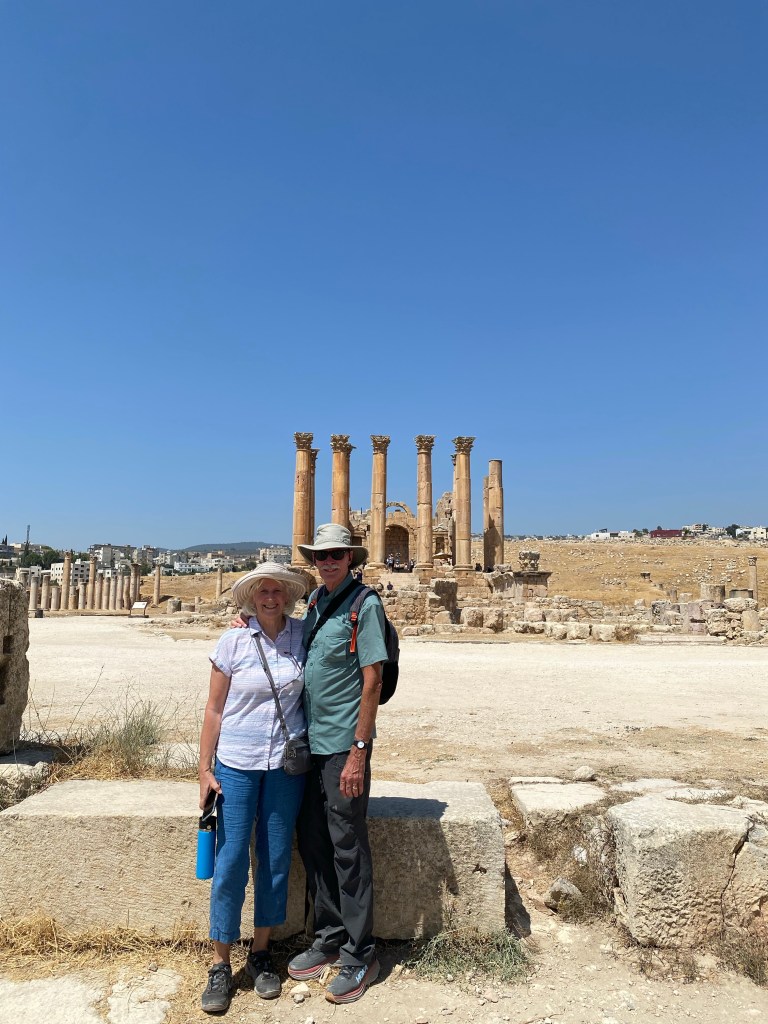
We continue to climb up to the Temple of Artemis with its Corinthian columns.

Typical of Roman cities is one Main Street called the Cardo Maximus. This one contained the original stones and you could see the ruts from the chariots.

Food in Jordan

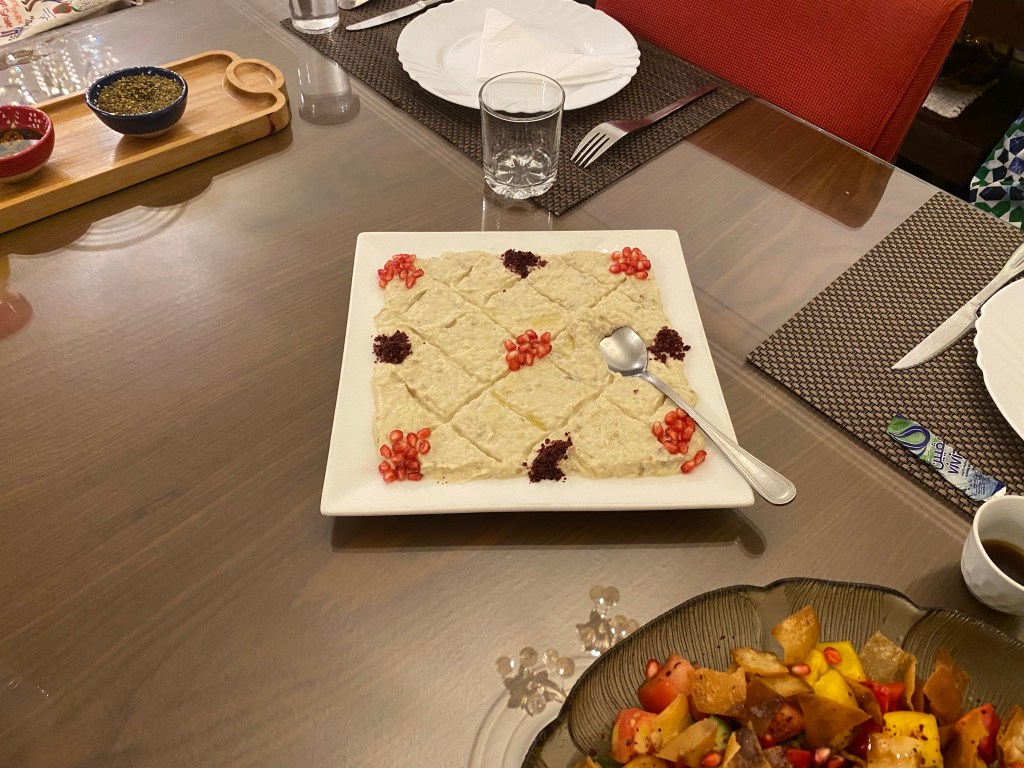
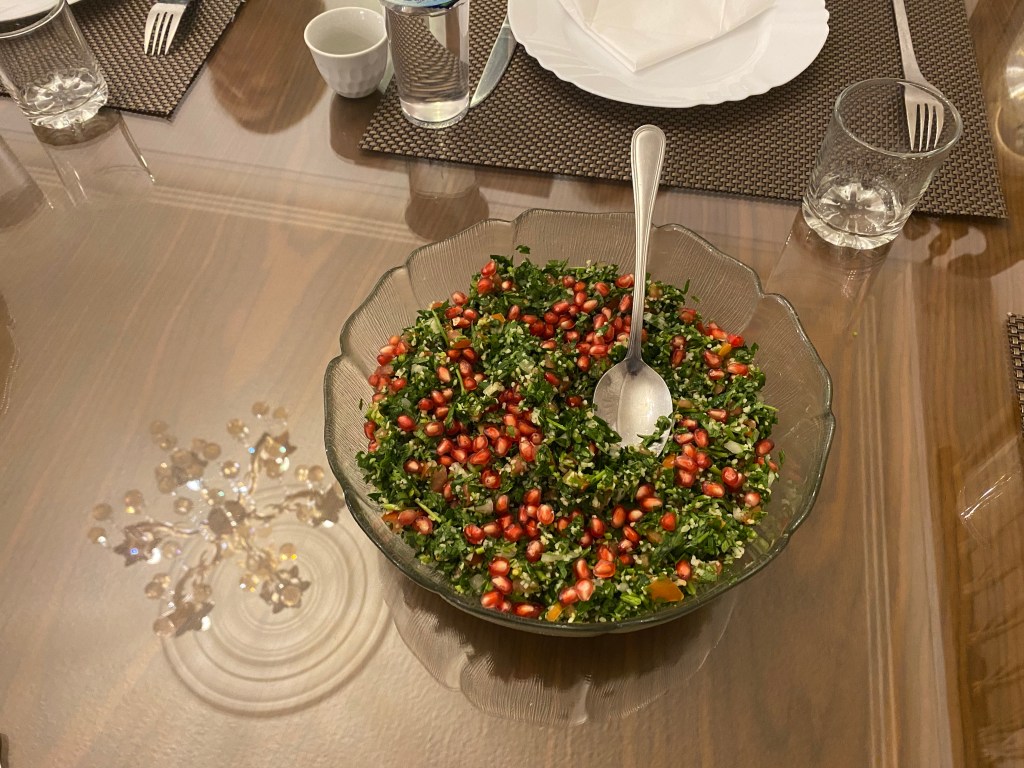
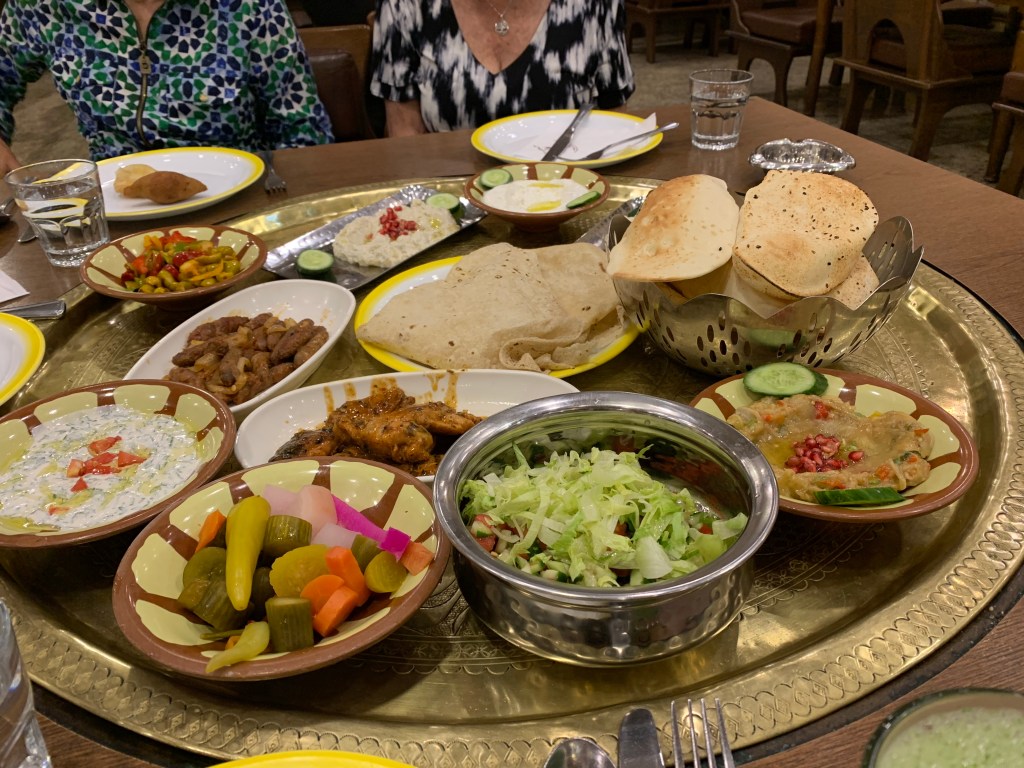
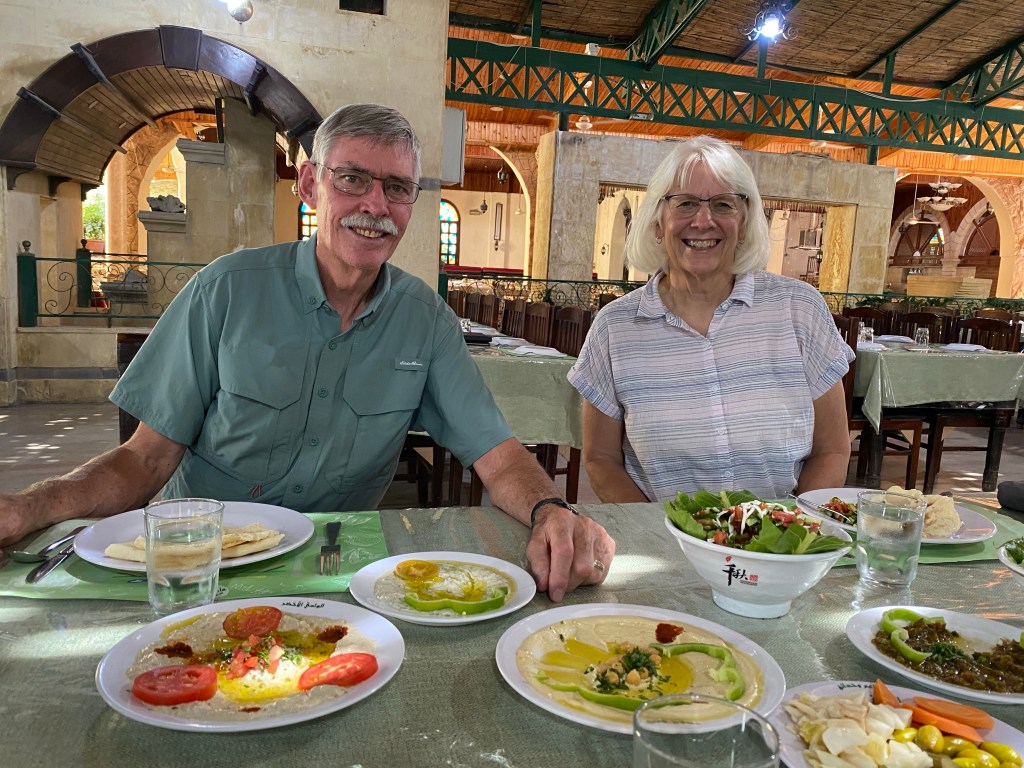
Dinner last night was at a Jordanian Restaurant called The Windmill. The first course is always salads, which includes hummus, baba ganoush, a yogurt sauce and others. There is vegetable salad, pickled vegetables, a parsley salad and others.
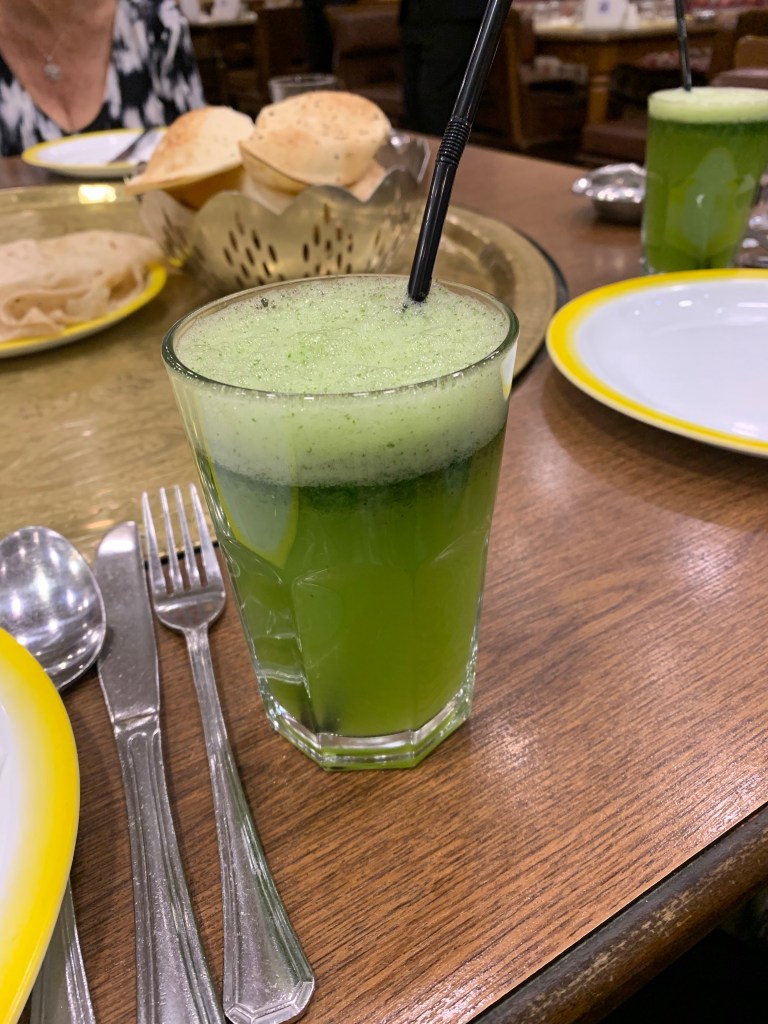
Fruit juices are part of the Jordanian cuisine. We were delighted to try the lemon juice with mint and fresh pomegranate juice.
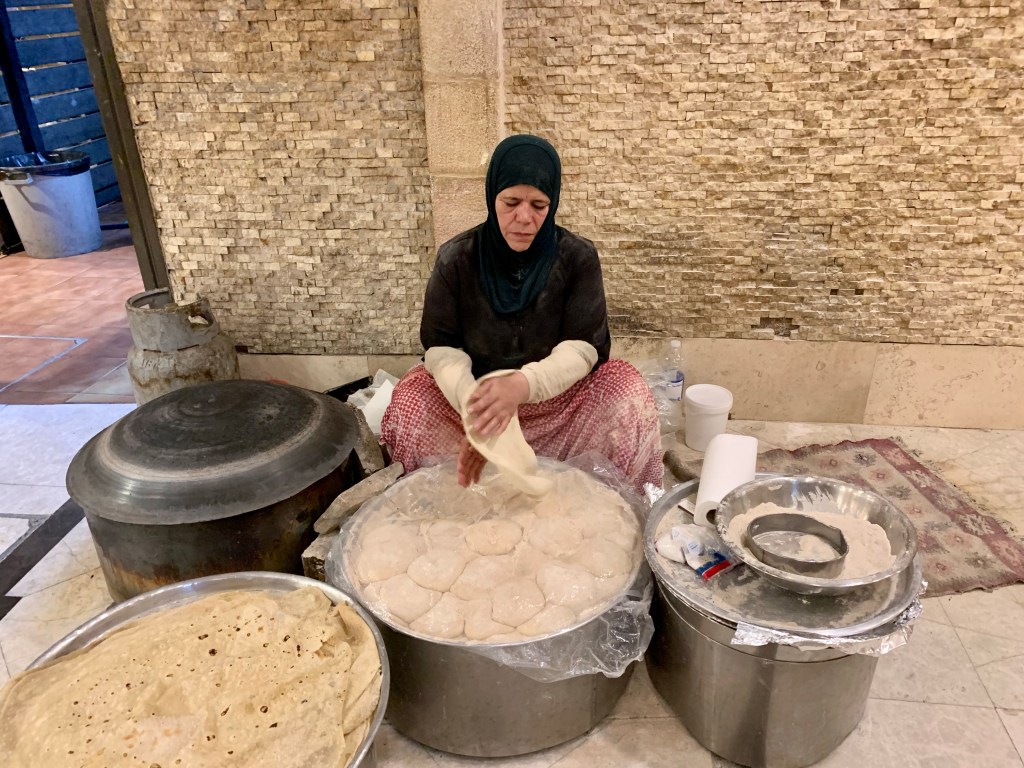
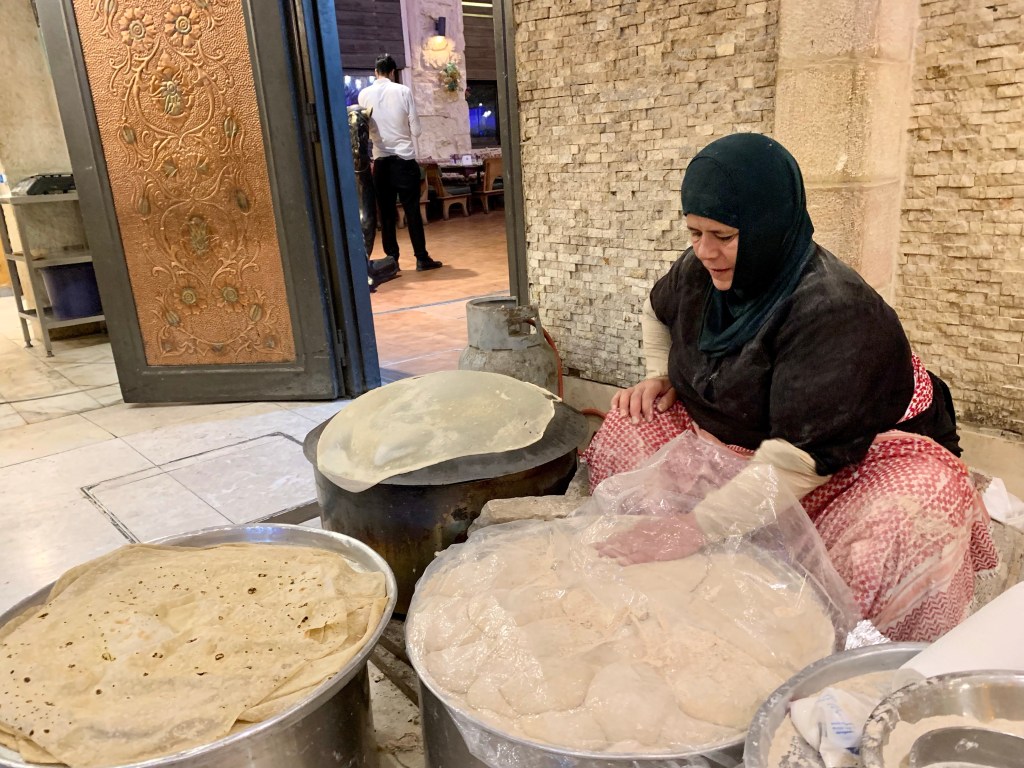
There are also some type of flat bread included. This lady was cooking bread in the Bedouin way.

Lunch salads today

A Day Exploring Amman, Jordan

The day begins with a lovely spread of breakfast at our hotel, The Crown Plaza. After meeting with our trip experience leader, Mahmoud, we head out for our tour of the city. Most of the buildings are made of limestone, making for a very white city landscape.

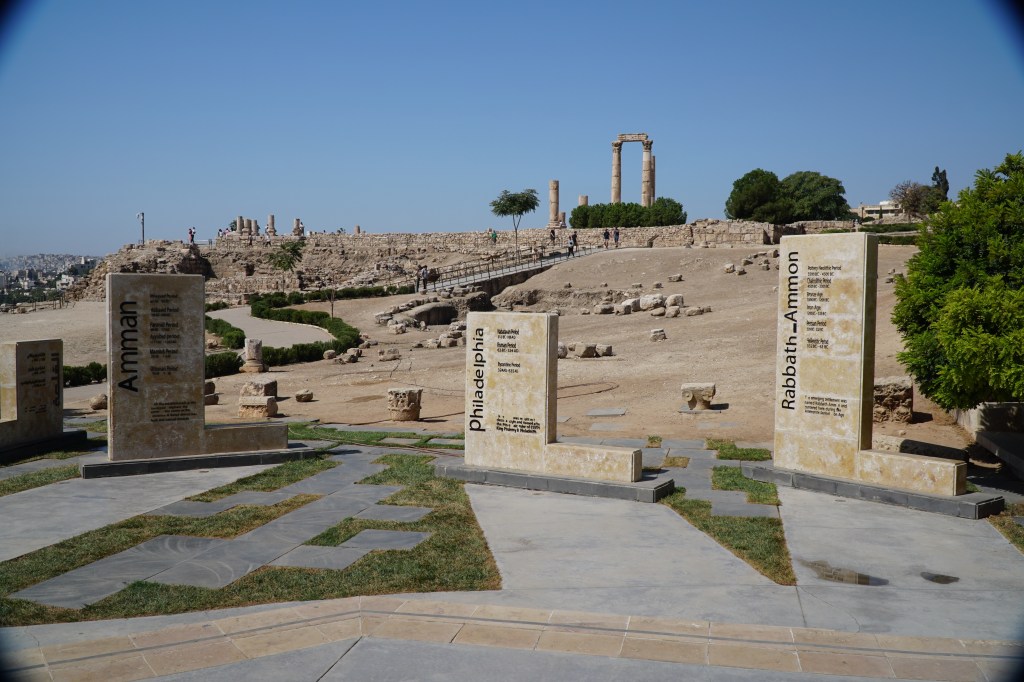
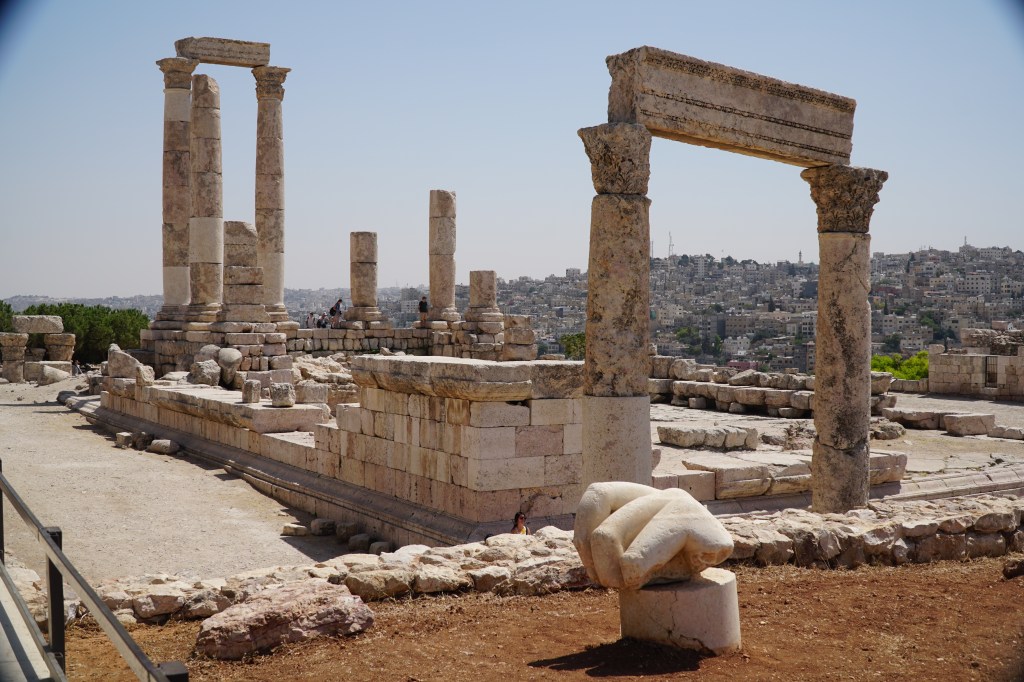
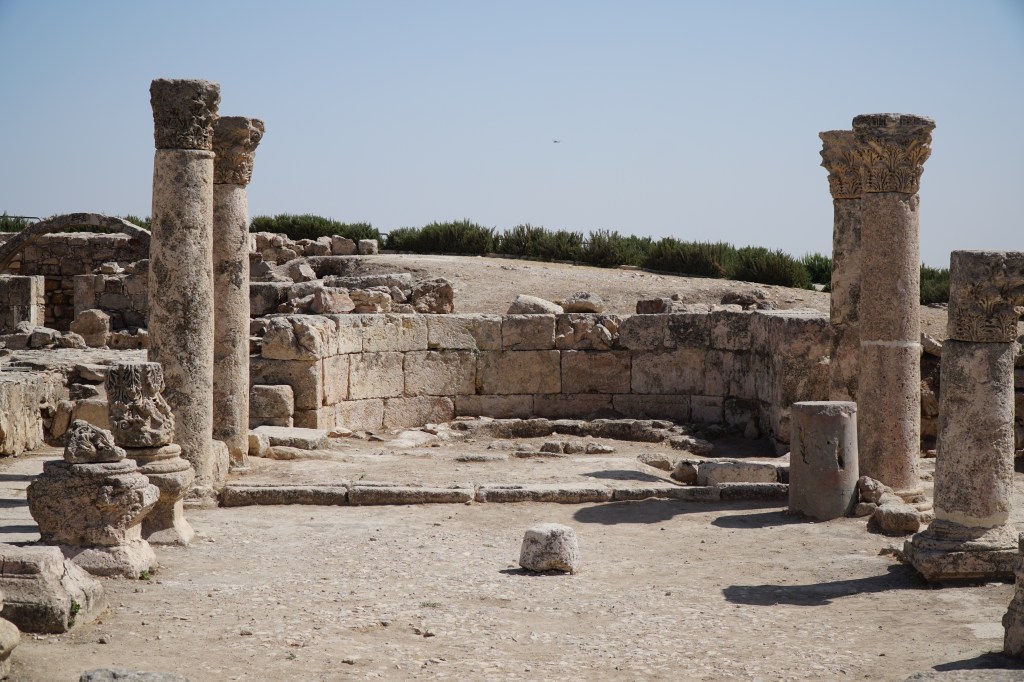
We spent the morning at Amman’s Citadel Archaeological Site which is a blend of Greek, Roman, Byzantine and Islamic ruins.

During Bible times it was called Rabbath-Ammon (King David’s time). The Romans called it Philadelphia (One of the cities of the Decapolis during Jesus’ time).
The Roman Temple of Hercules
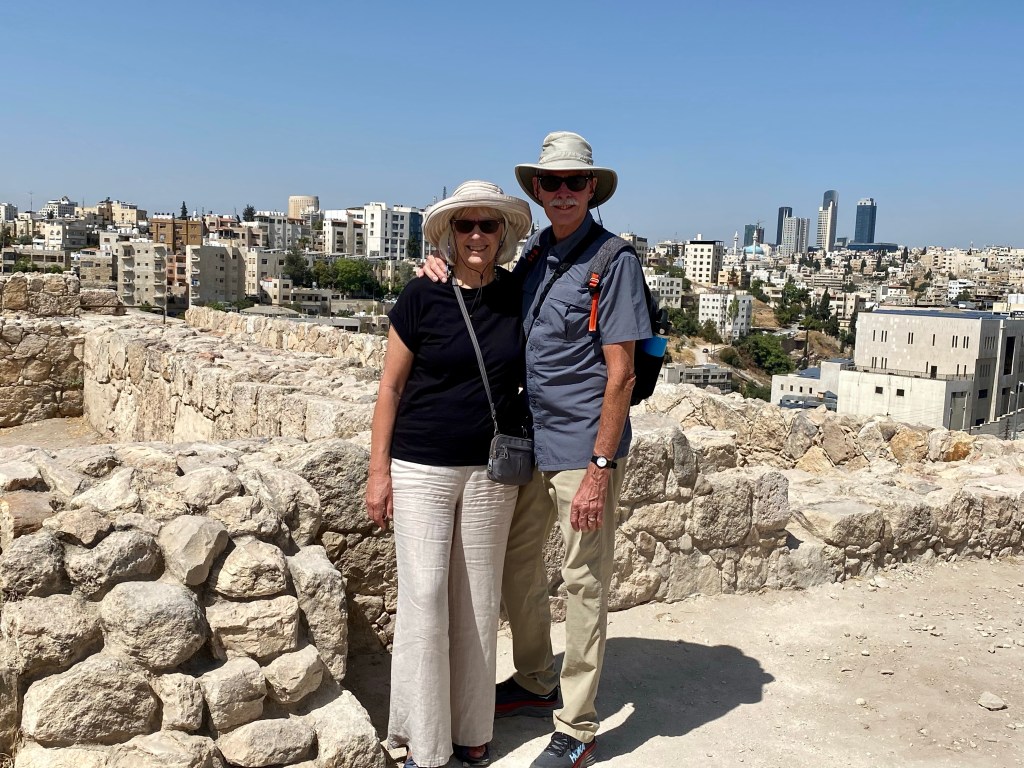
Us amongst the ruins

The ruins of an early Christian church

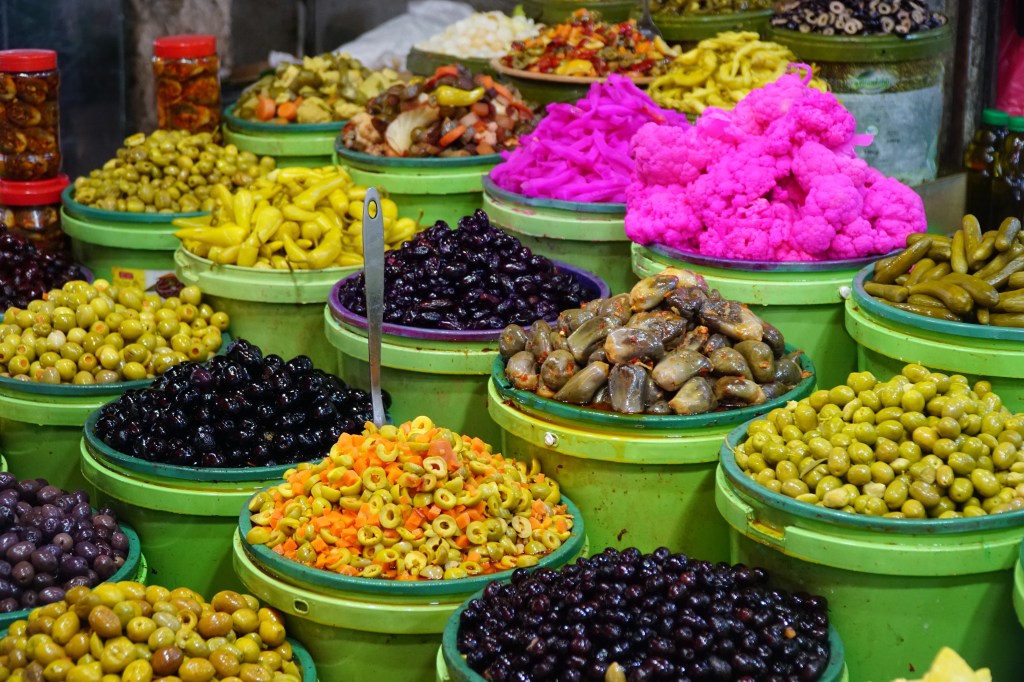
After exploring the Citadel we walked around the older part of the city including walking through the old vegetable market.

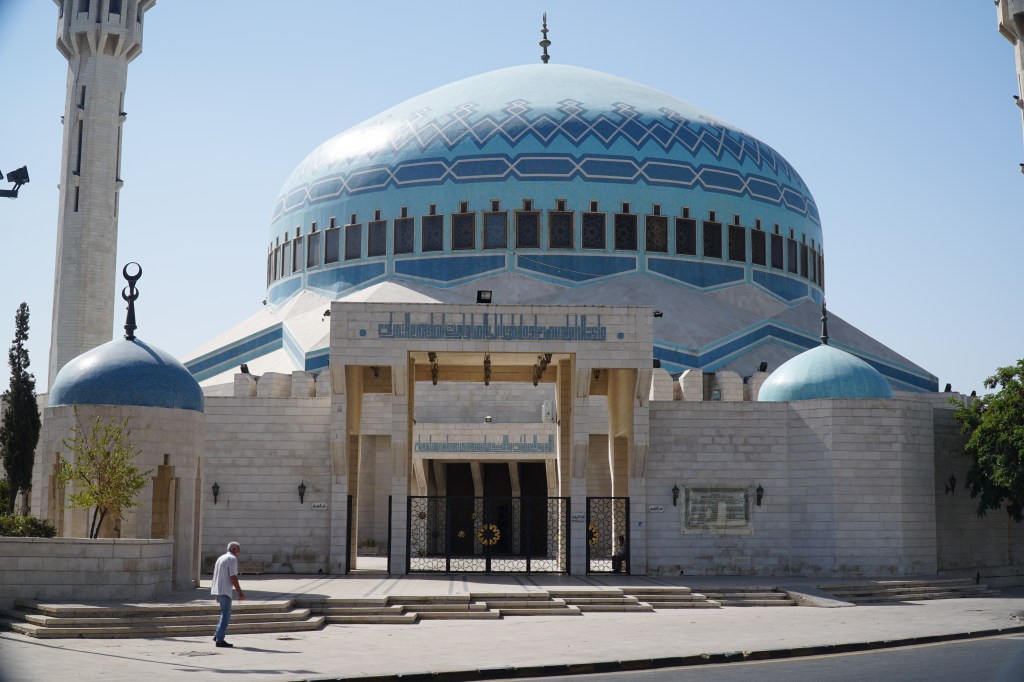
Since Jordan is a Muslim country there are mosques.

The newest mosque in Amman
Coffee shops everywhere!

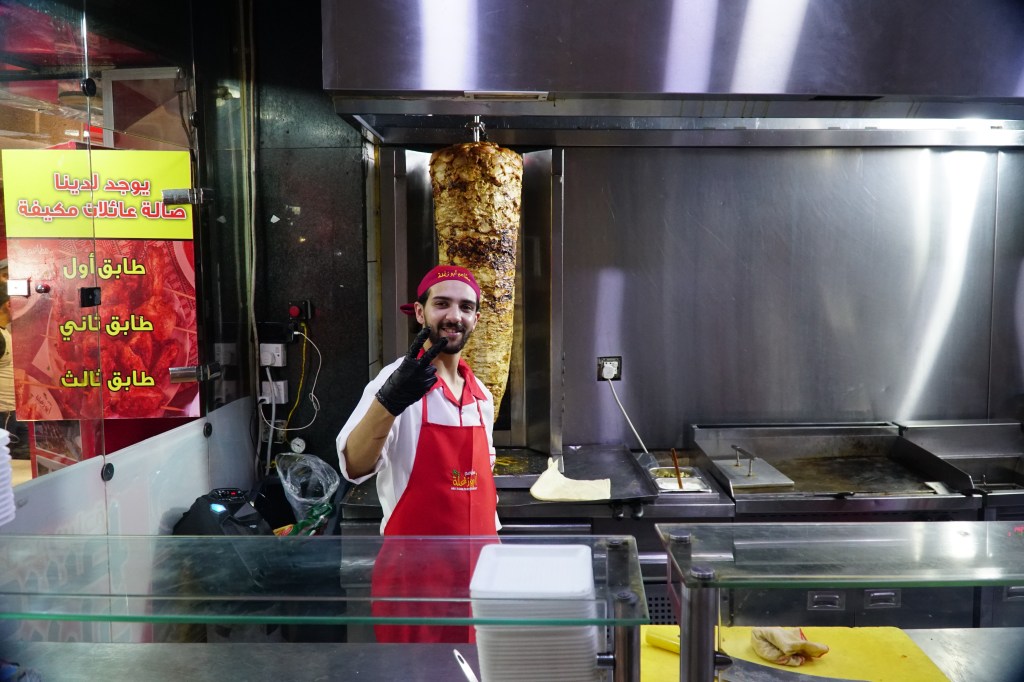
We finished our walk with lunch at a Chicken Shawarma place.