Another Interesting Day in Aswan

Boat Trip

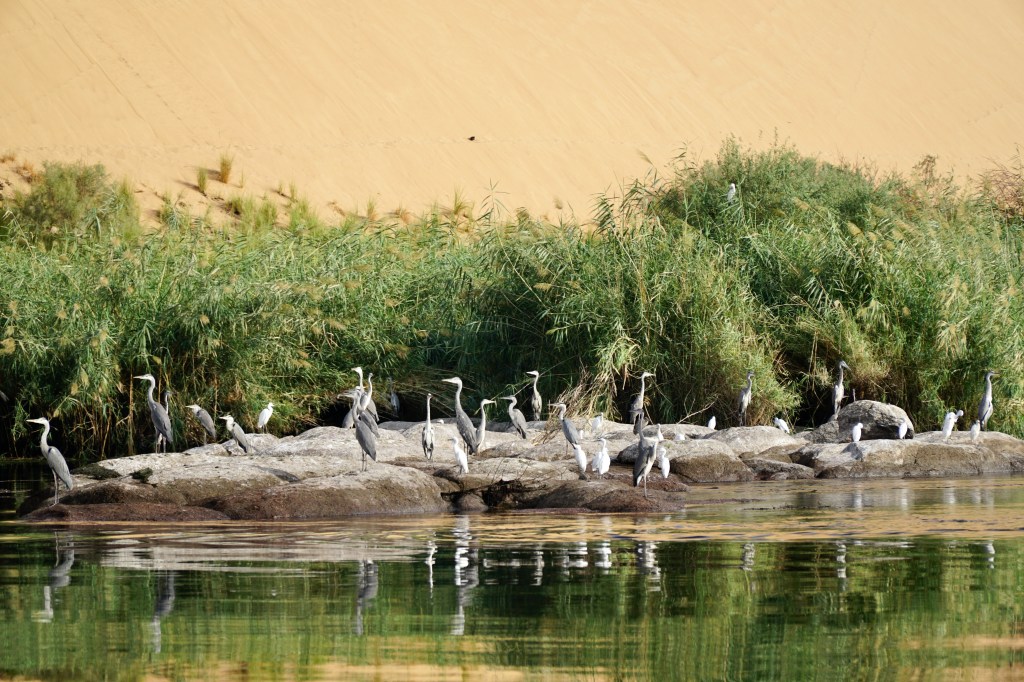
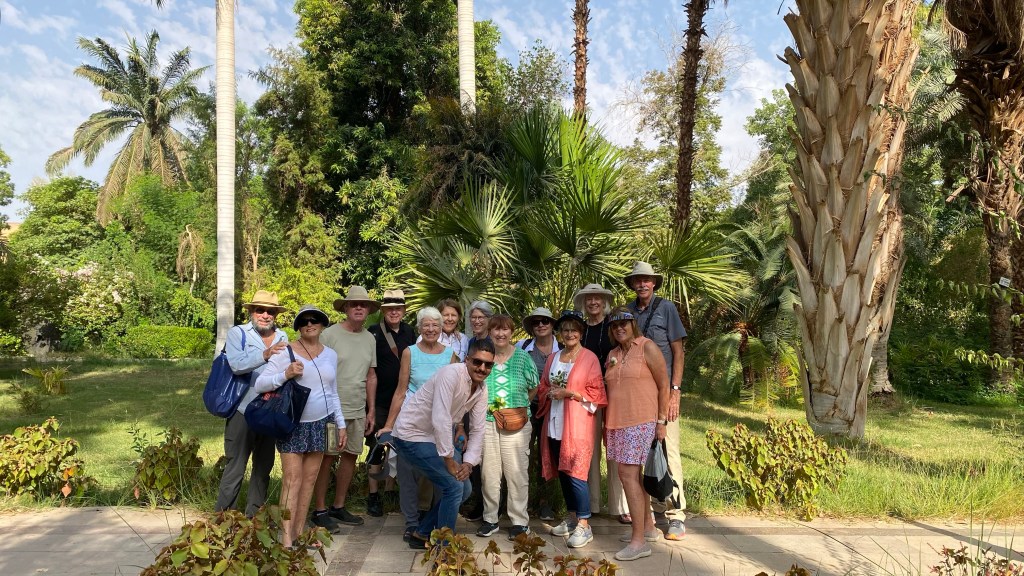
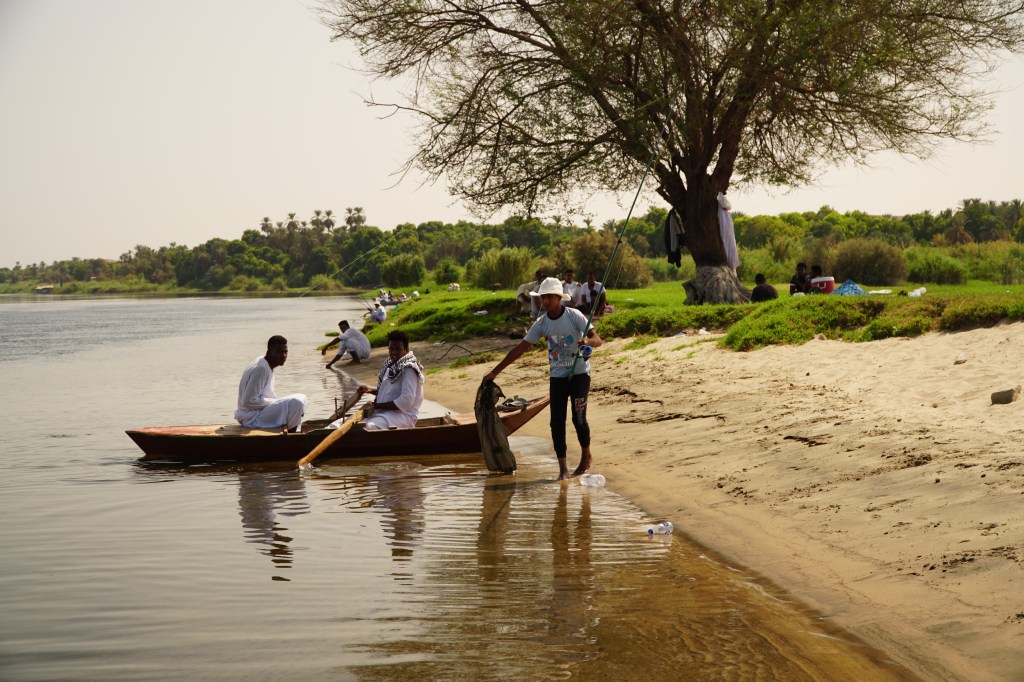
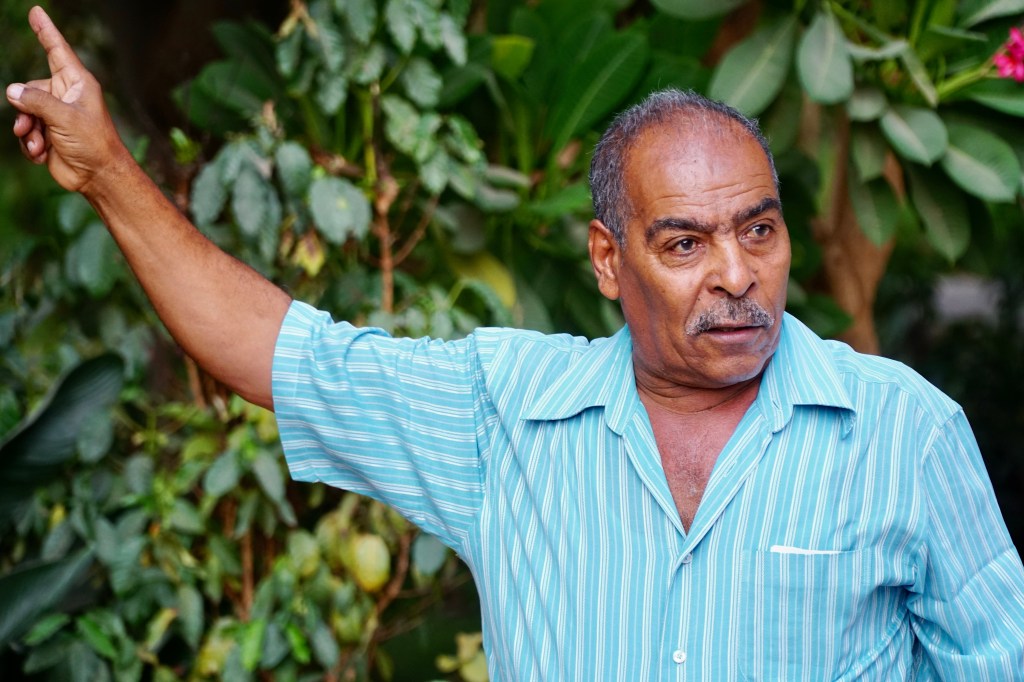
We wake up early for a birding motor boat trip on the Nile. Our guide is Mohammad Arabi aka “The Birdman of Aswan”. We saw many types of herons, egrets and ducks. After cruising the river for awhile we docked on Kitchener’s Island to have a tour of a beautiful botanical garden.

Purple Heron

Philae Temple

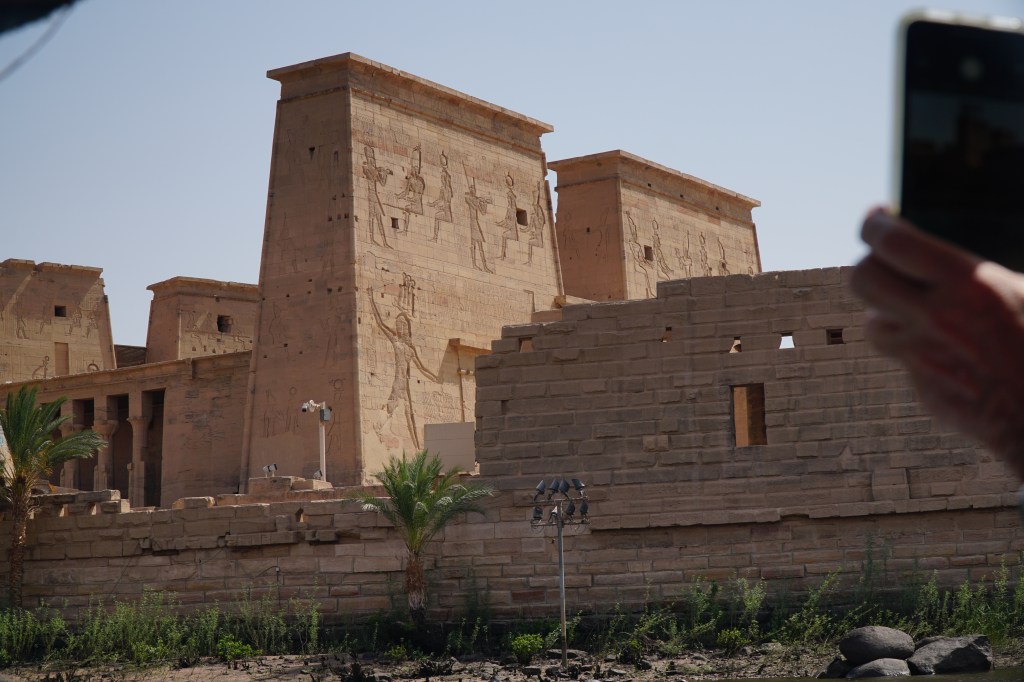
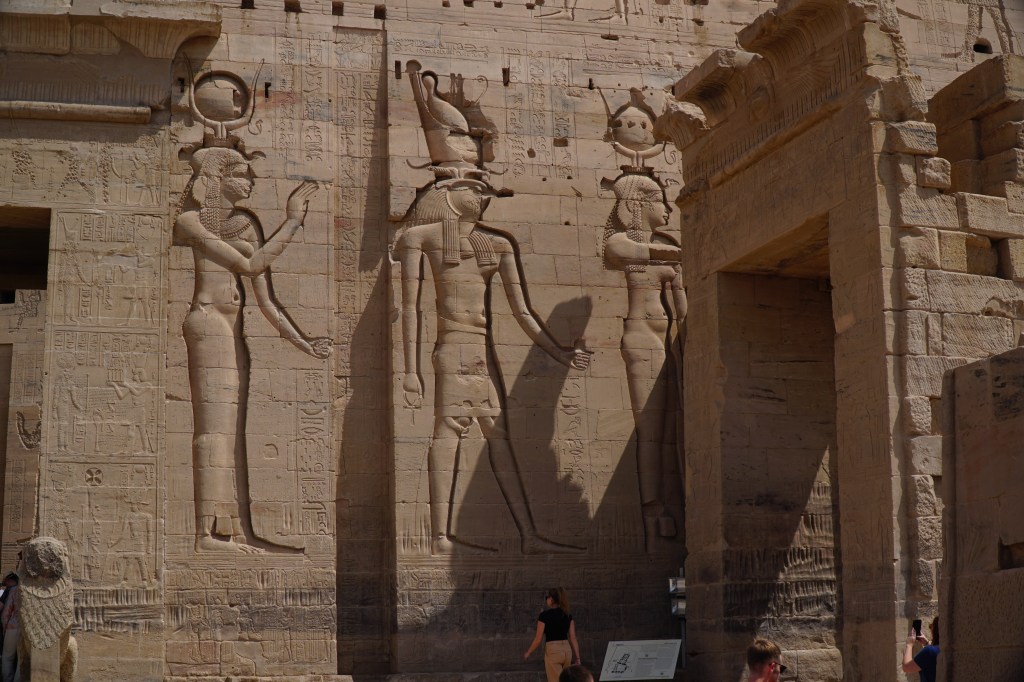
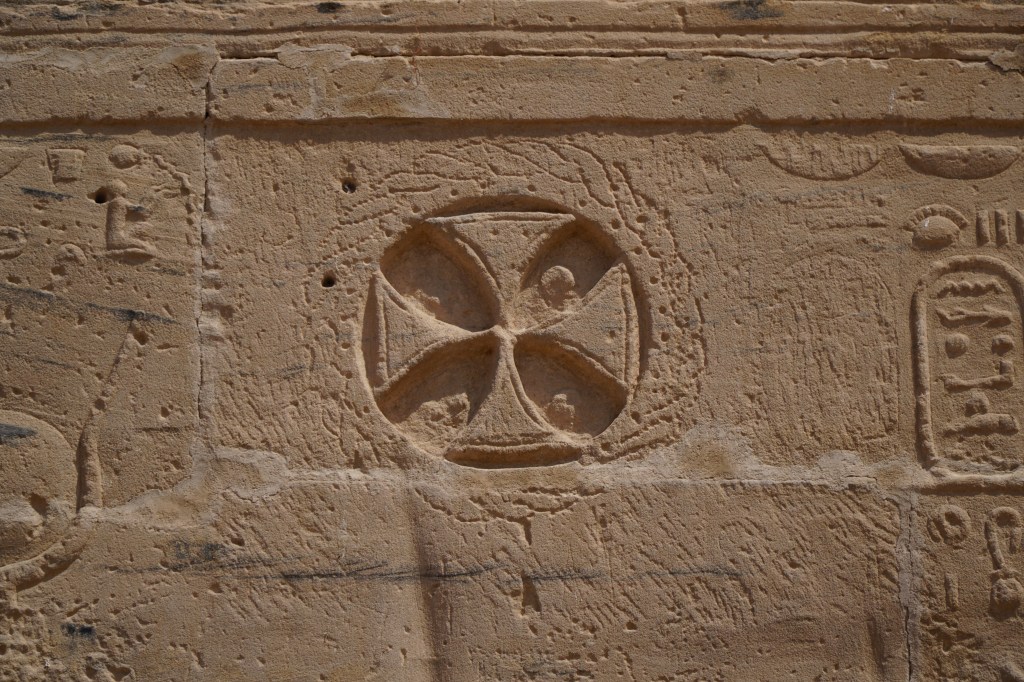
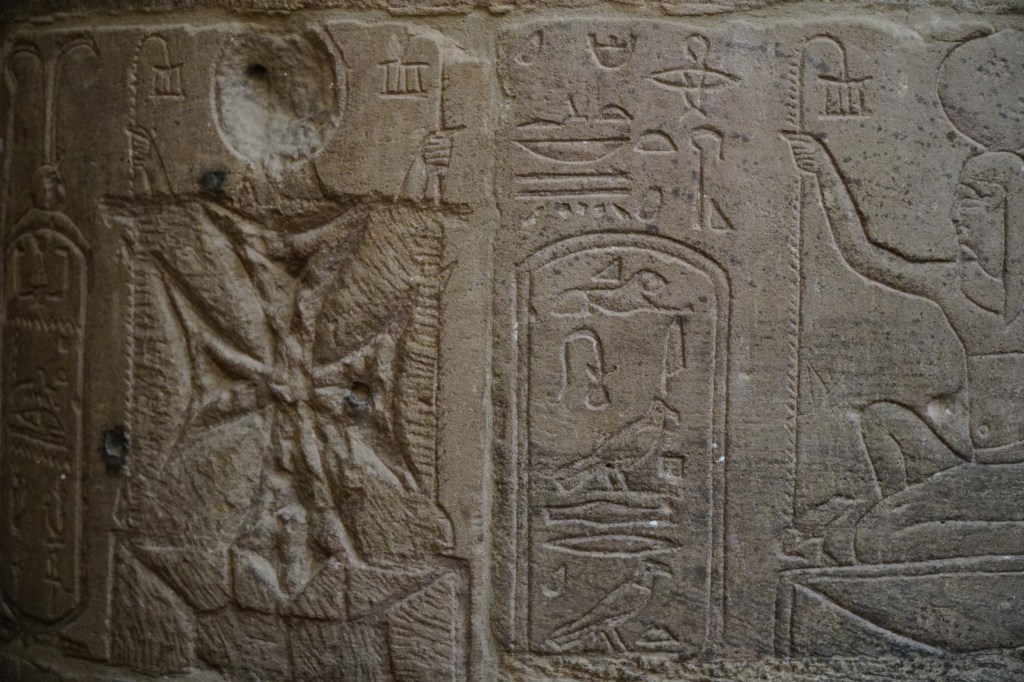
We have another boat trip this morning to an island to visit our last temple of the trip. This temple is honoring the goddess Isis. She is the wife of Osiris and mother of Horus. Egyptian gods associated with the Pharoahs.

Temple of Isis

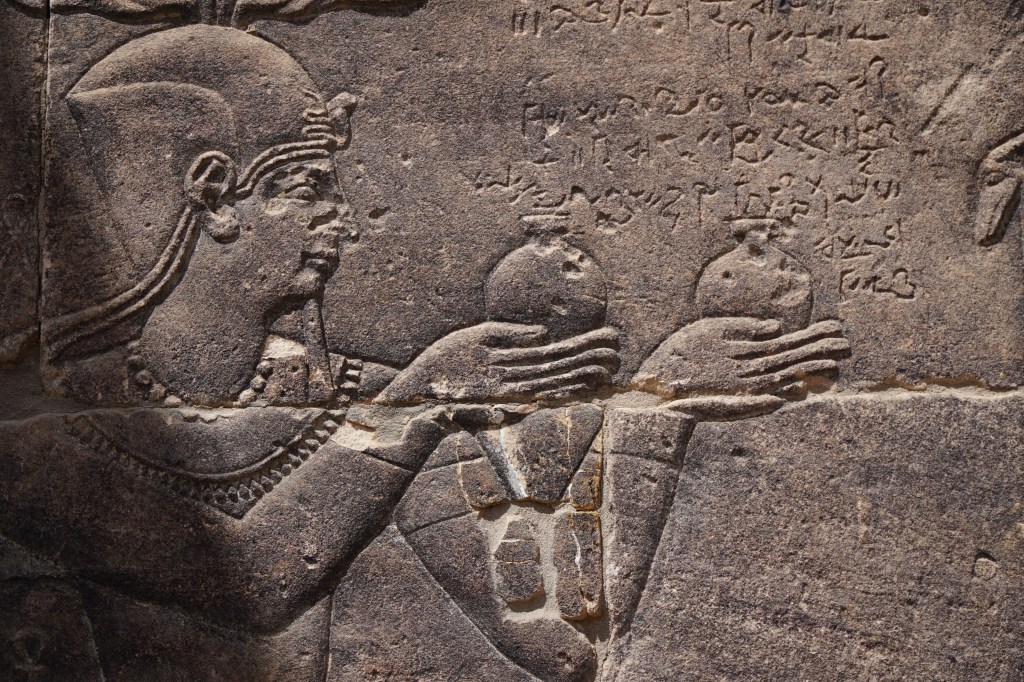
This temple was built in the Greek and Roman times. There is even a Kiosk to Emperor Trajan.
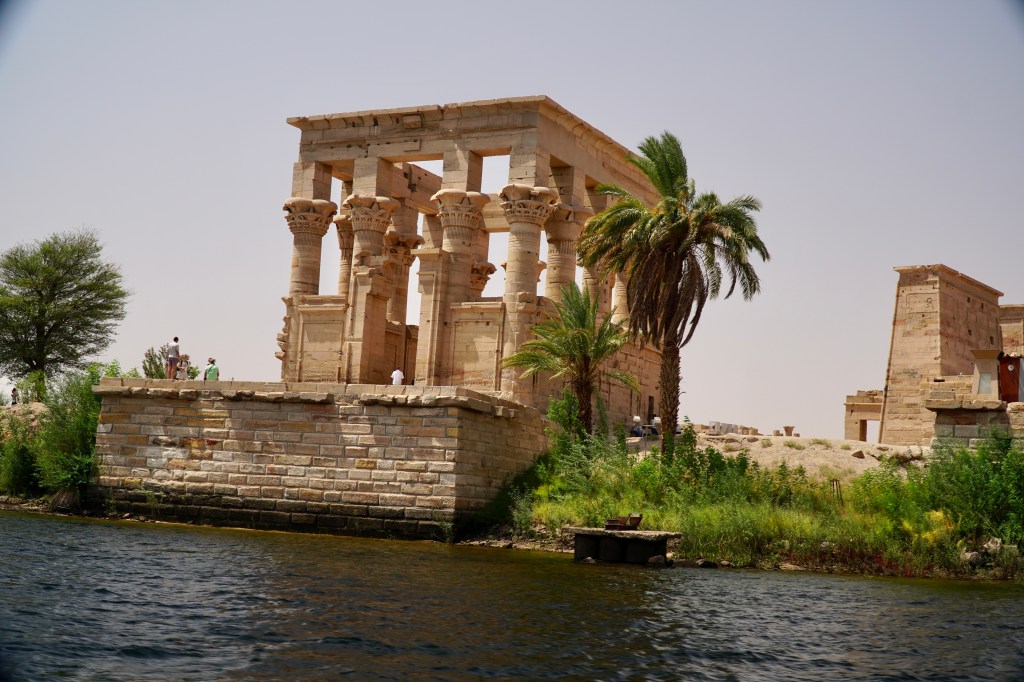
In honor of Roan Emperor Trajan

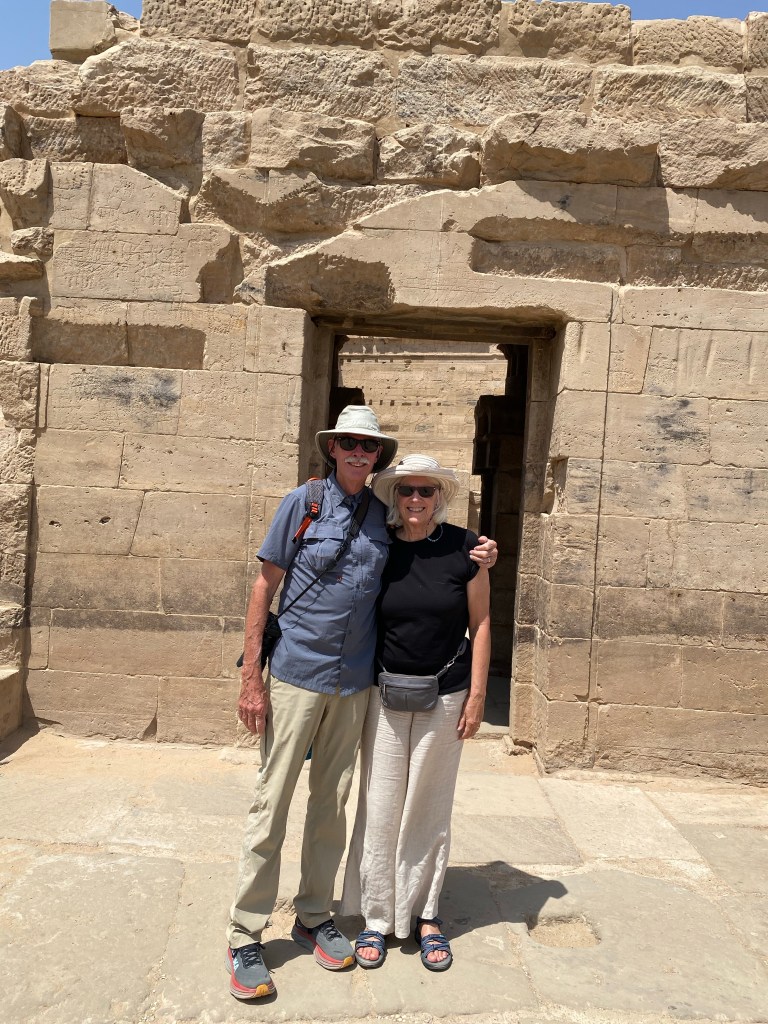
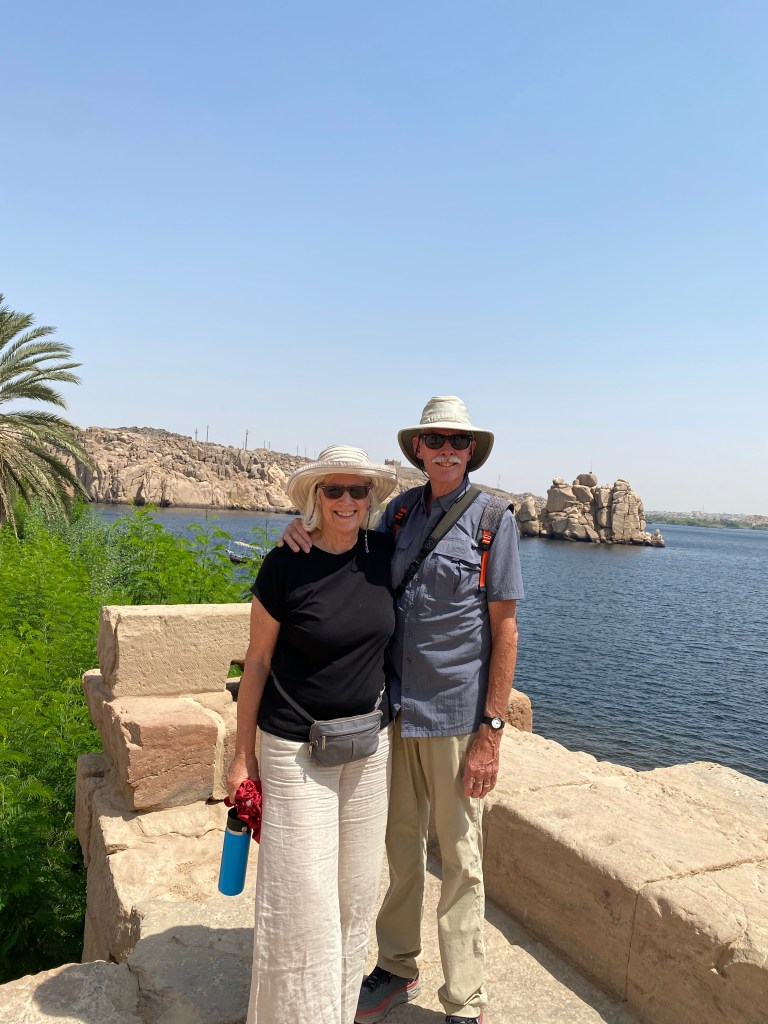
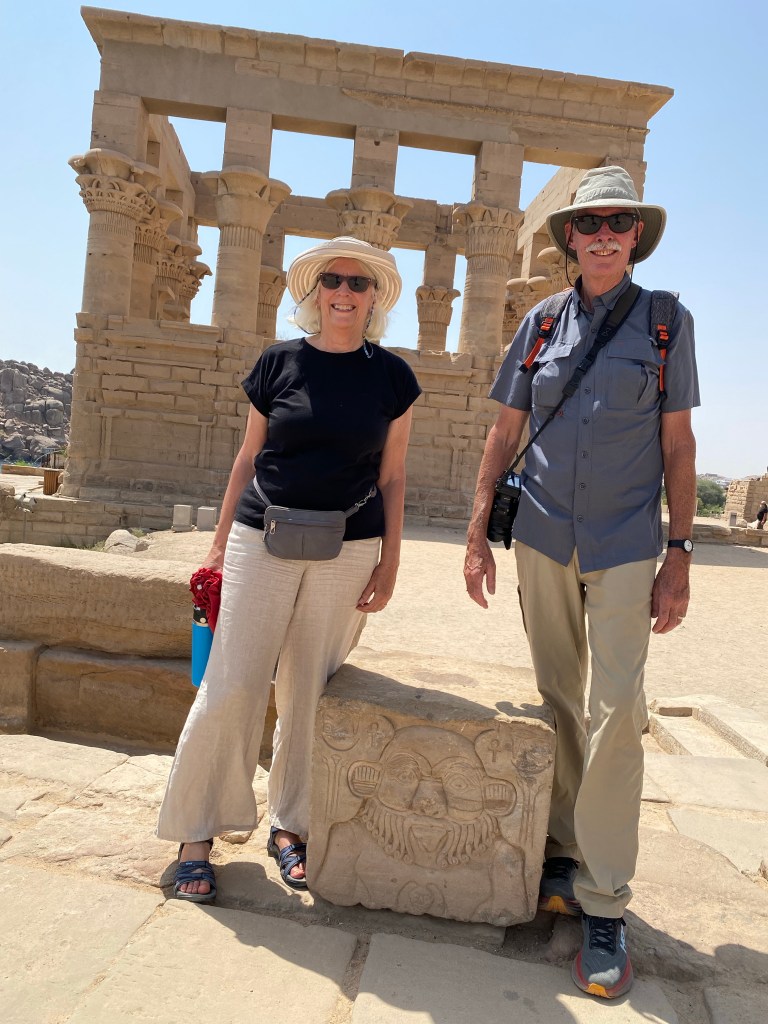
A policeman offered to take some photos of us and we gave him a tip. I am sure they are not paid much and this is a way for them to make more money.
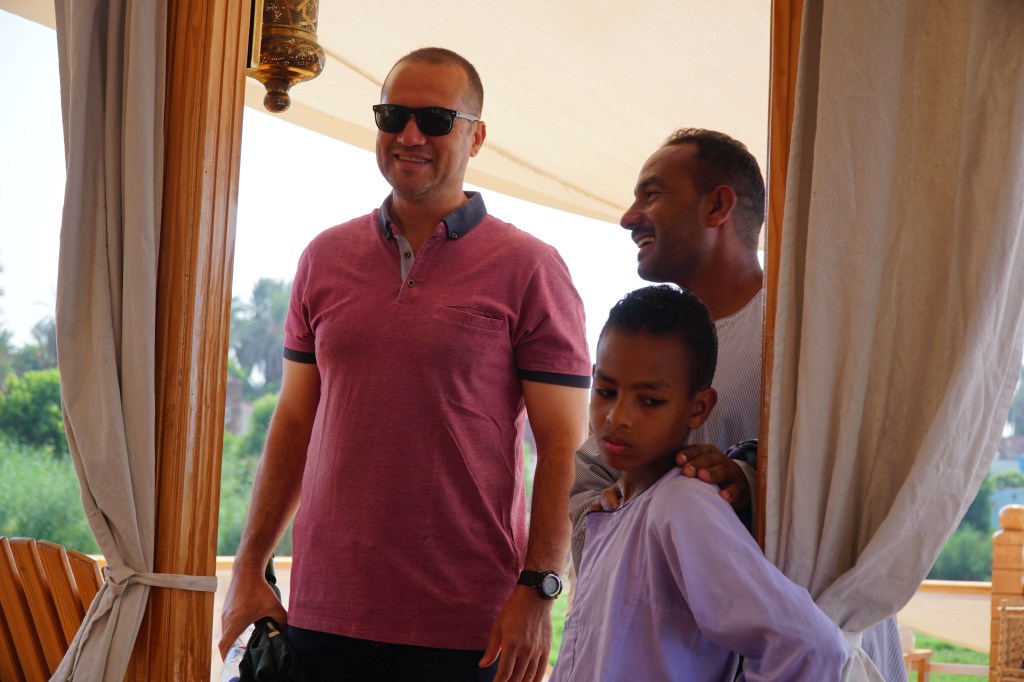
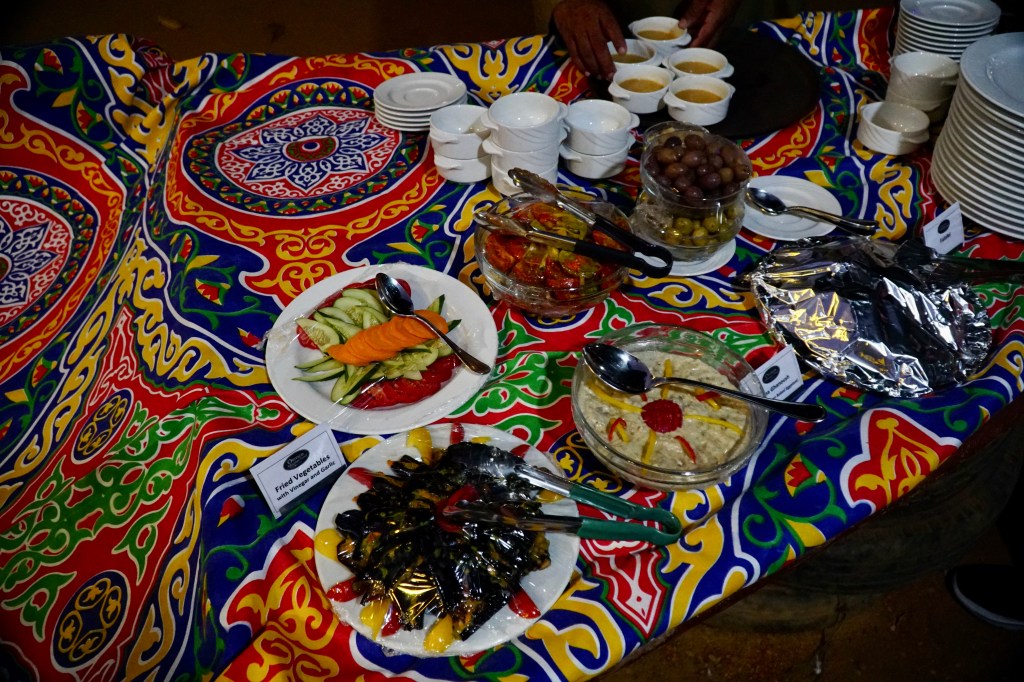
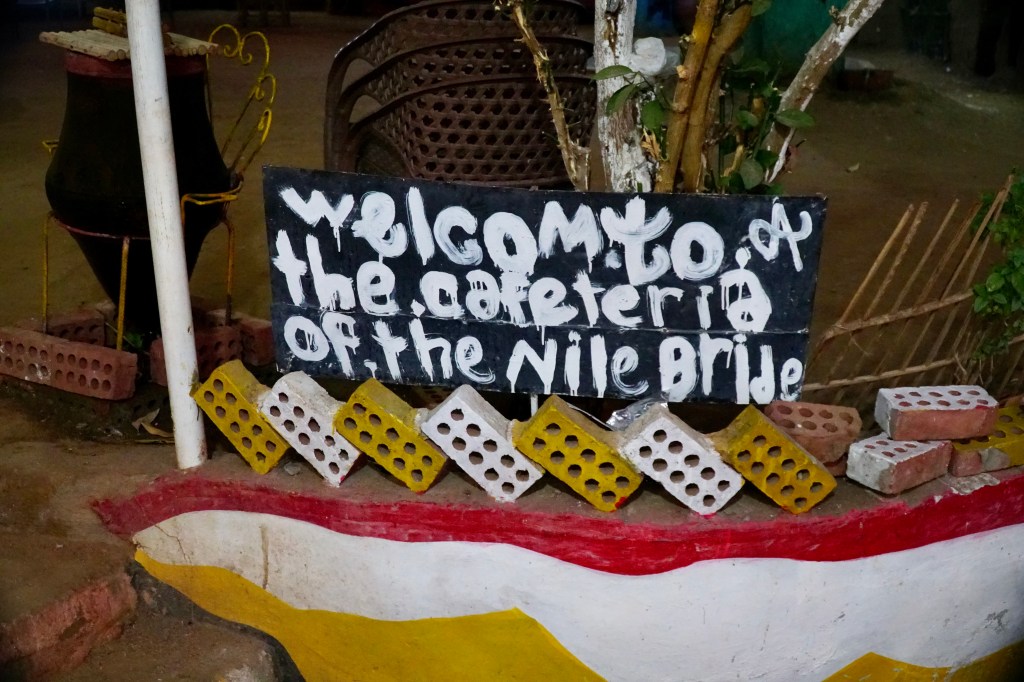
We hop into the boat again to travel to a Nubian restaurant for lunch.

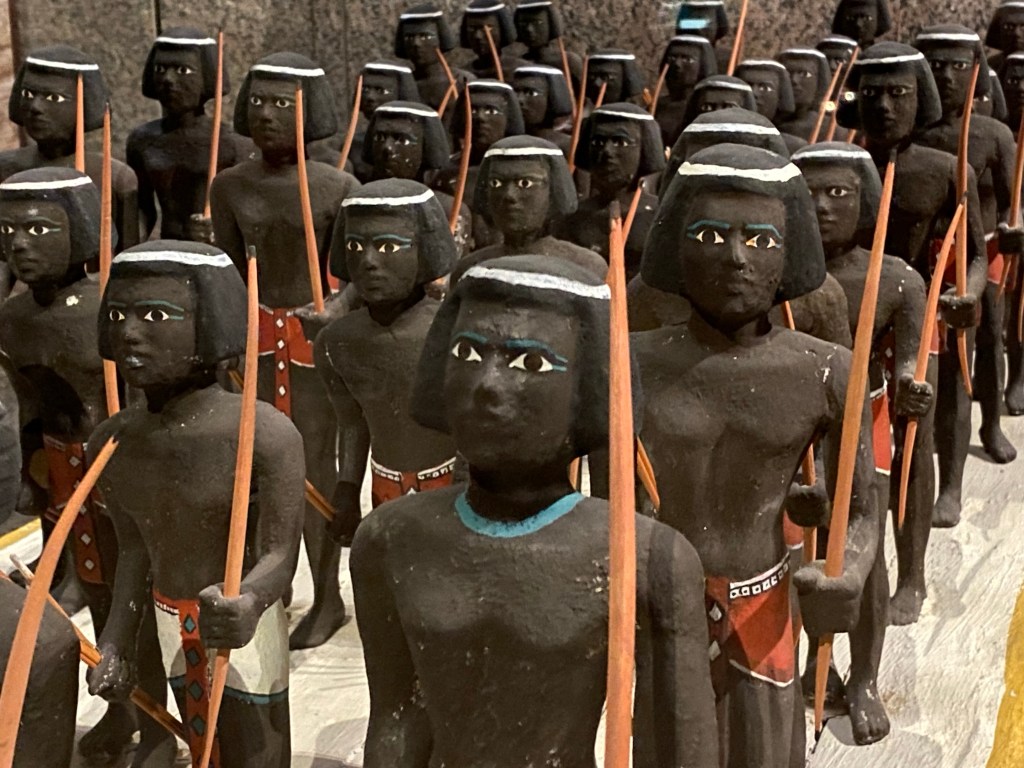
In our free time we visited the Nubian Museum. The Nubians live in what is now southern Egypt and Northern Sudan.

We ended the day with a nice farewell dinner at the Cararact Hotel.

Aswan

(Since we are stuck in Frankfurt, Germany because of a flight cancelation, I can catch up on the blog posts.)

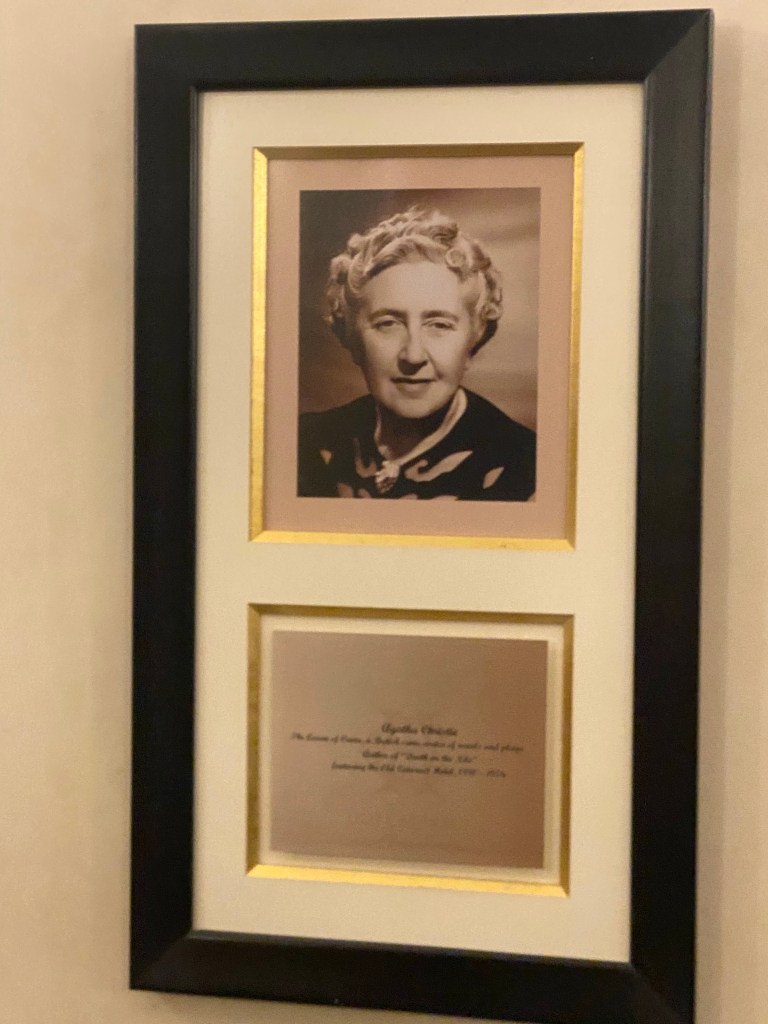
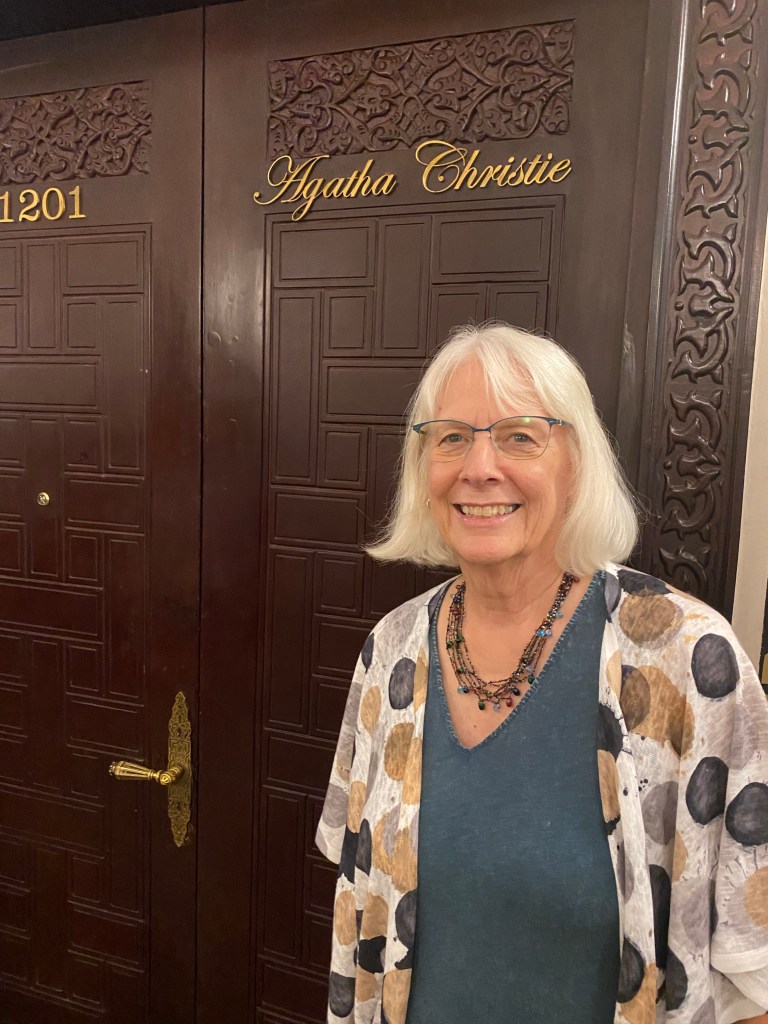
Our hotel in Aswan is the historic Old Cataract Hotel. Many heads of state and famous people have stayed here. It is famous for being the site where Agatha Christie wrote “Death on the Nile”. We took a tour of the hotel and saw the Agatha Christie Room and the William Churchill room.
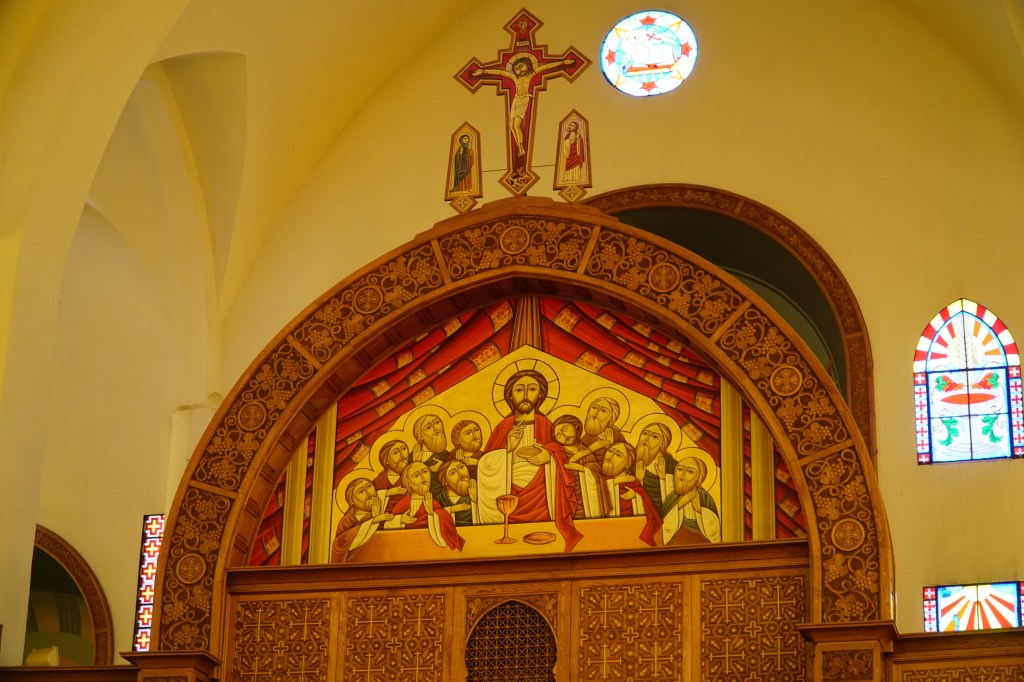
Tim and I took a tour of the Coptic Orthodox Church. The Coptic Church is thought to have begun when the apostle, Mark, brought Christianity to Egypt. It was beautiful. They also are quite proud of the fact that the Holy Family fled to Egypt.

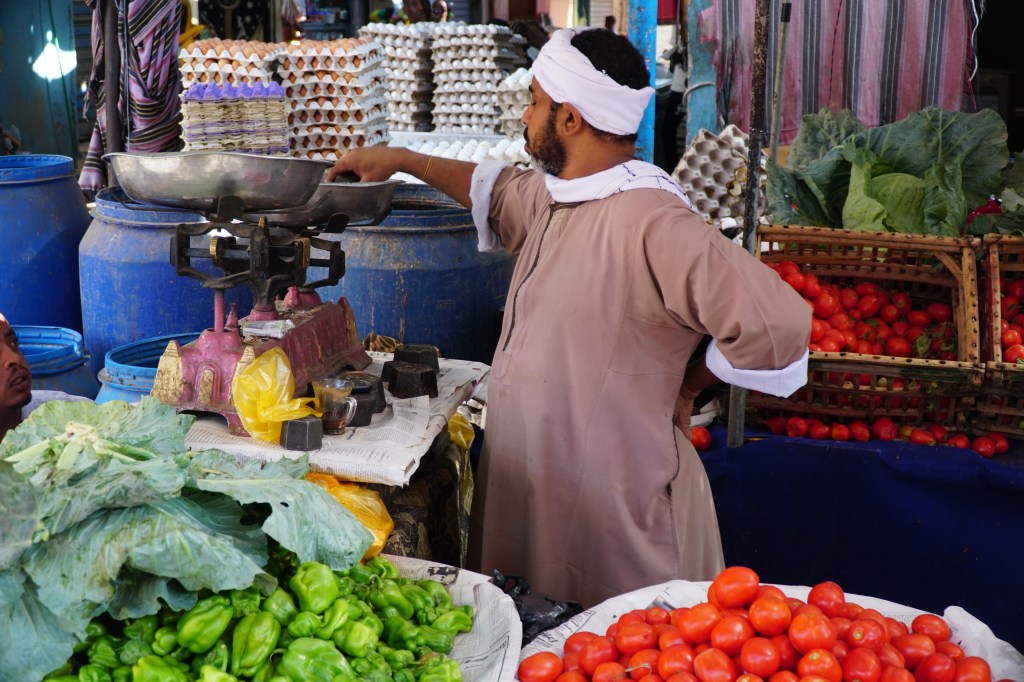
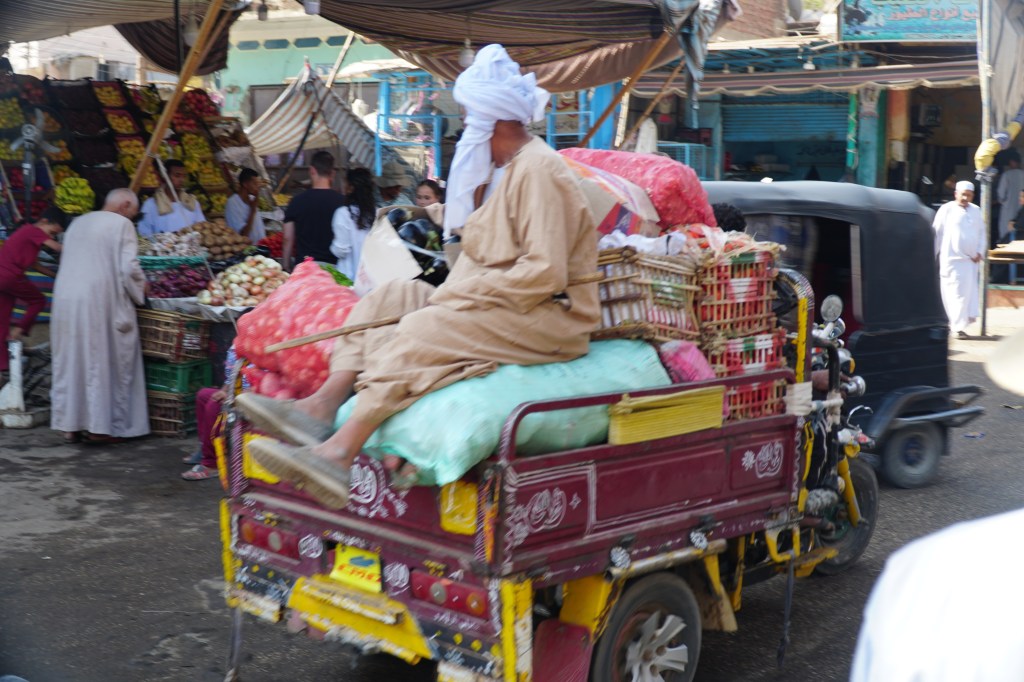
Later in the afternoon we went to explore the Aswan Spice Market.

Abu Simbel

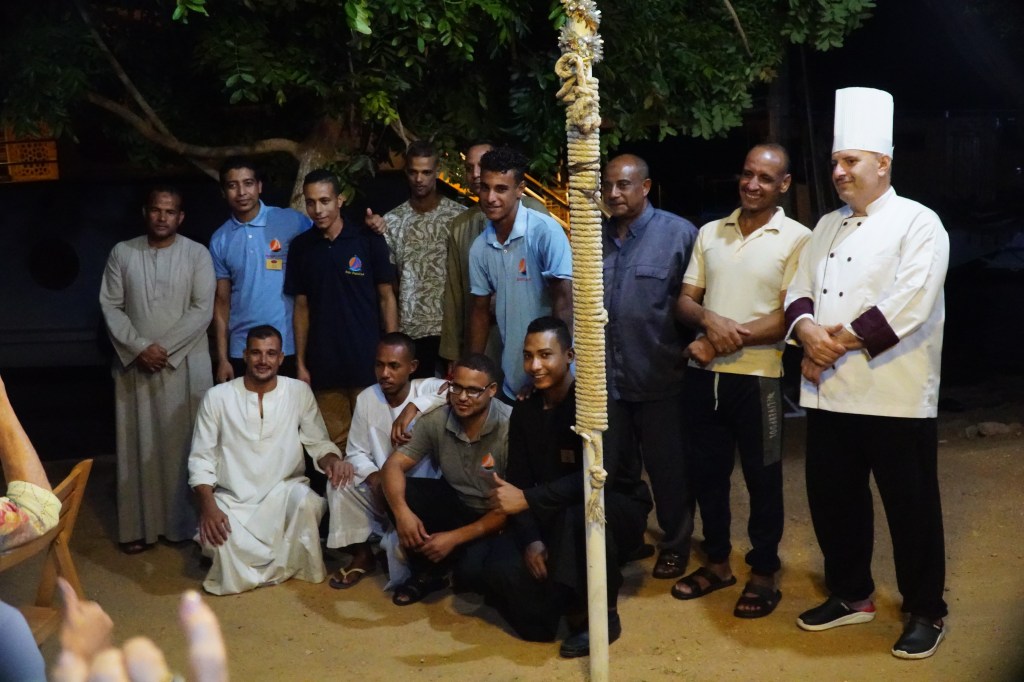
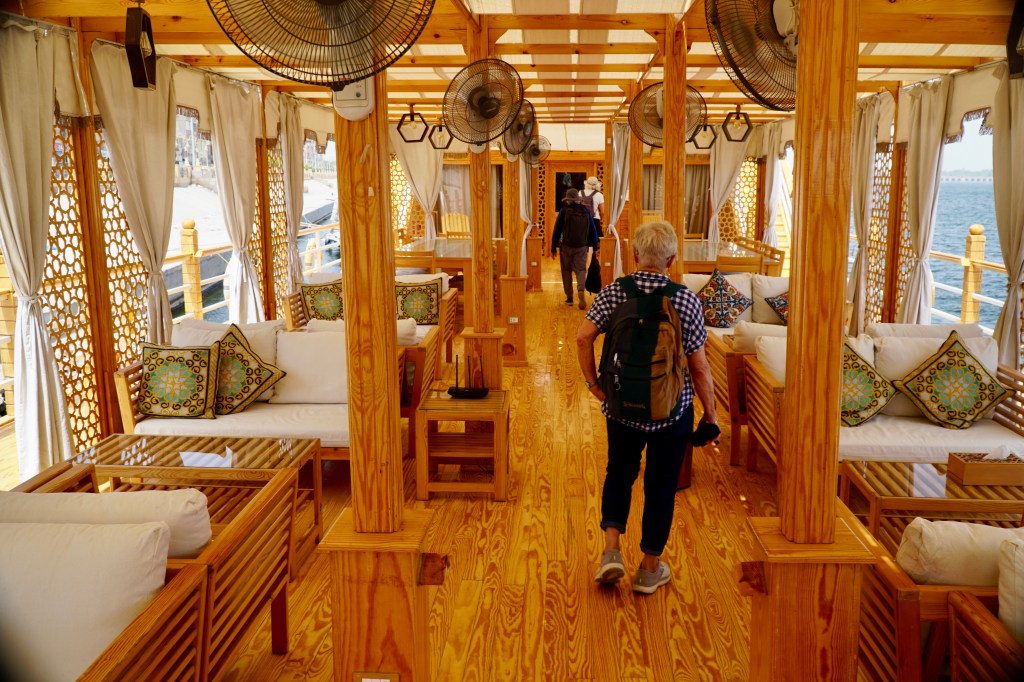
We said goodbye to the crew on the dahabeya. Their service was incredible and the food delicious. It was a lovely way to see the Nile countryside.

It is about a three hour drive from Aswan to Abu Simbel. Along the way we stop at the Aswan High Dam. When the dam was constructed under President Nasser Avery large lake was formed. An entire village of Nubian people was covered by the water destroying their way of life along the Nile. They were resettled in the desert. Several of Egypt’s antiquities were also threatened, including Abu Simbel. Under the direction of UNESCO the huge temples were moved to higher ground.
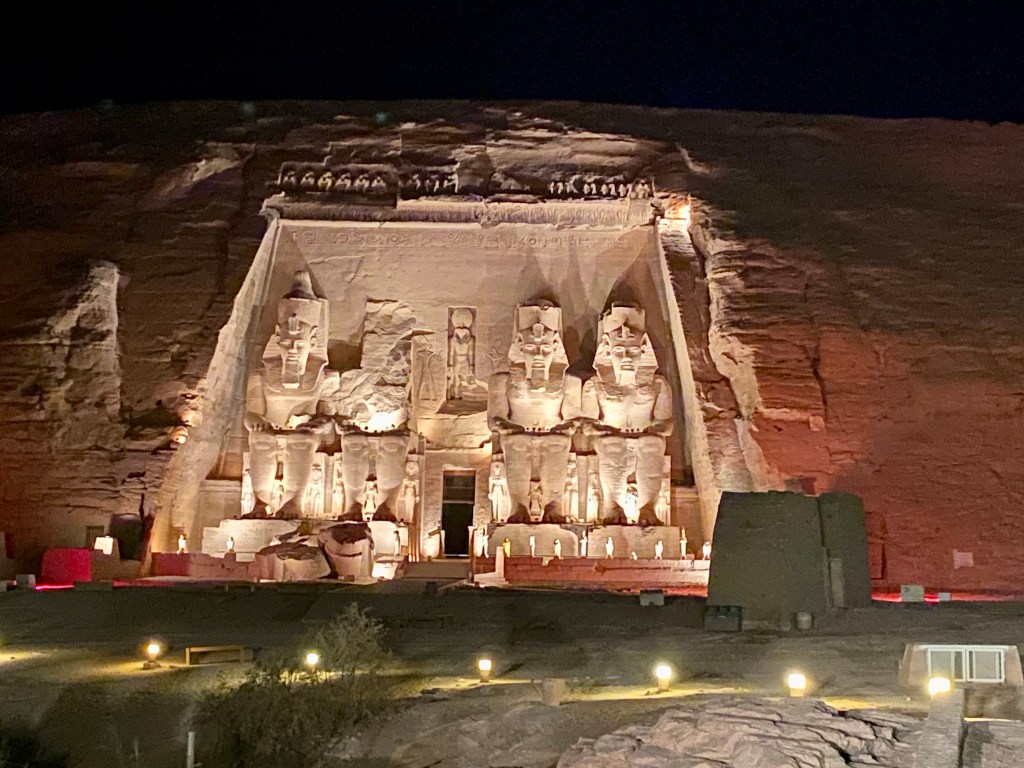
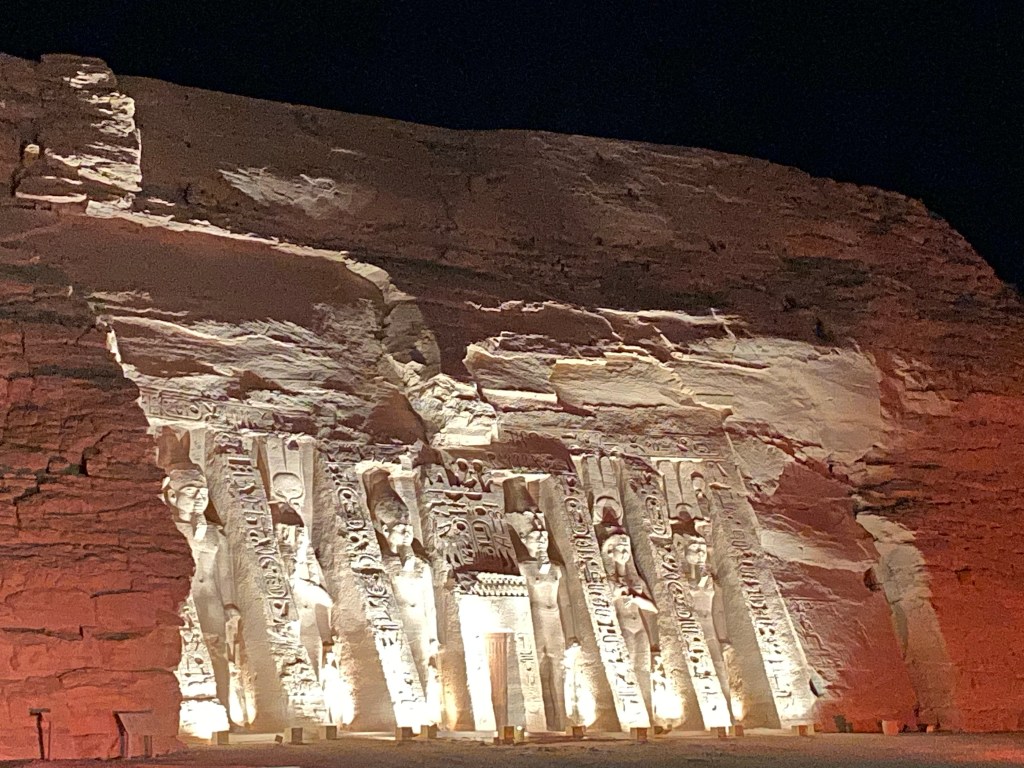
This evening we enjoy the light and sound show at the temples of Abu Simbel.
Ramses II Temple
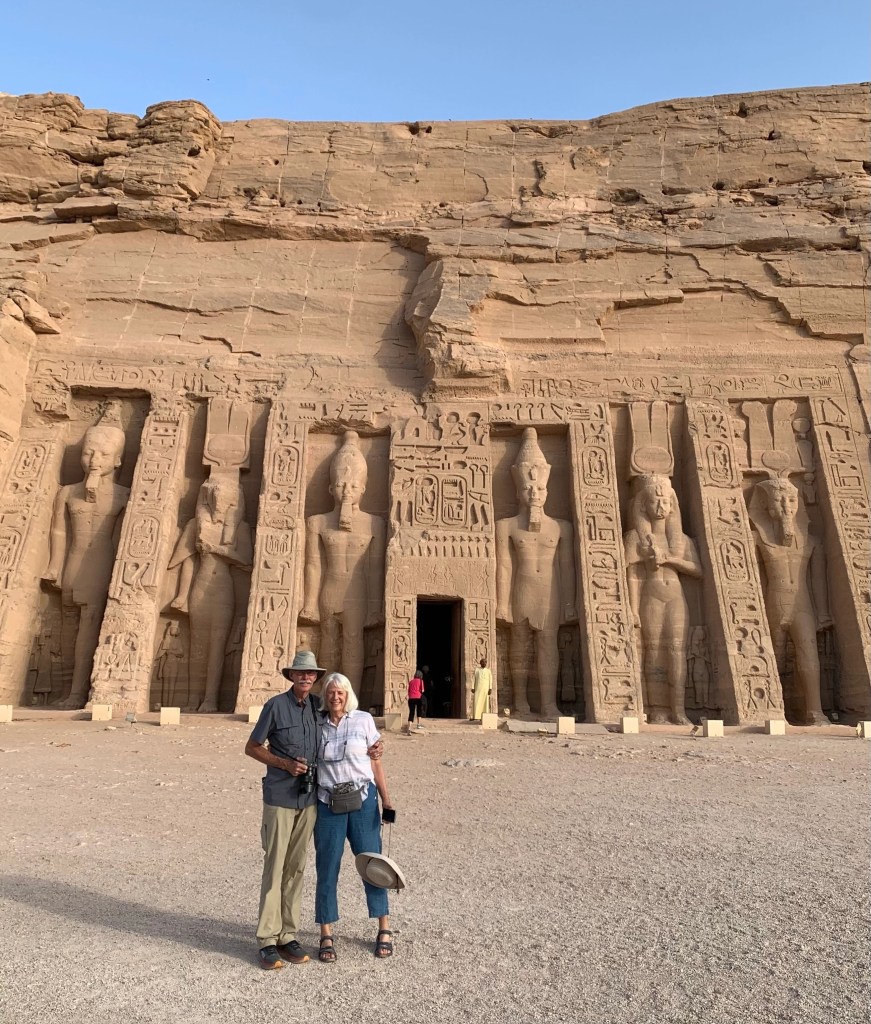
Temple to Ramses’ wife Nefertari.

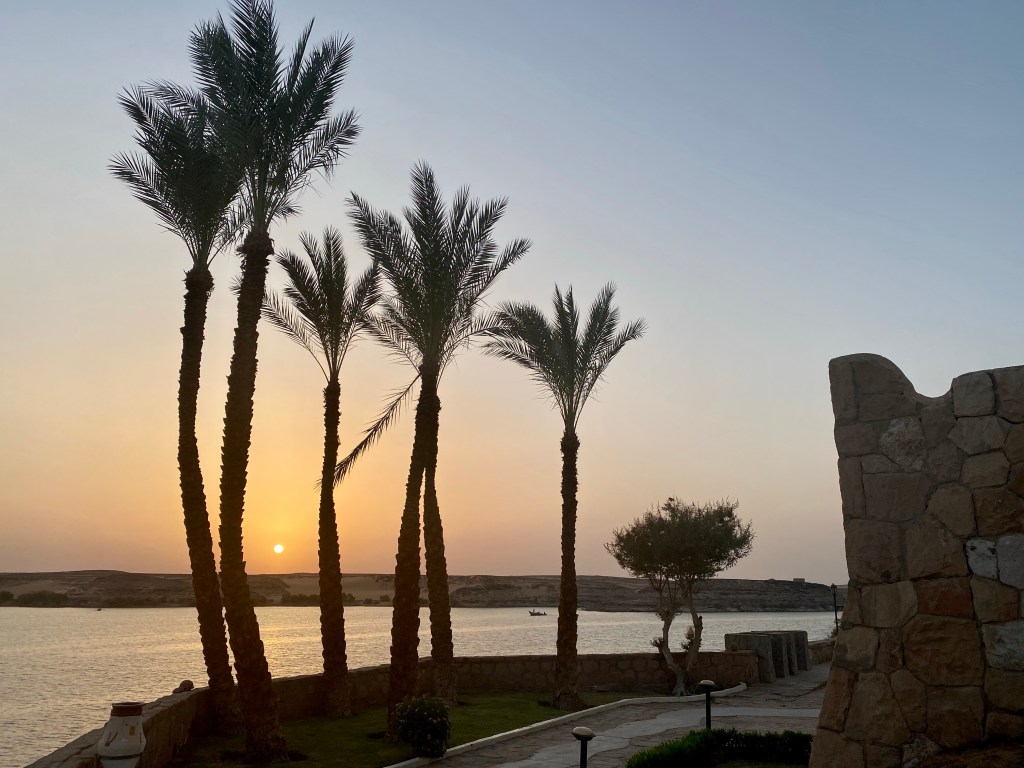
Views from our hotel had beautiful views of Lake Nasser.

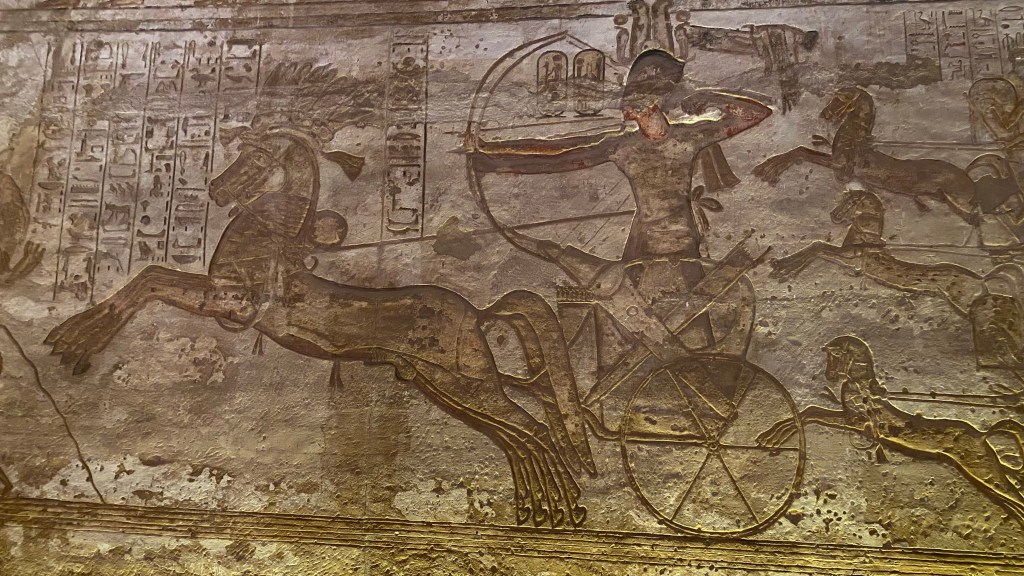
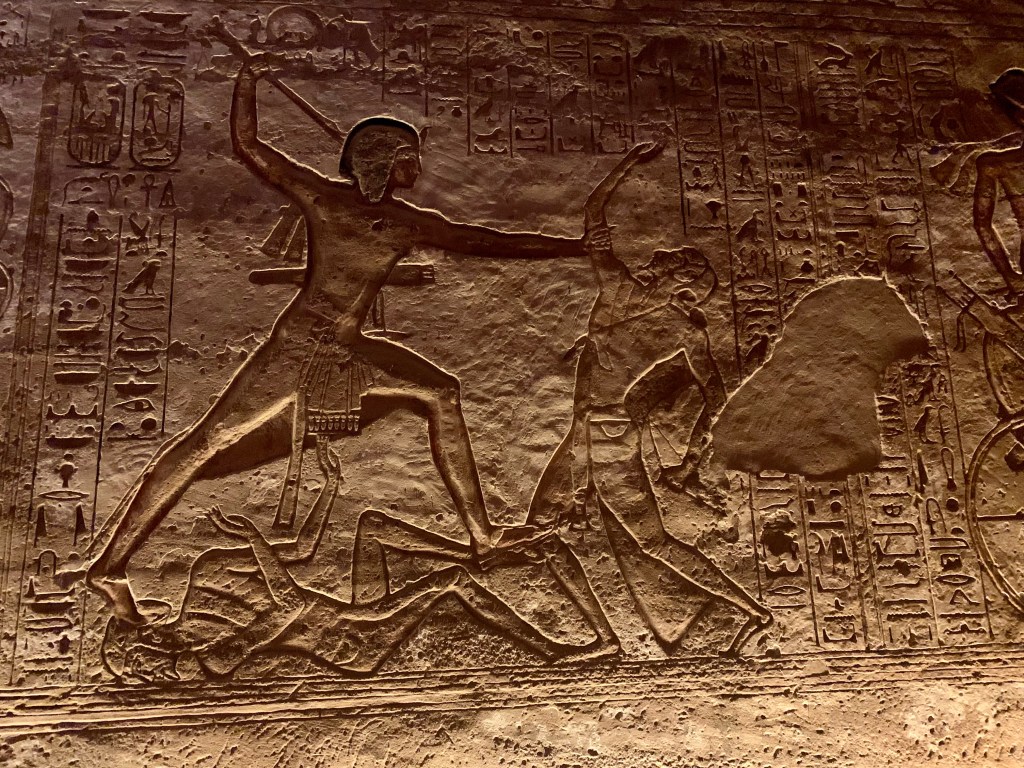
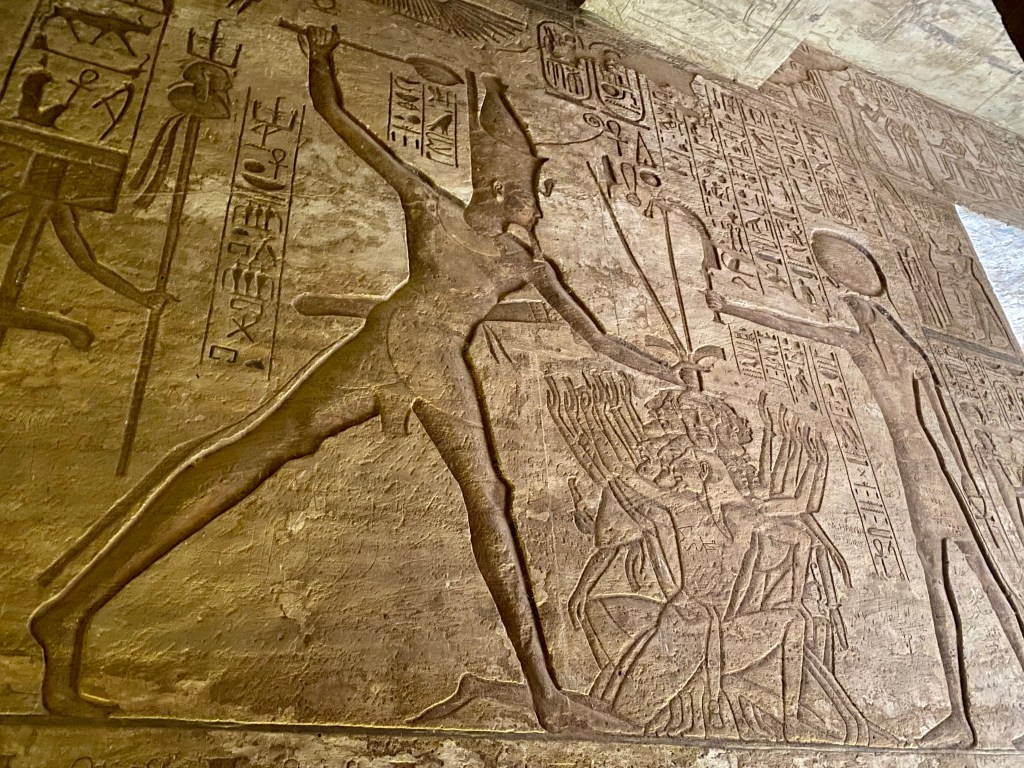
We start early the next morning to explore Abu Simbel without the heat and the hoards of tourists. It is magical. The images inside the temple chronicles a battle Ramses had with Syria. It was quite dramatic and ended in one of the first peace treaties of the time.
Nefertari’s Temple

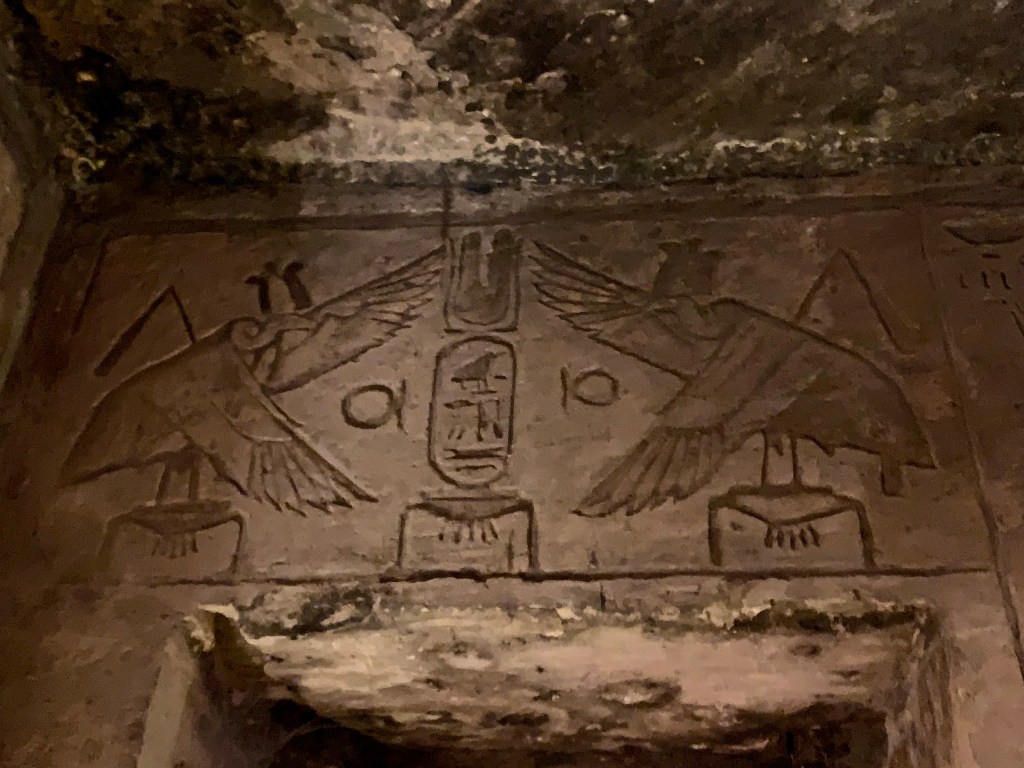
Scenes from Nefertari’s Temple.

Village of Daraw and a Dip in the Nile

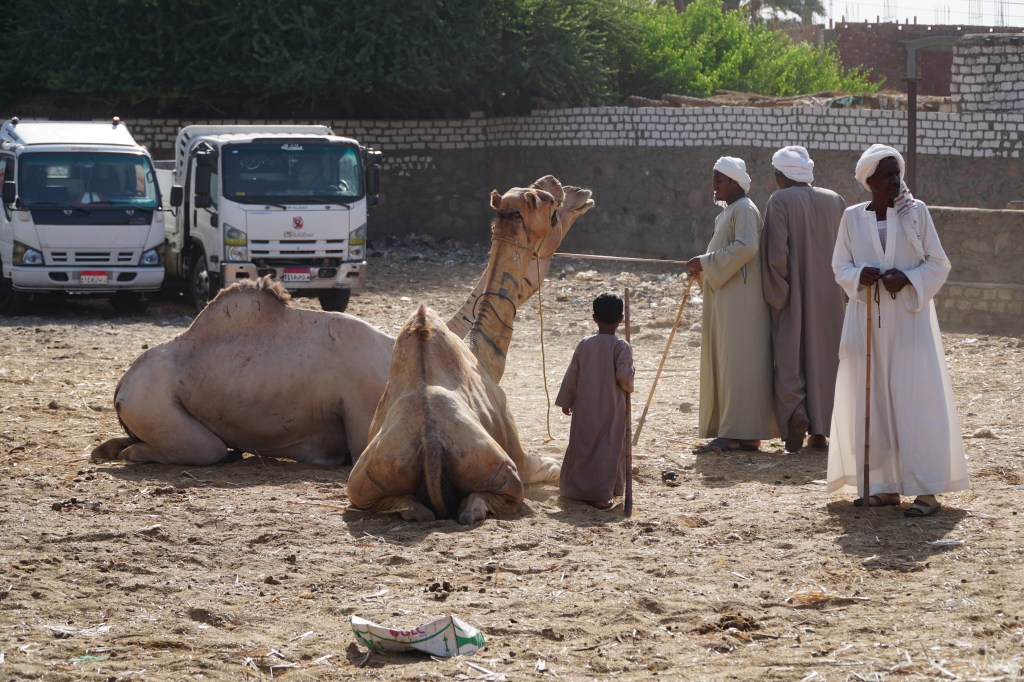
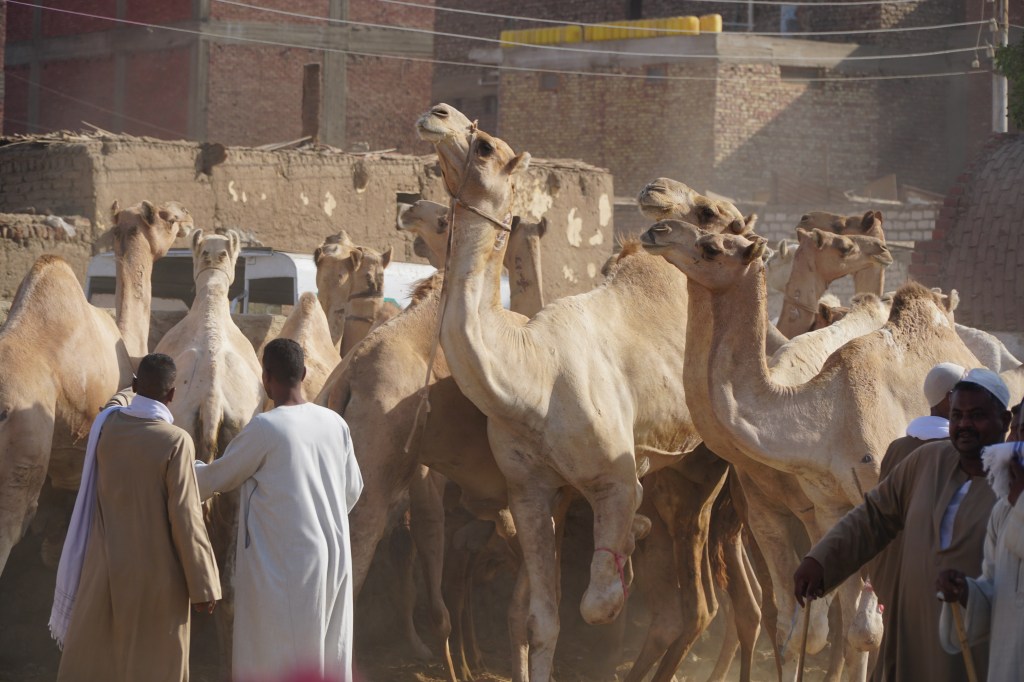
We have another very interesting visit to a village along the Nile. The village of Daraw is the home of a weekly camel market. We got to experience the auctioning of the camels to the highest bidder. The camels are exported from Sudan. There are three reasons people want to buy camels. 1. For the meat, 2. To help carry loads on the agricultural land and 3. Tourism.

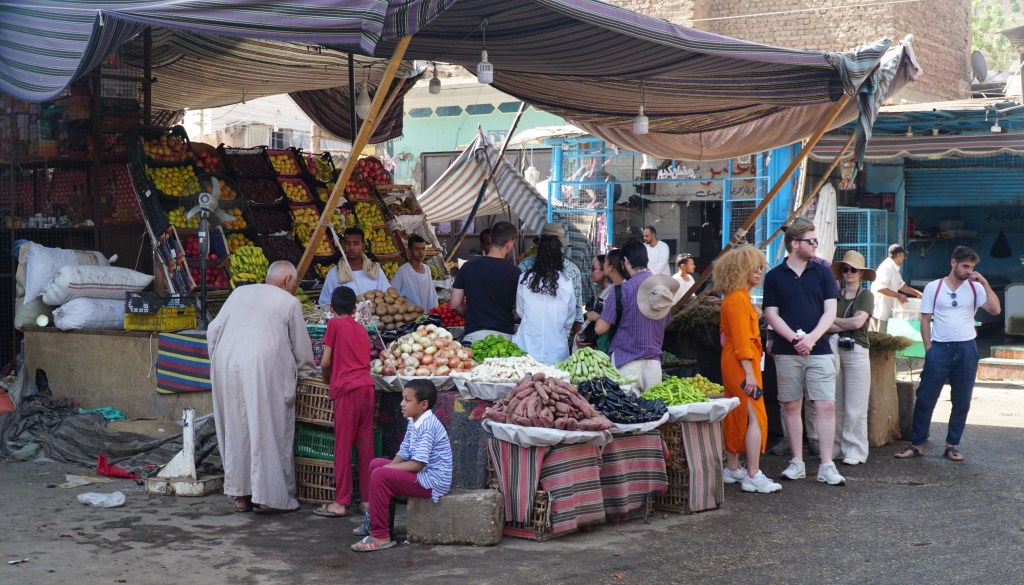
After observing the camel auction we walked through the market area of the village.

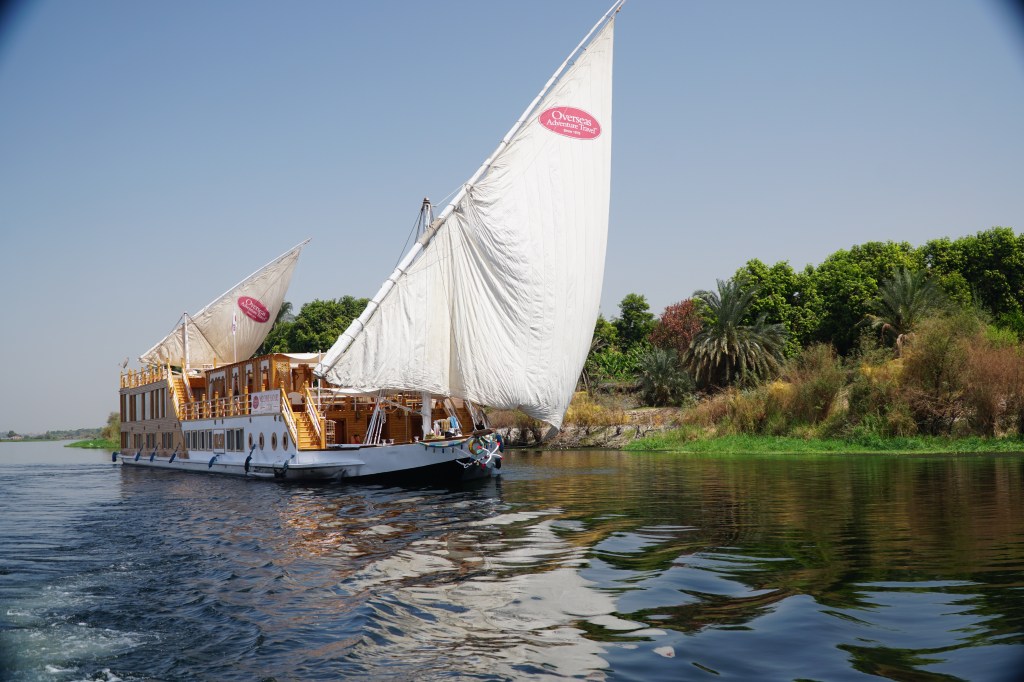
The dahabeya at full sail

We ended the afternoon watching the older Agatha Christie movie, “Death on the Nile” which was filmed at the Old Cararact Hotel in Aswan. Tomorrow we leave our boat at Aswan and check into that hotel!

Visit to Fares Island and Kom Ombo Temple

(For those following the blog, I am several days behind with posts due to poor Wi-Fi on the dahabeya. We are currently off the ship and staying at the Old Cataract Hotel in Aswan. But, back to the Nile cruise….)

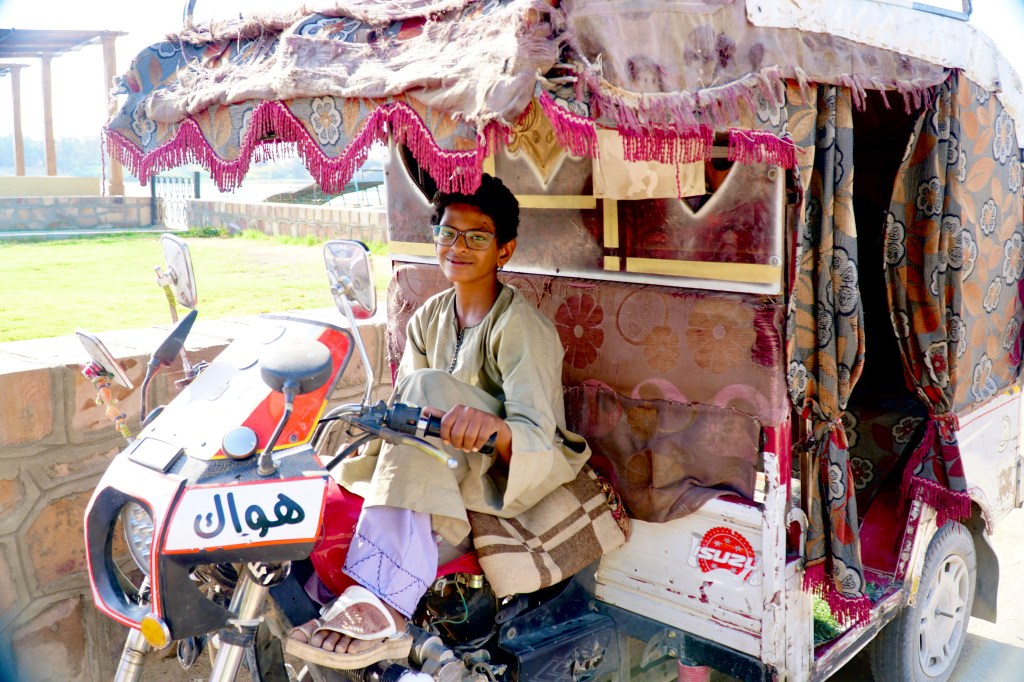
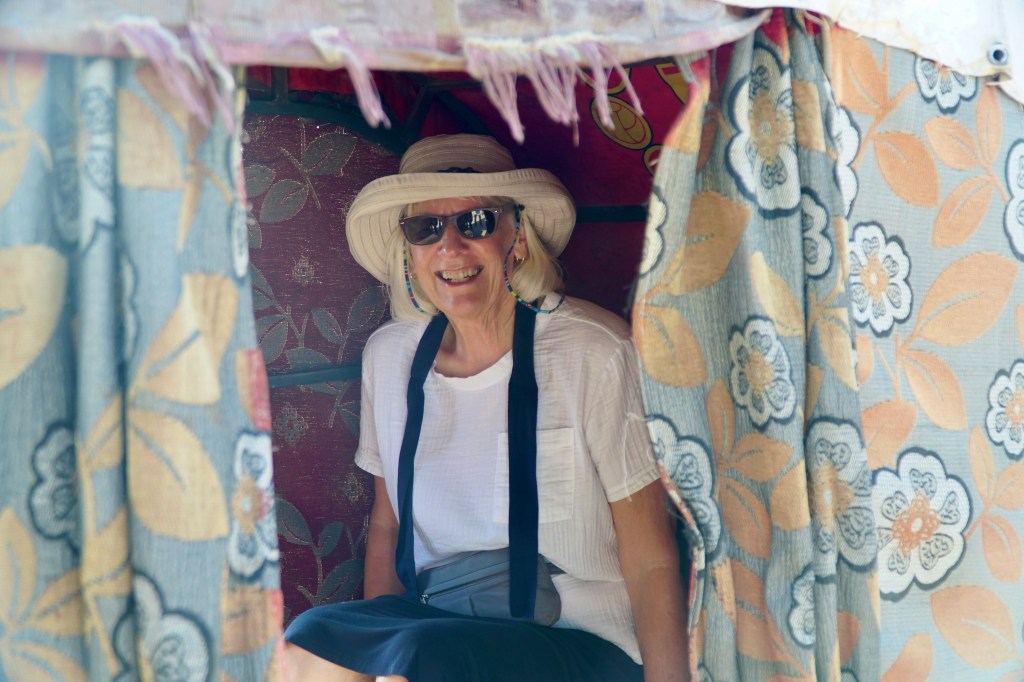
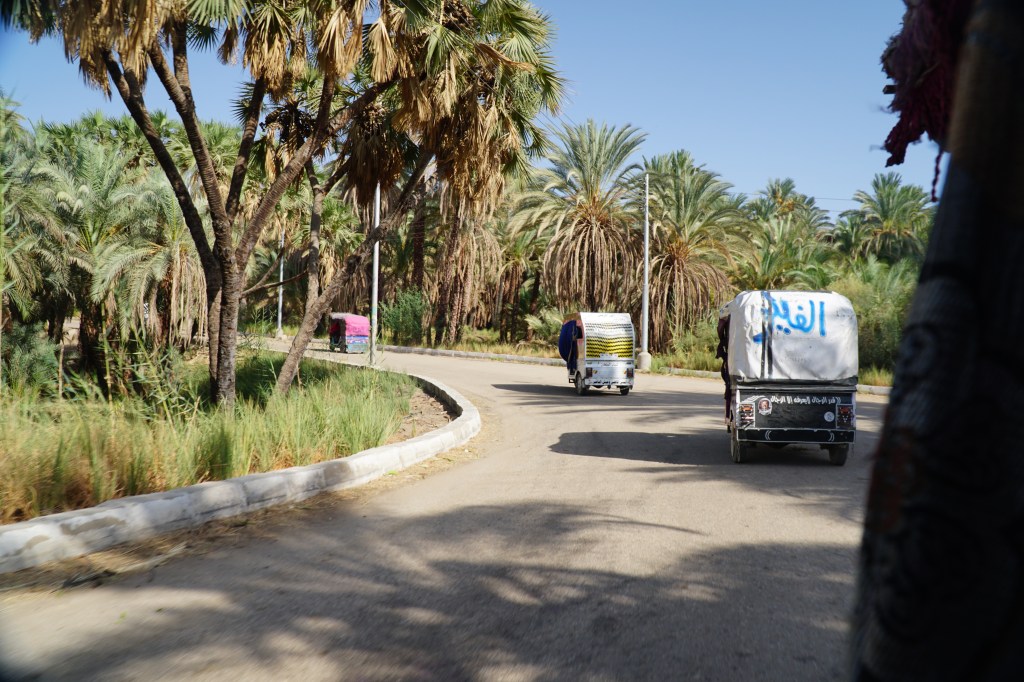
The dahabeya docks at Fares Island and we all get into Tuk tuks for a drive through the rural village.

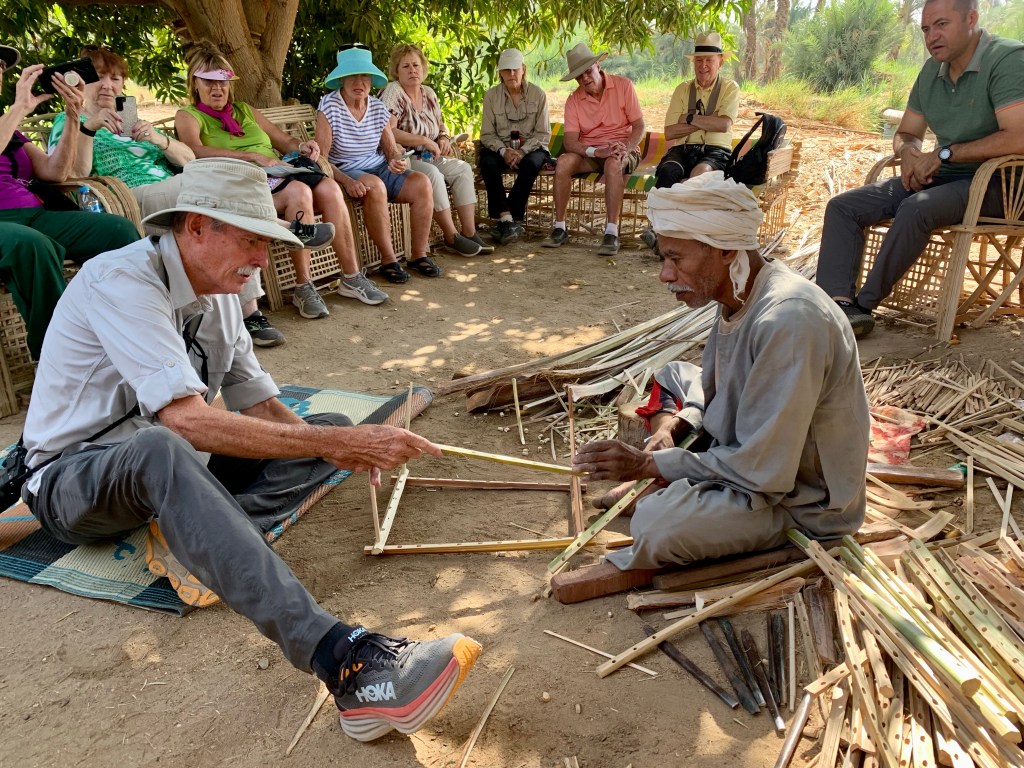
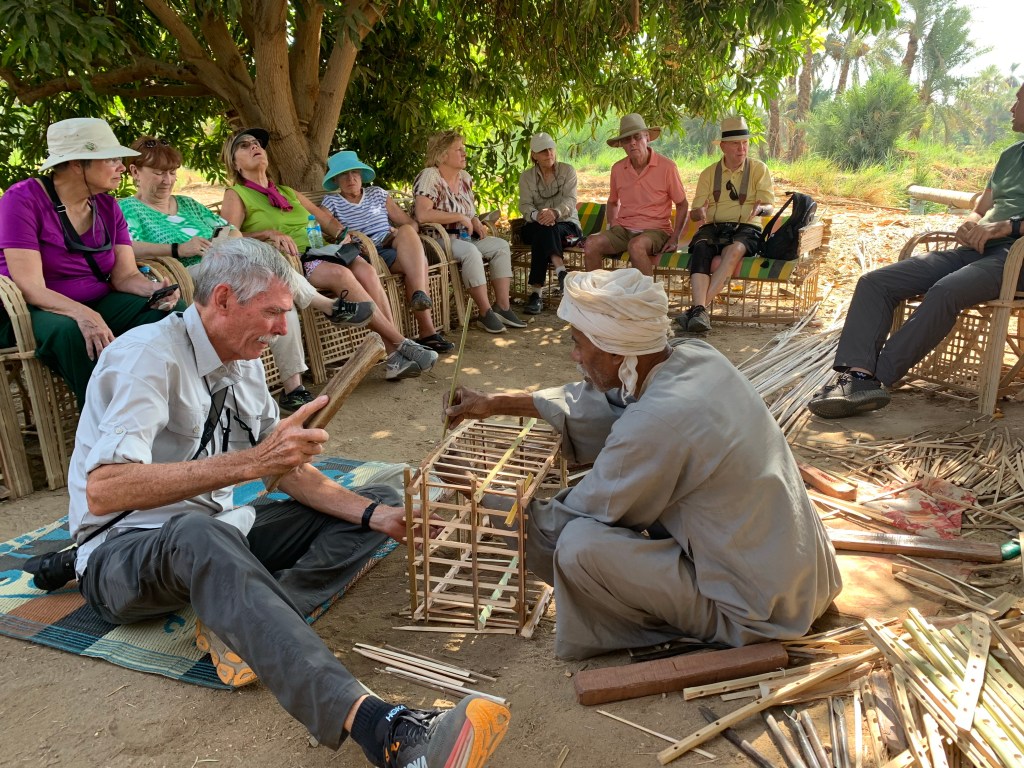
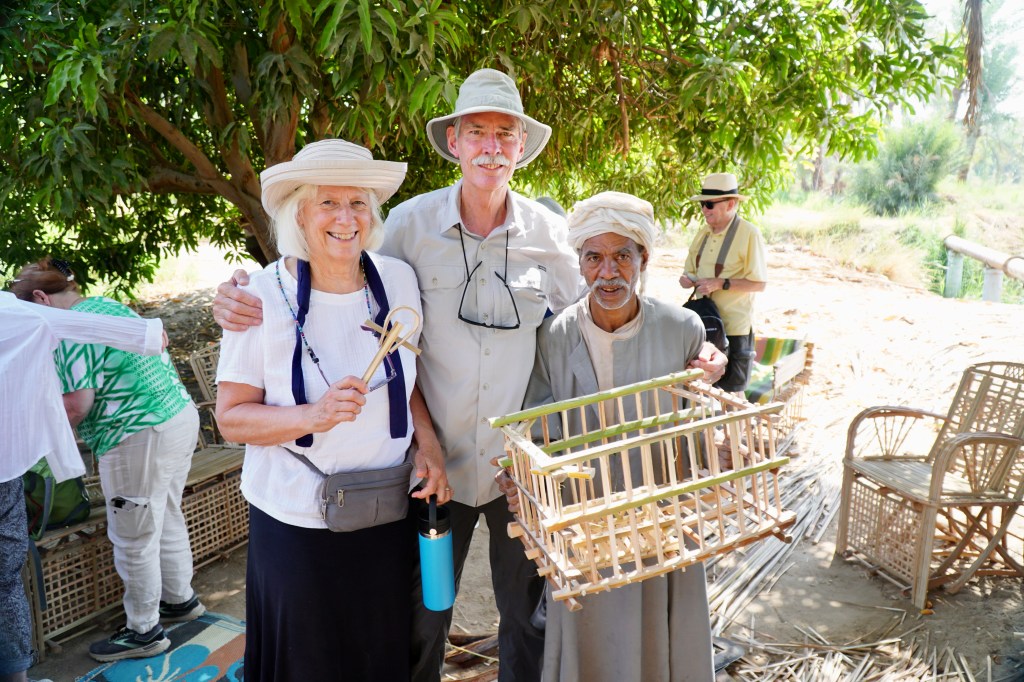
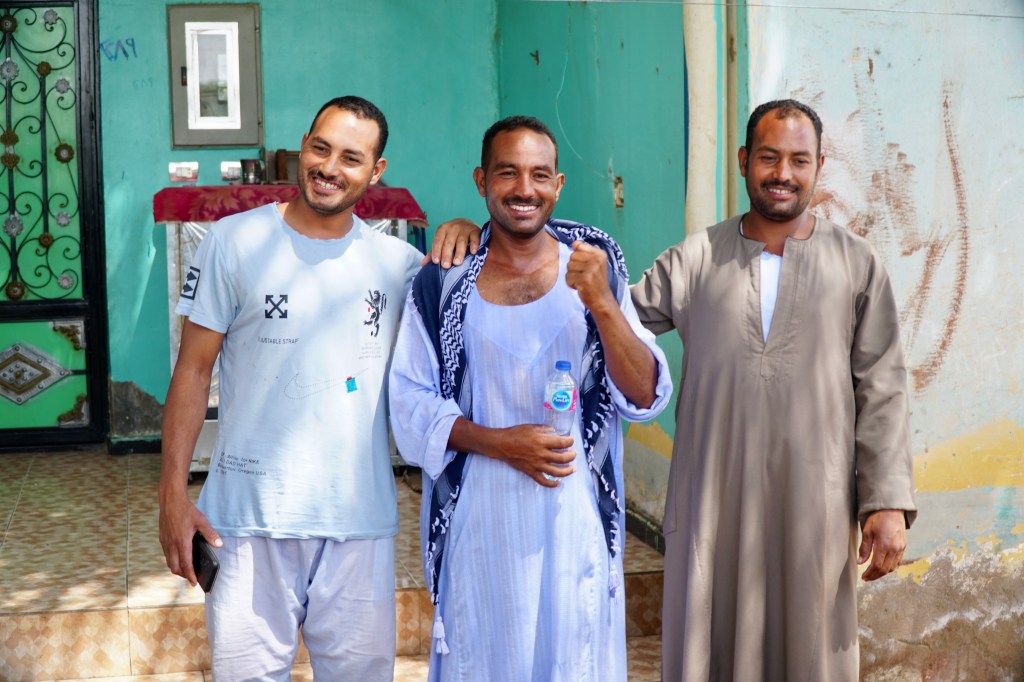
We drive past houses and crops and arrive at the home of Am Mohammad. He is a craftsman using palm branches to construct mango boxes which he sells at markets. He also crafts furniture and other items.

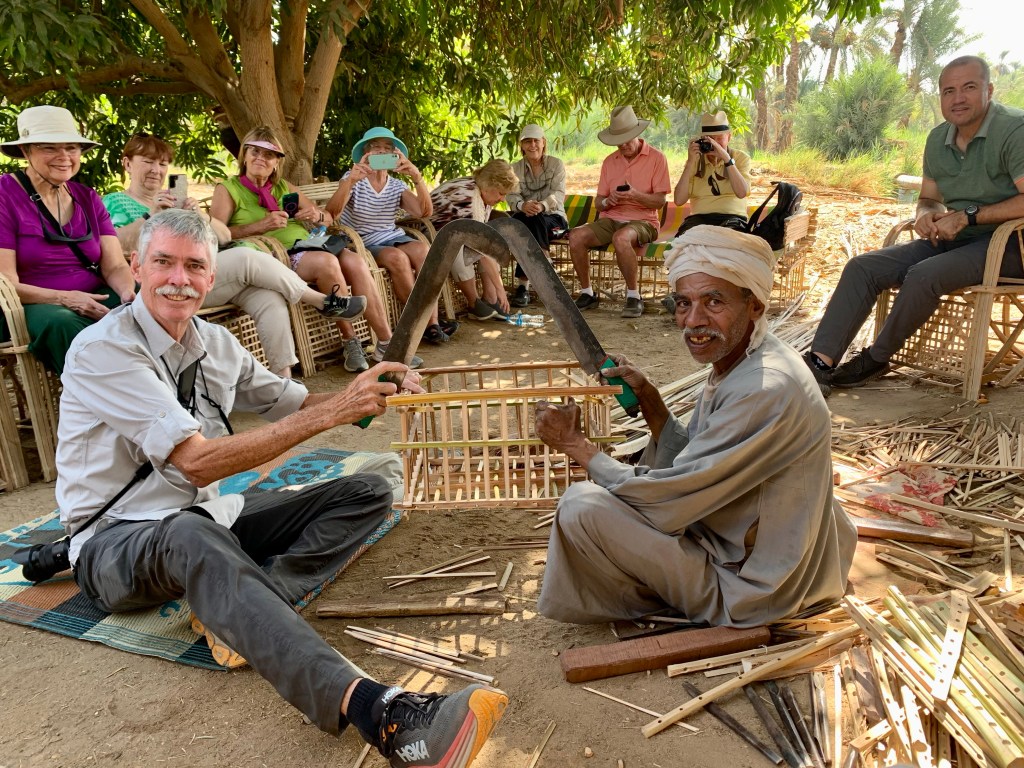
Am Mohammad with mango boxes behind him

He demonstrates making a box and the asks for a volunteer to learn. Here are some photos of Tim learning the trade. He is a kind man and he gives each a hand crafted Ankh for long life.

We return to the boat for lunch and sail to Kom Ombo to visit the temple. The temple is unique in that it is a double temple. One side dedicated to the crocodile god, Sobek, and the other side dedicated to the falcon god, Horus.

We return back to the dahabeya after our fun and interesting day.

Visit with a Farmer on Besaw Island and Gibel Silsila Sandstone Quarries

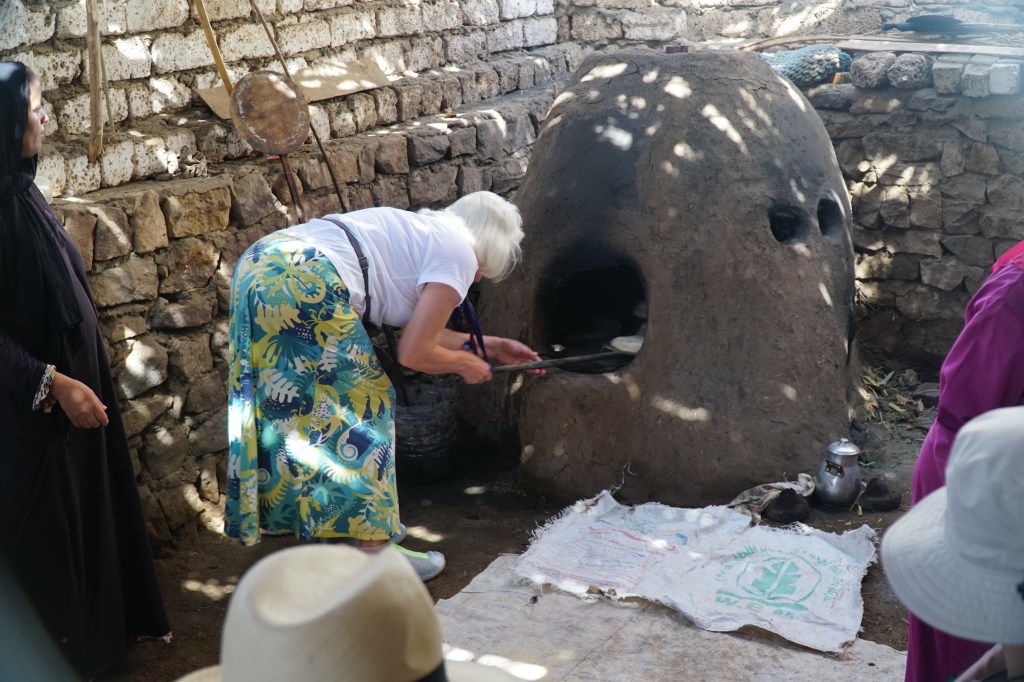
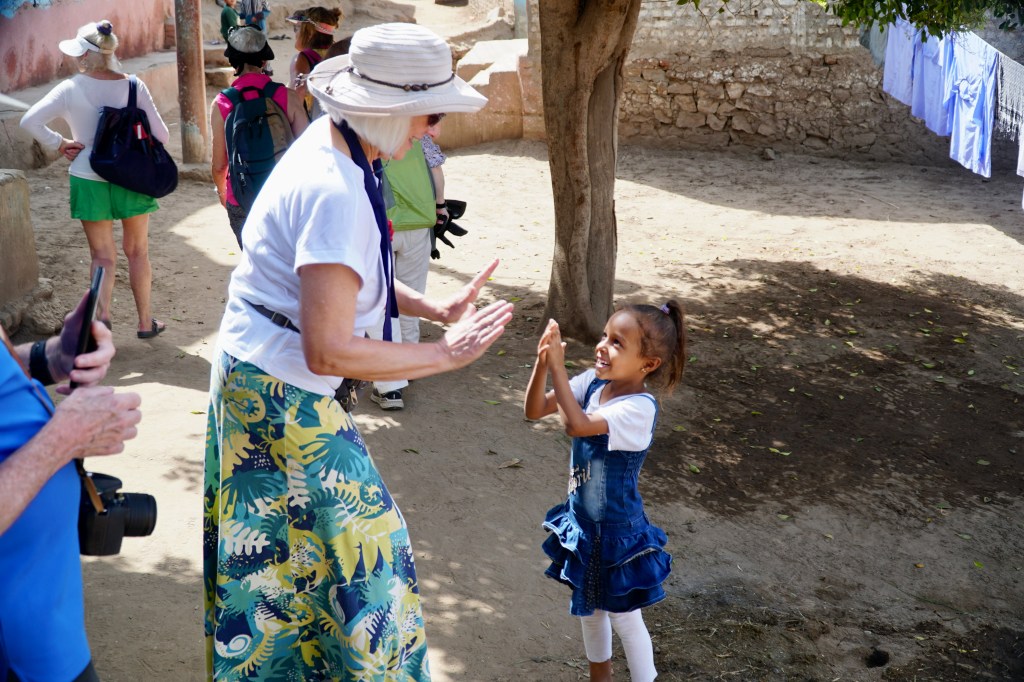
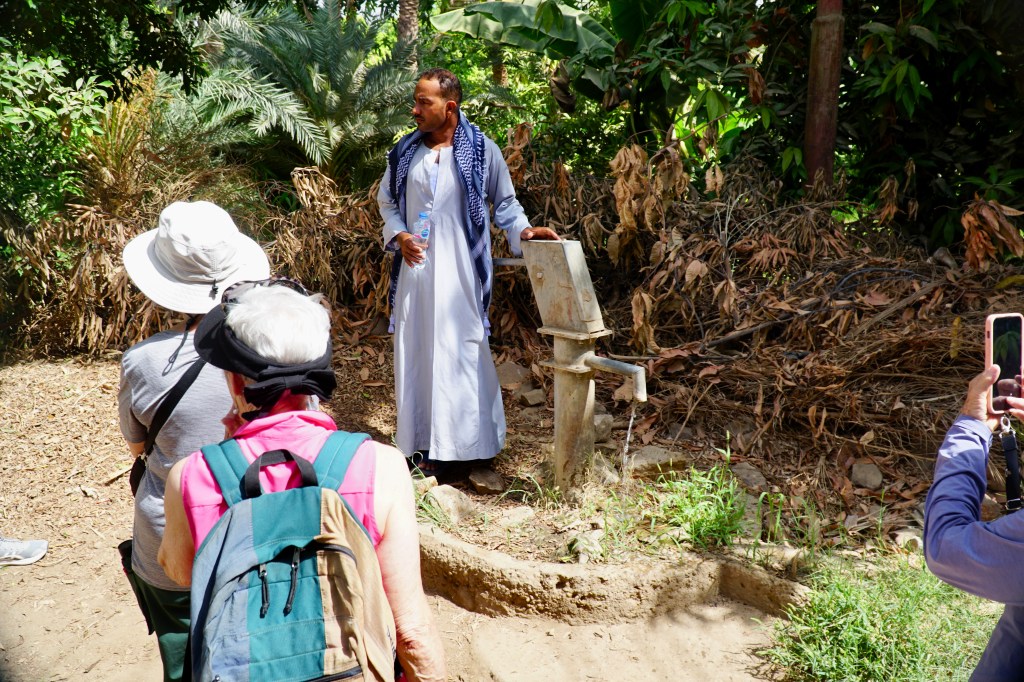
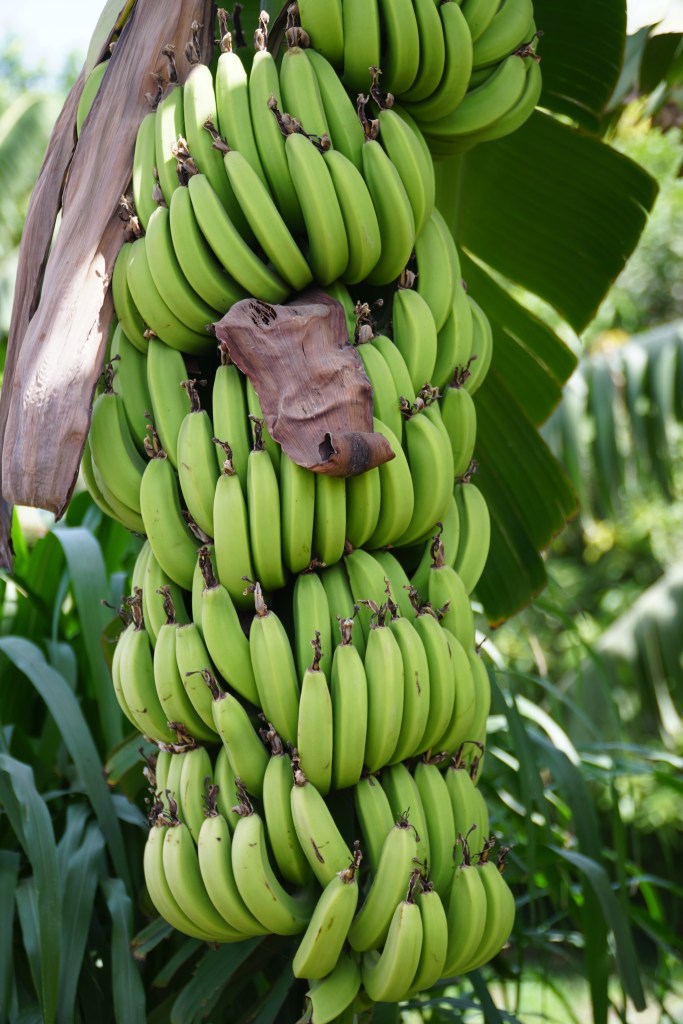
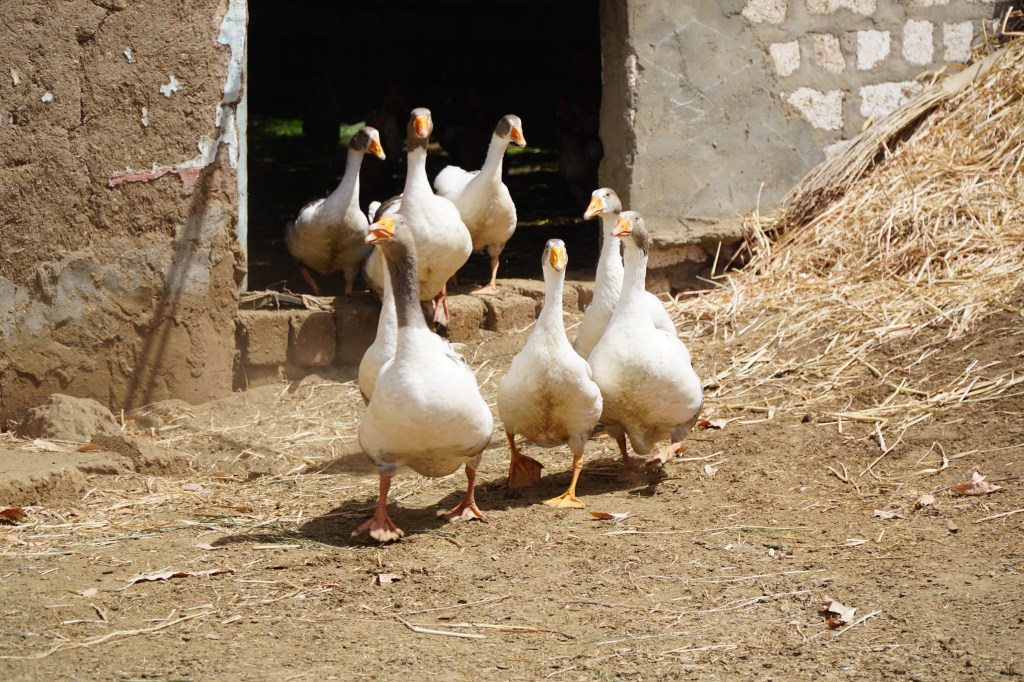
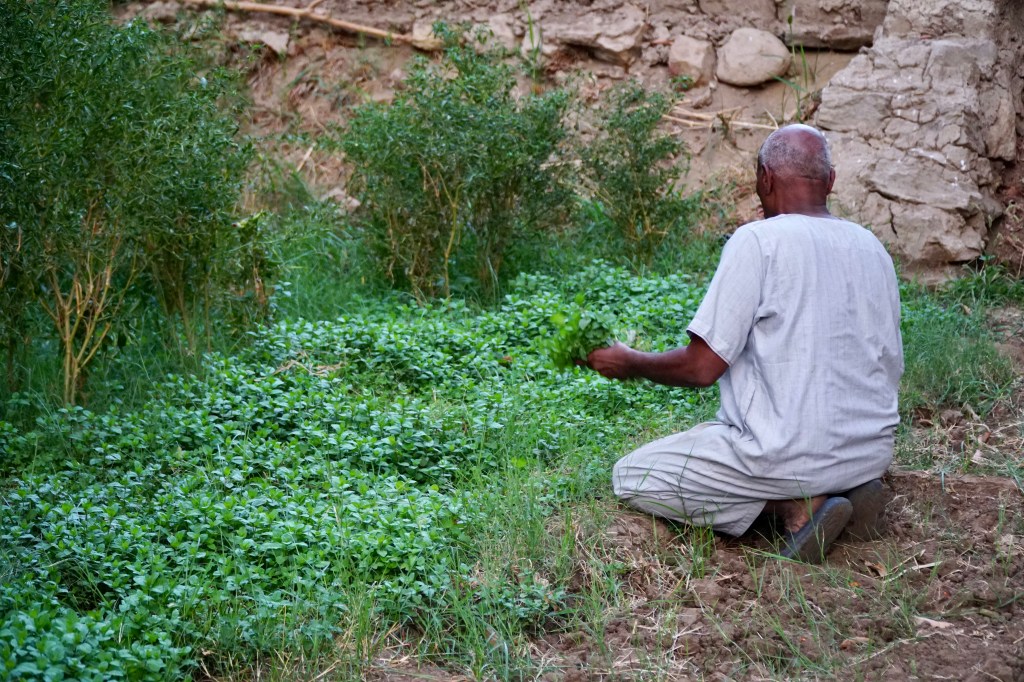
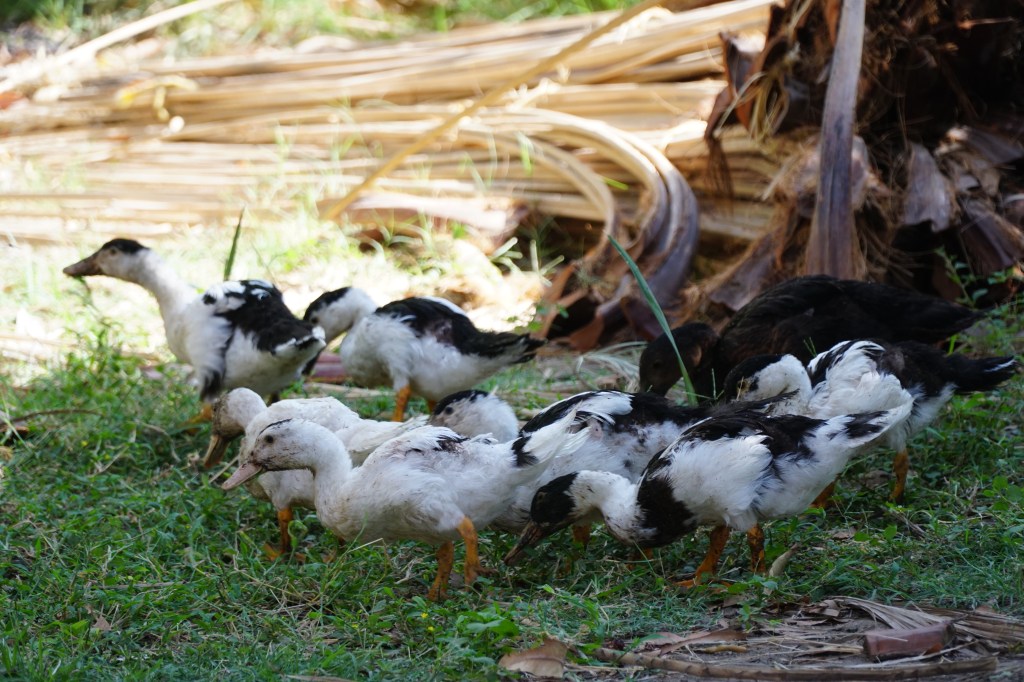
Today a local farmer leads us on a tour of his farm on Besaw Island, a community of about 500. The crops grown on this island are mangoes, dates and bananas. The farmers also have chickens, ducks and other animals. Say is welcomes us into the home of relatives who show us how they make sun-baked bread.

Sayid takes us on a walk around his property showing us his crops and animals. Many children follow us and wave.

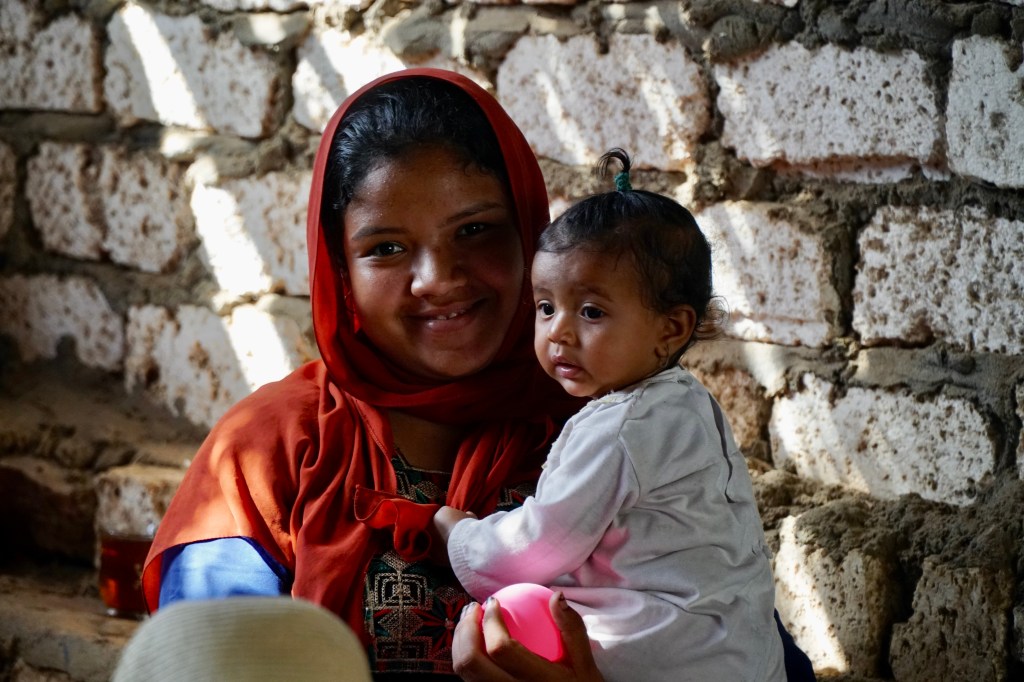
Women of the village.
Climbing to harvest dates.

We were invited to Sayid’s family home for lunch and to meet his family.

What we appreciate about Overseas Adventure Travel is the opportunity to meet local families and learn about the culture.

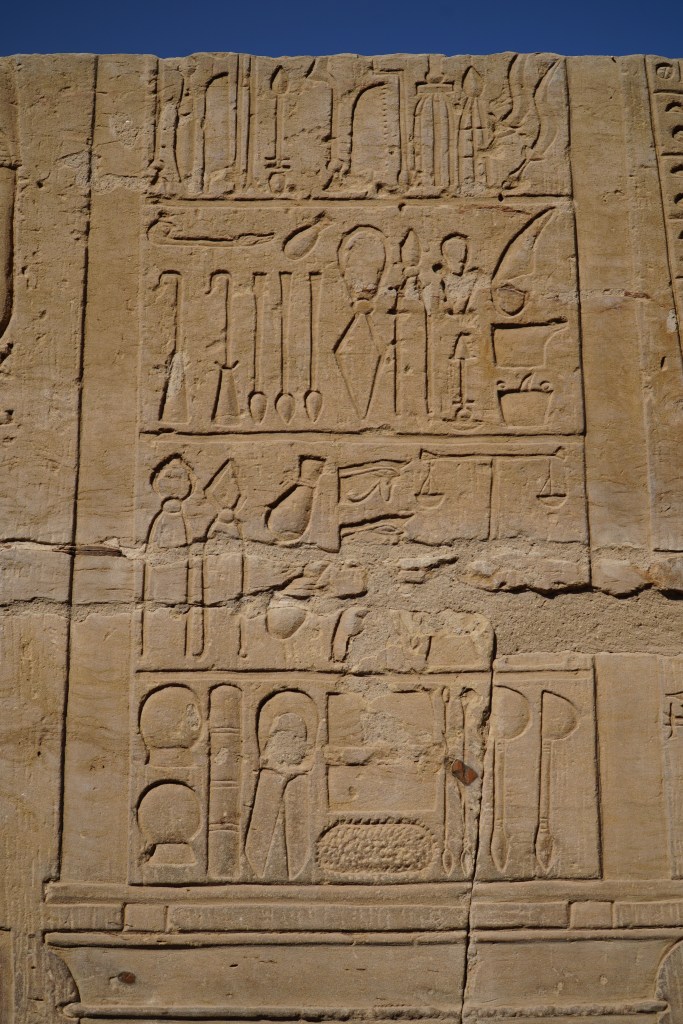
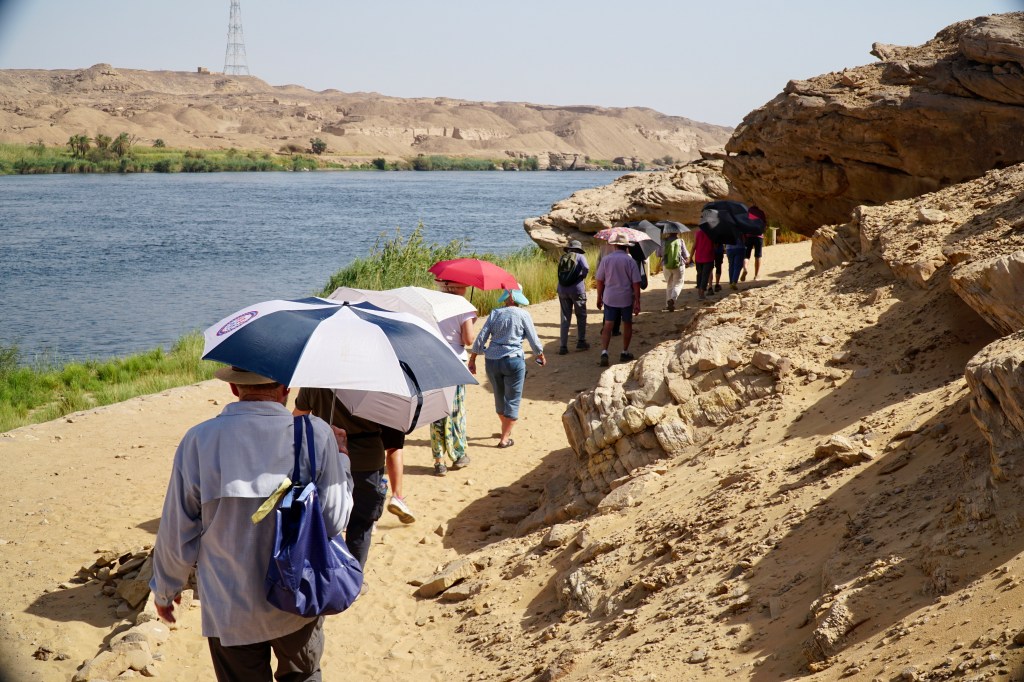
Later in the afternoon we visit Gisela Silsila Quarries. It is a sandstone quarry where the ancient Egyptians carved out the blocks to build the temples in Luxor and Aswan. There was a simple temple for the workers and burial sites for the leaders.

Back on the dahabeya

Temple of Edfu and Dinner off the ship

The ship pulled up to Edfu, but we had to wait to dock because there were many cruise ships there. As they began to leave, we were able to dock and meet our bus to the Temple. We were the only tour group there!

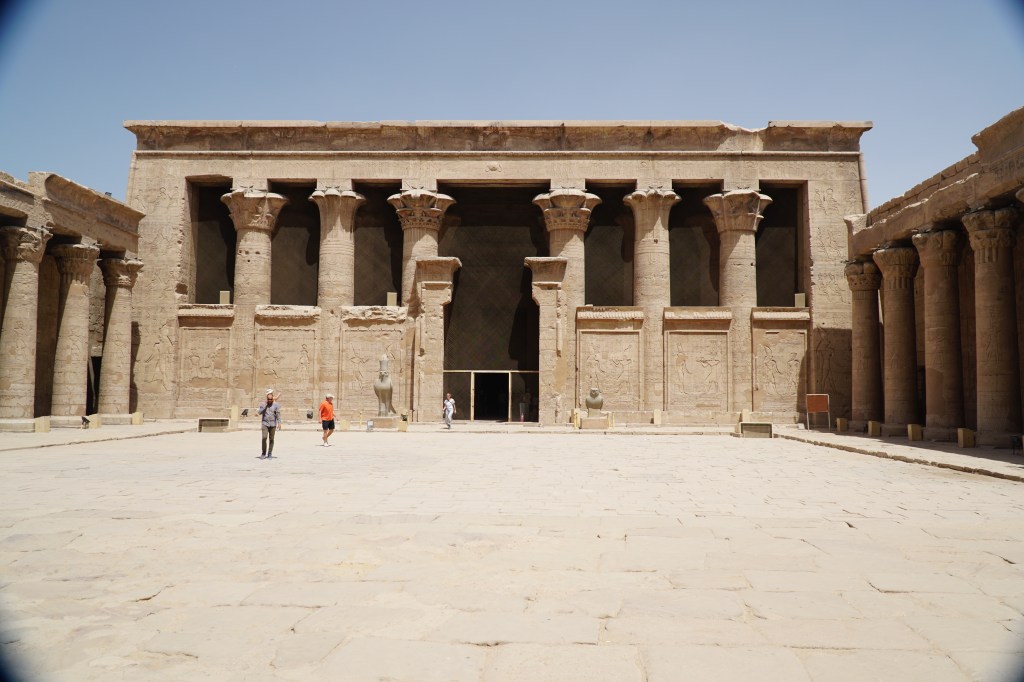
This is the Temple of Horus, the falcon headed god.

Horus
Egyptian mythology

Our tour leader, Mohammad, gave a talk about the recent history of Egypt. He told us about the history that led to the protests of the Arab Spring and how little difference it made has made in the current government.

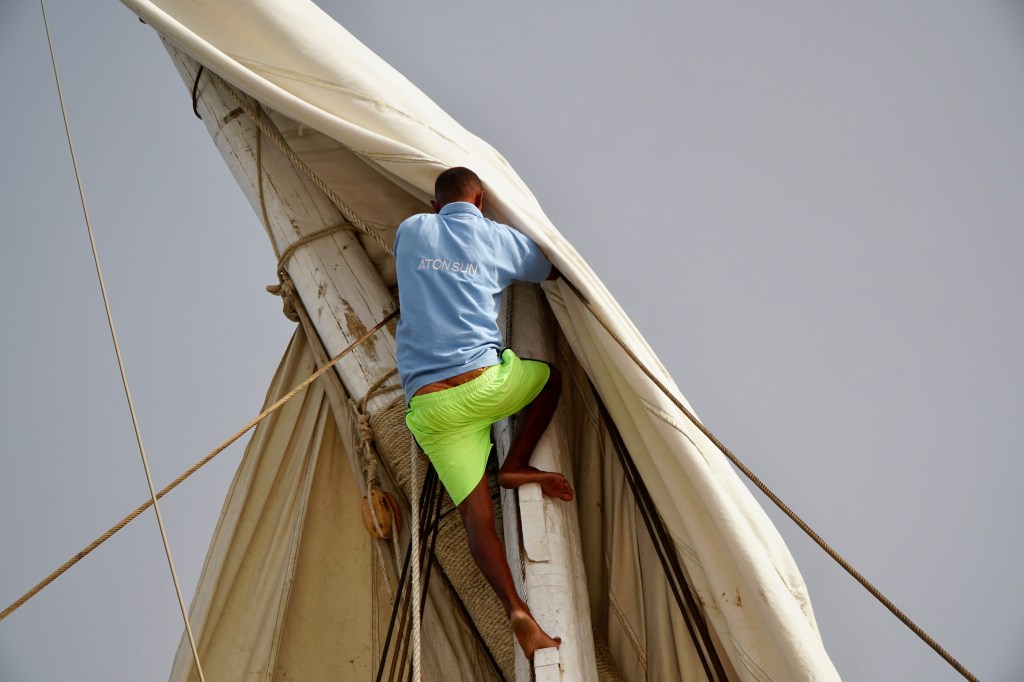
This afternoon the crew put up the sails to show us how the old dahabeya’s sailed. It was fun to watch. Unfortunately there was too much wind and they had to take them down right away.

The crew surprised us with dinner at Fauaza where we docked for the night. It was delightful with traditional Egyptian cuisine.

Esna, the Temple of Khnum, boarding our Dahabeya and a village visit.

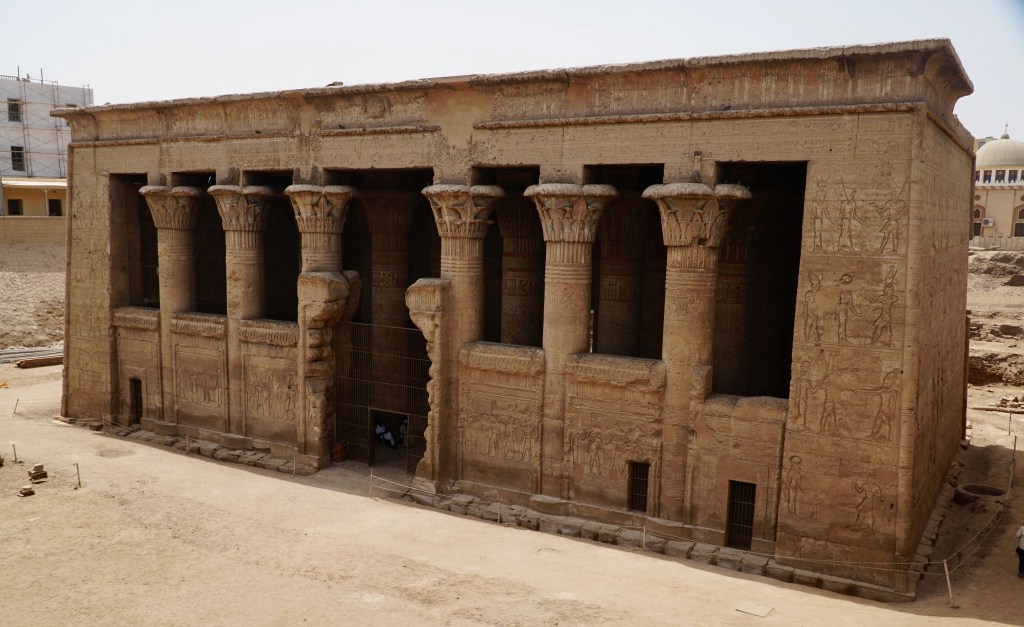
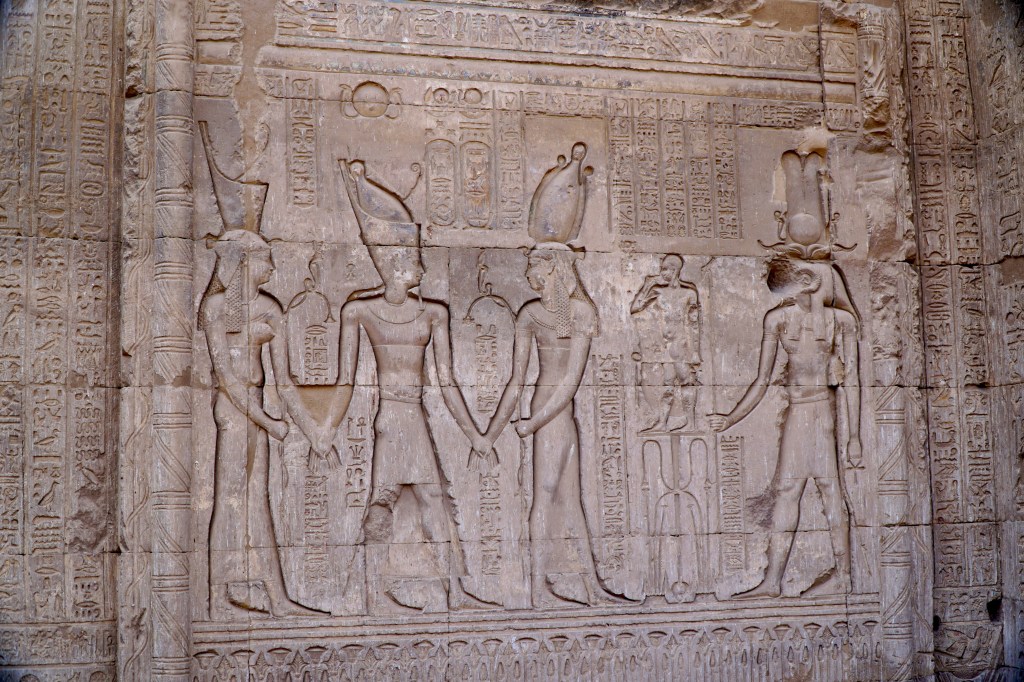
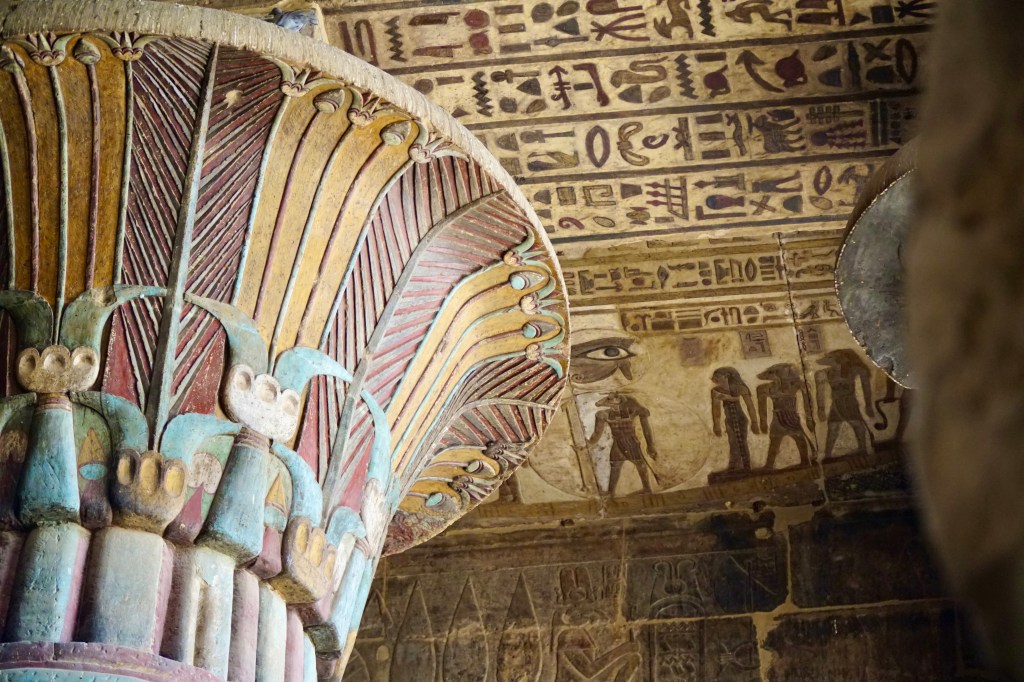
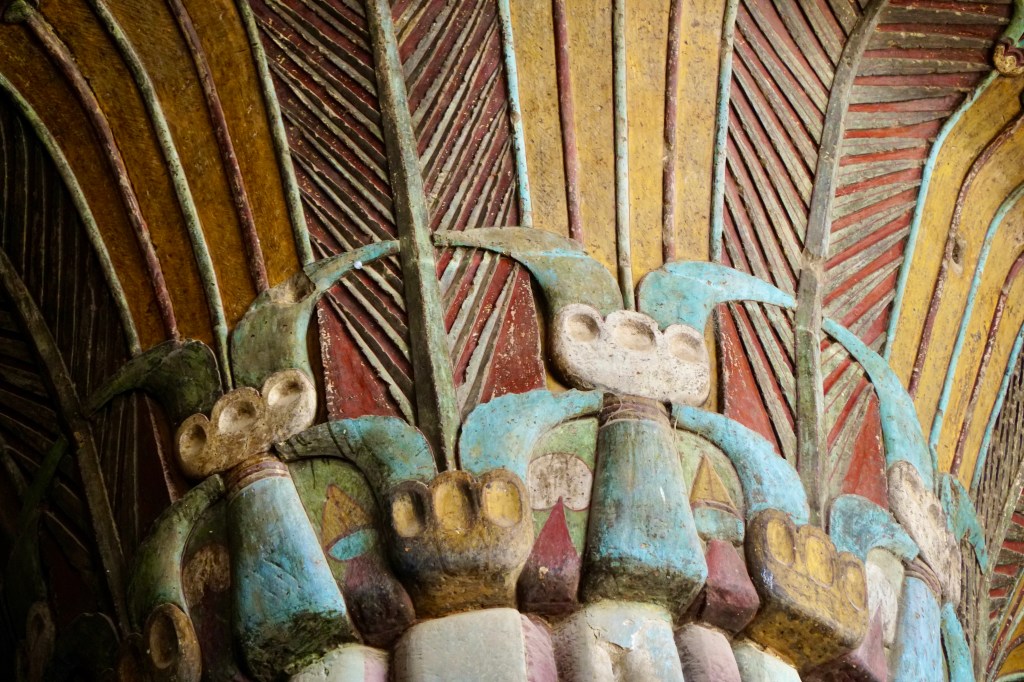
We leave Luxor and travel to the city of Esna. In the city is a partially excavated temple. The temple has retained the brilliant colors like all the temples would have been like in antiquity.

Temple of Khnum

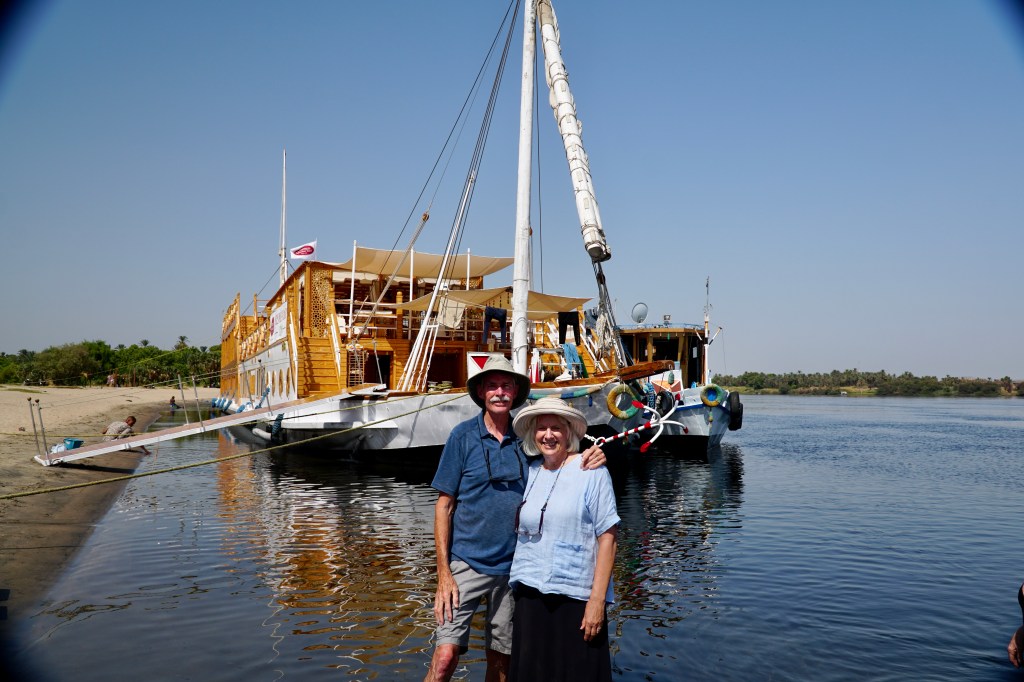
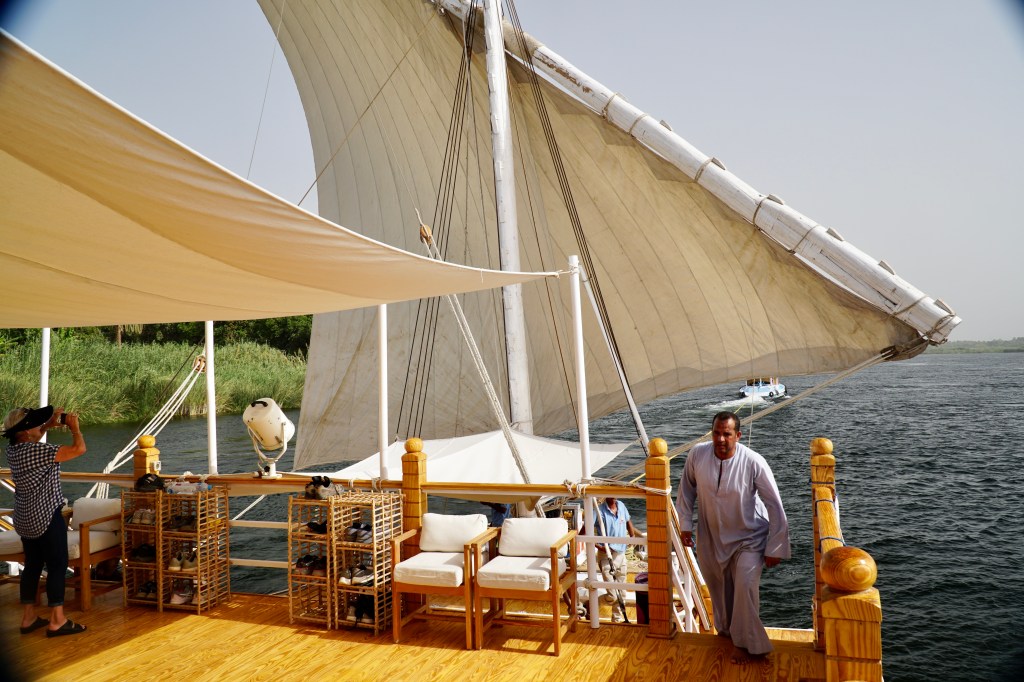
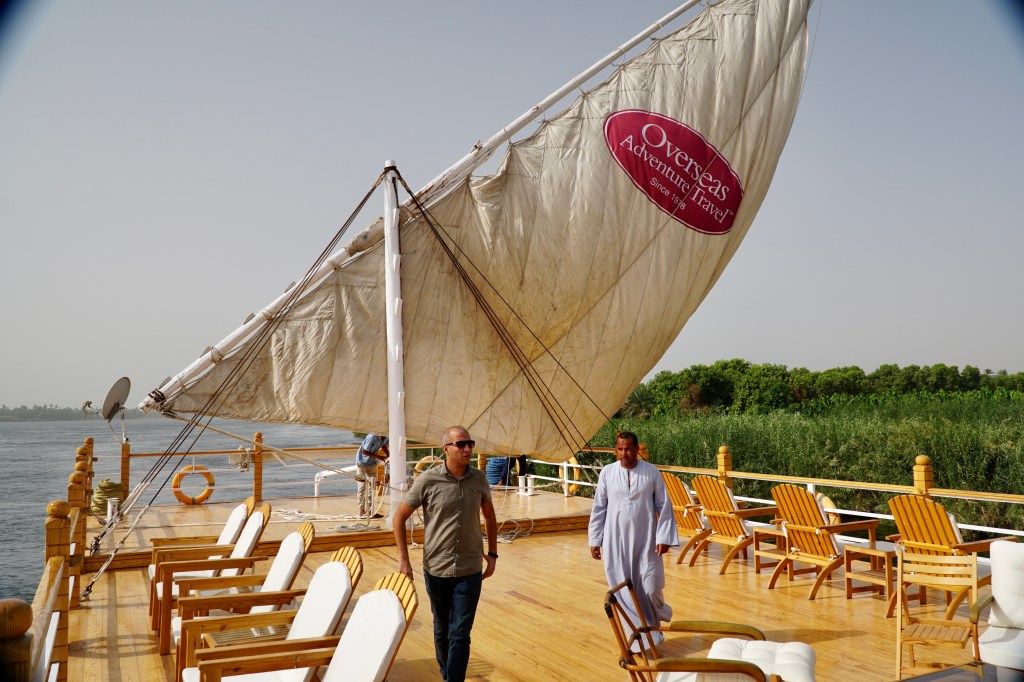
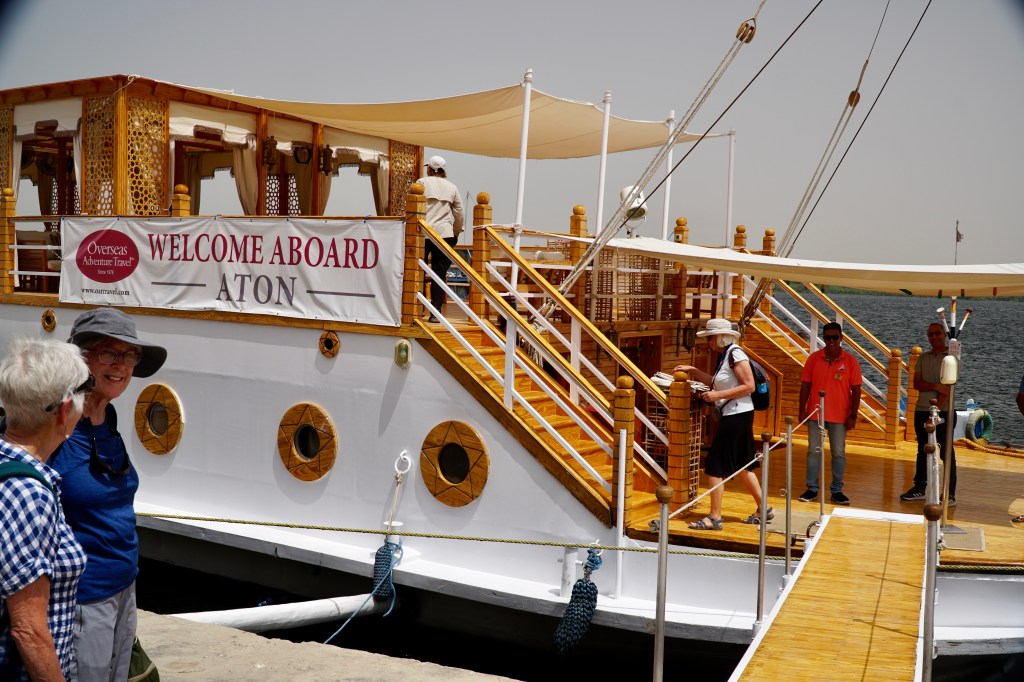
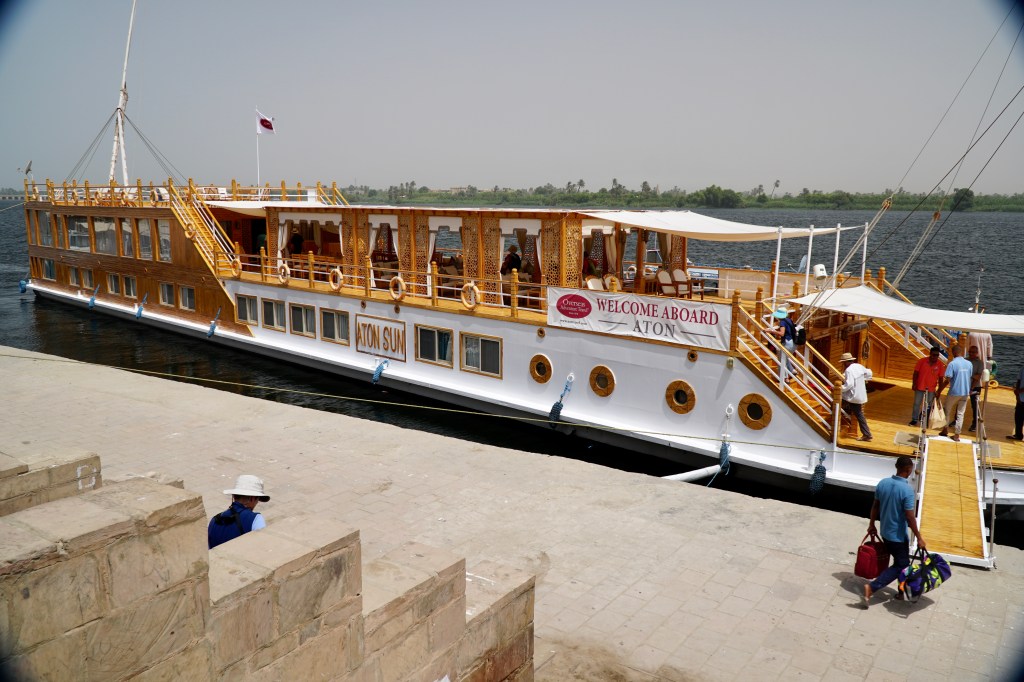
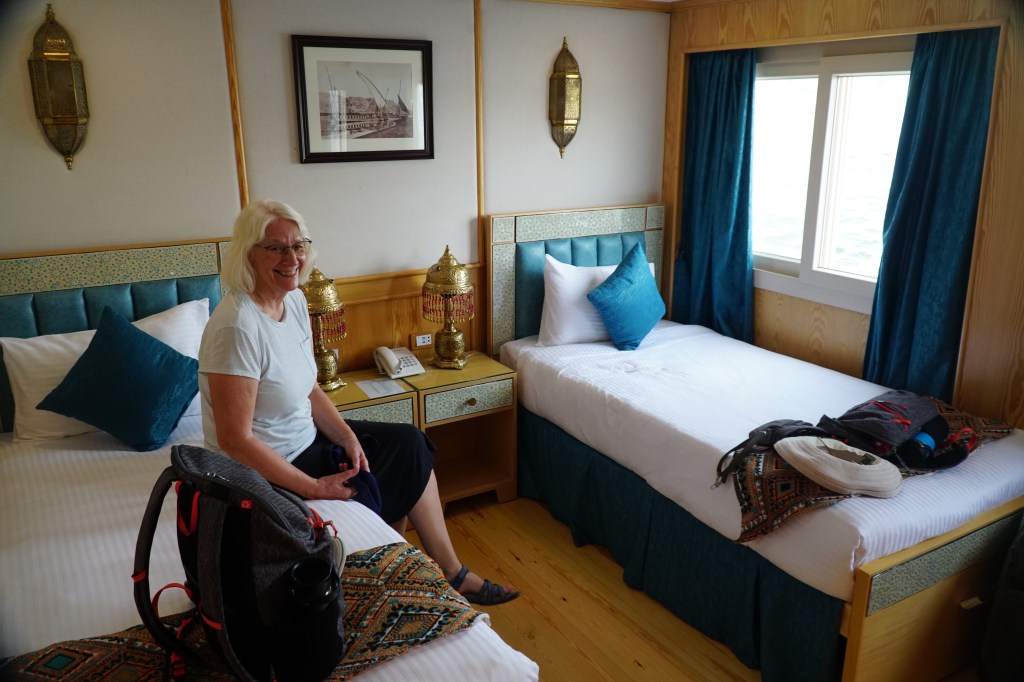
After our visit at the temple we boarded our private yacht called a dahabeya. It is a small traditional craft powered by sales. But for our tour we are pulled along by a tugboat. It is called the Aton Sun.

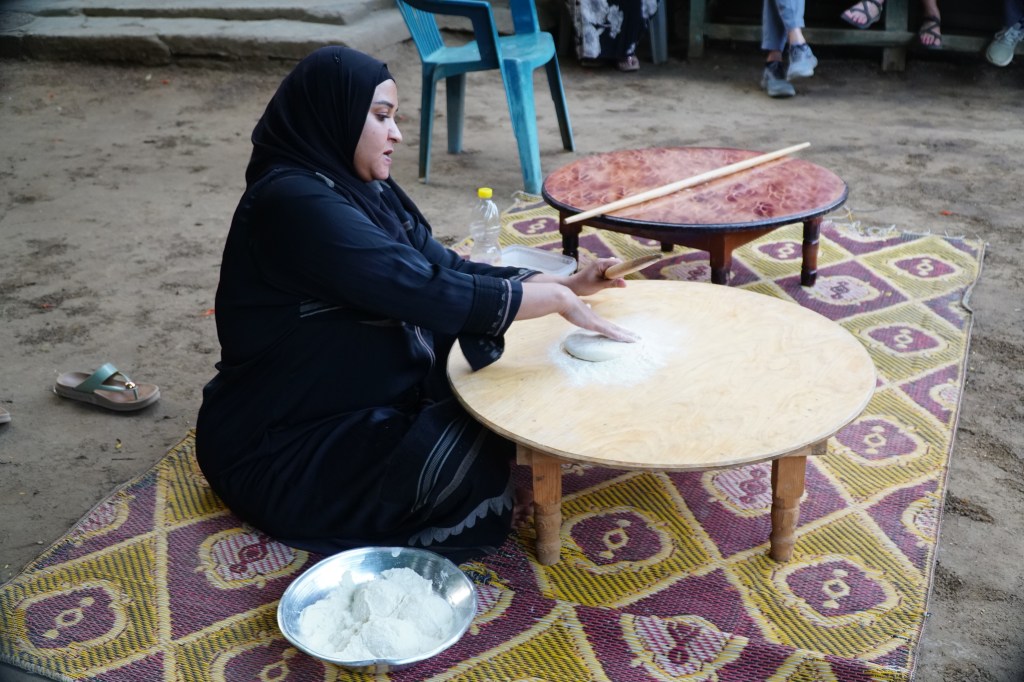
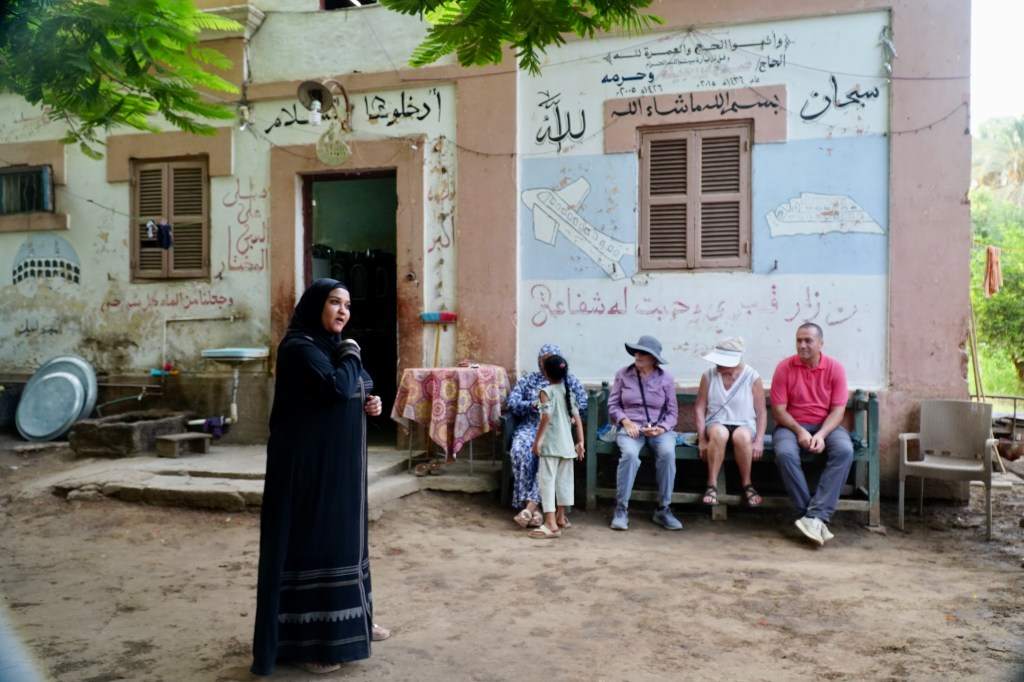
After sailing for awhile we stopped at the small village of Higz. We are met by a young woman, Mrs. Asma. She works for Overseas Adventure Travel as a local guide. She has been teaching herself English for two years using “Mr. Google” and Duo Lingo. She takes us to her family home and she and her sisters demonstrate making a traditional bread.

Luxor Temple and Karnak Temple

We have been seeing many ancient Egyptian temples and learning about the Pharaohs and their need to show their might and power in their temples. Also depicted in the temples are their relationship with their gods. Their are twin temples in Luxor joined by a two mile street lined with sphinxes.

Sphinx lined road

Luxor Temple

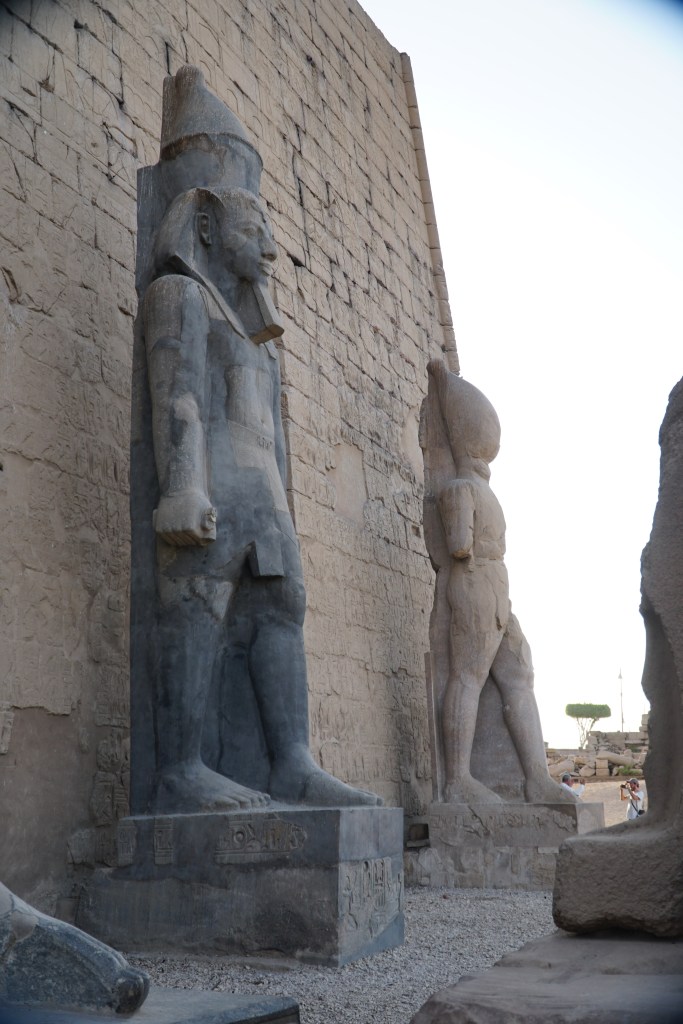
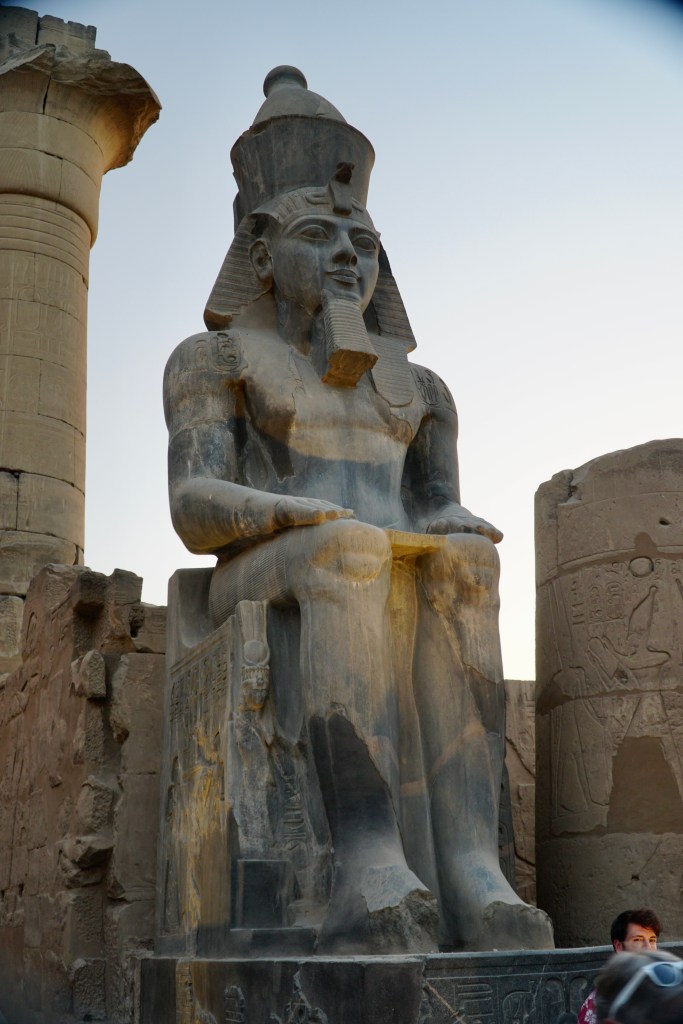
The outside of Luxor Temple has six imposing statues of Ramses II. It originally had two obelisks in front, but one of the kings gave one to France.

Karnak Temple

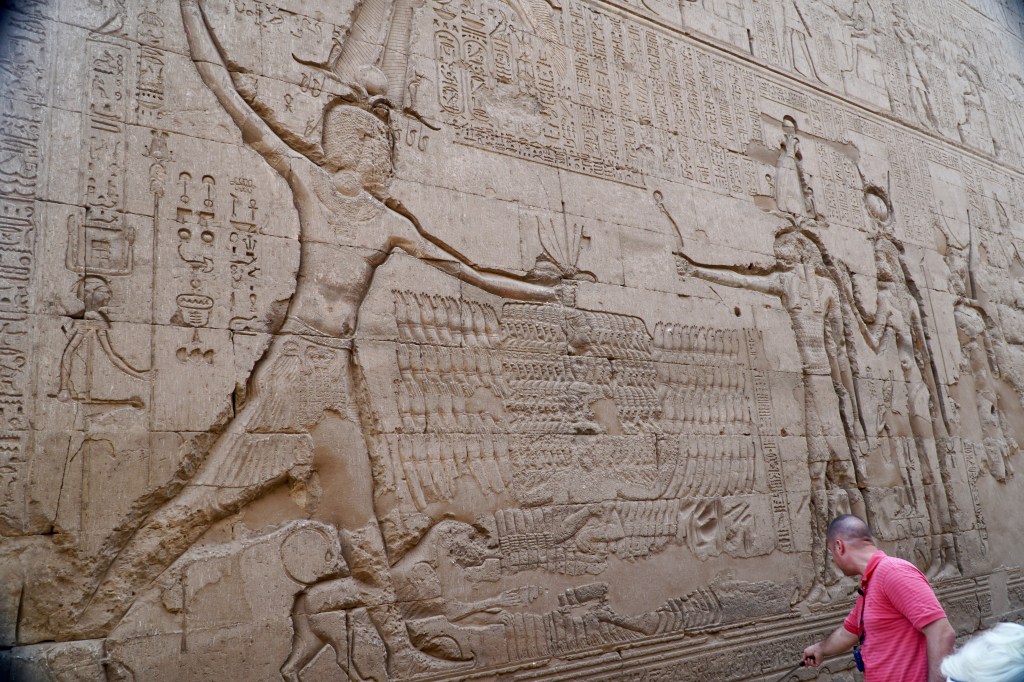
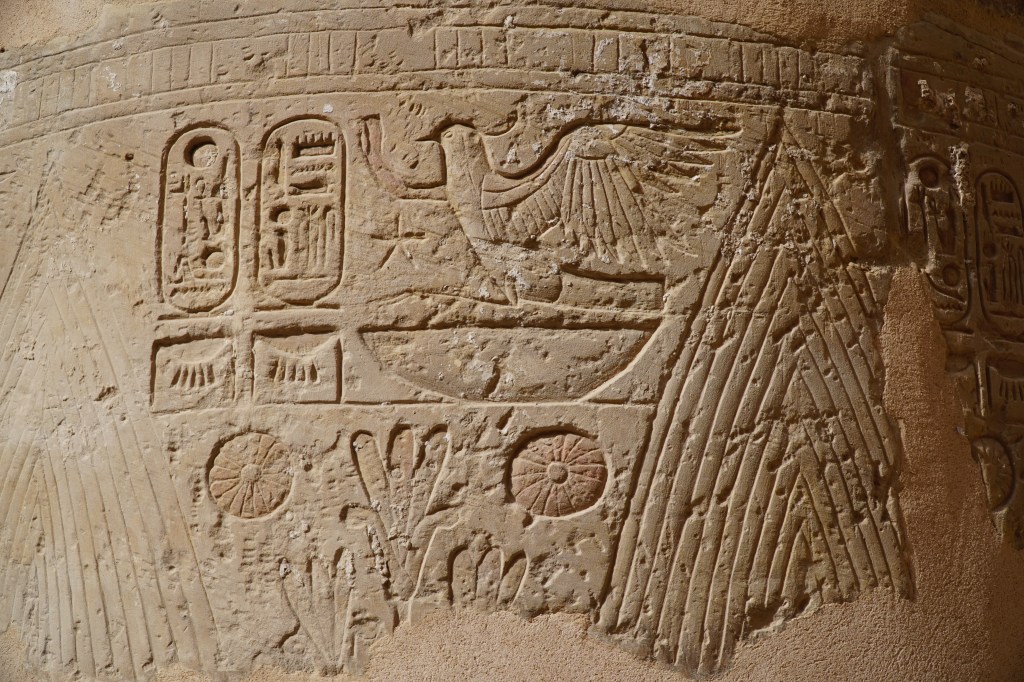
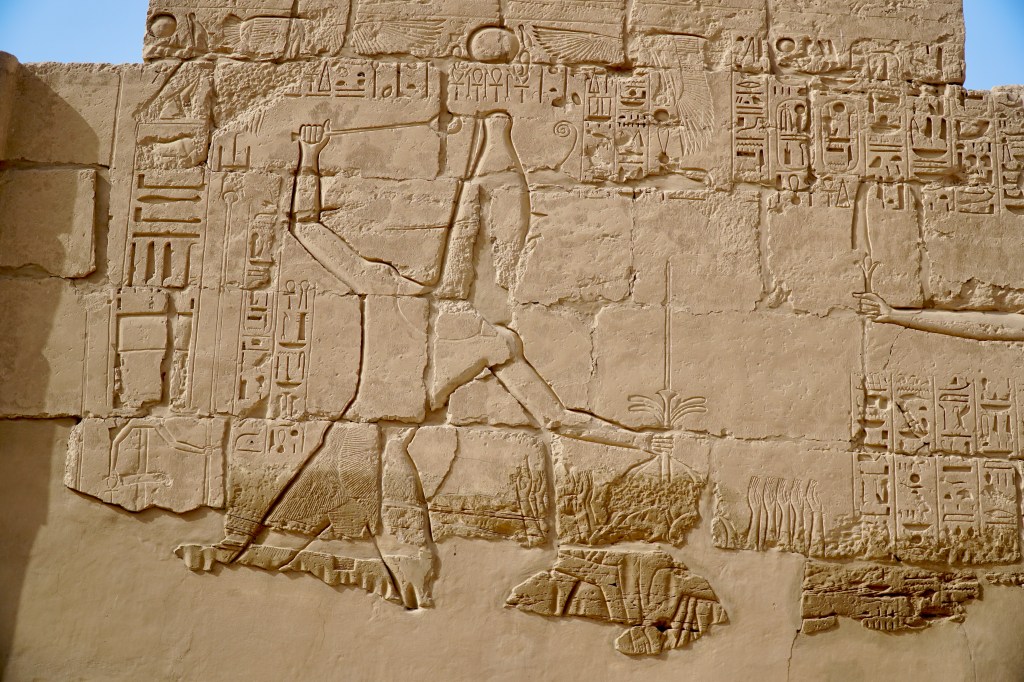
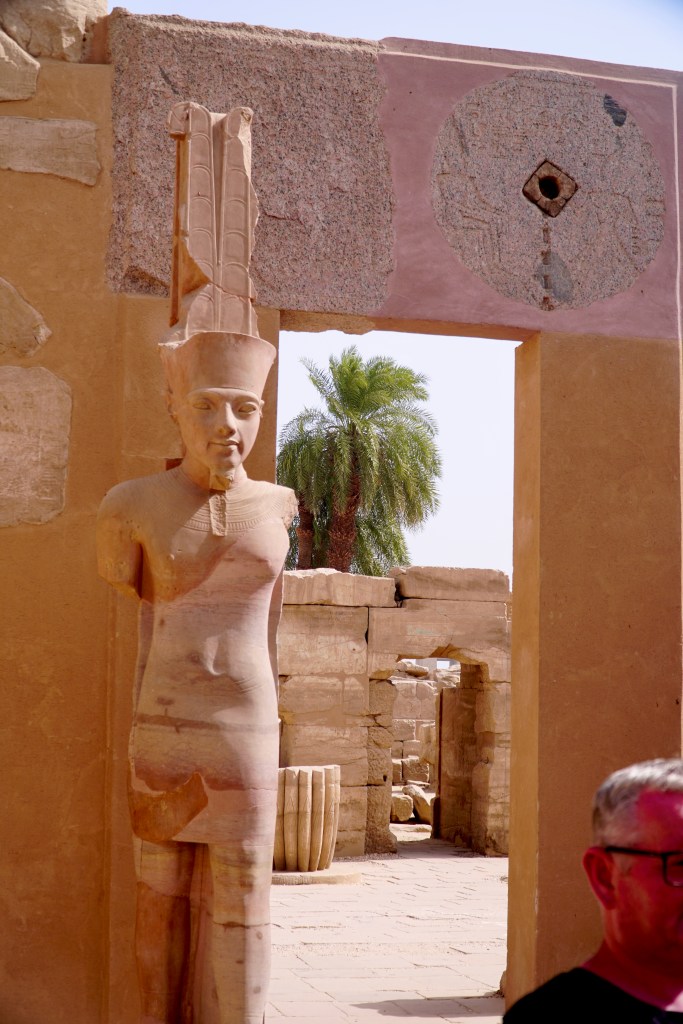
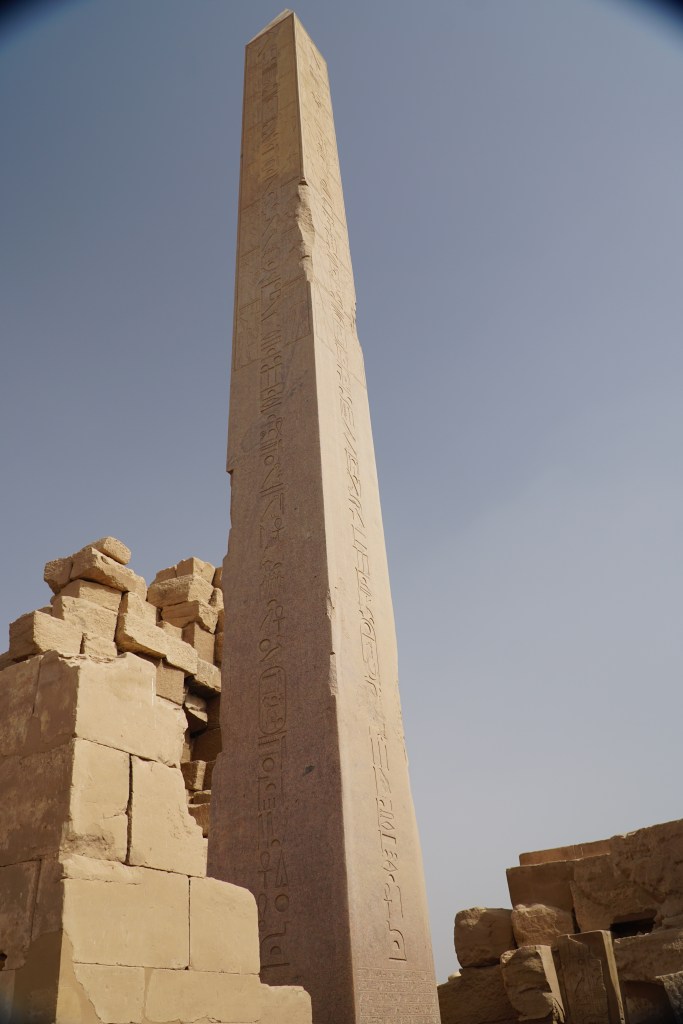
Karnak Temple is a large complex that spans the reigns of several pharaohs. The statues and drawings depict pharaohs smiting enemies and pharoahs making offerings to the gods. Also depicted are scenes from Egyptian mythology.

The row of ram headed Sphinx at Karnak temple

Valley of the Kings

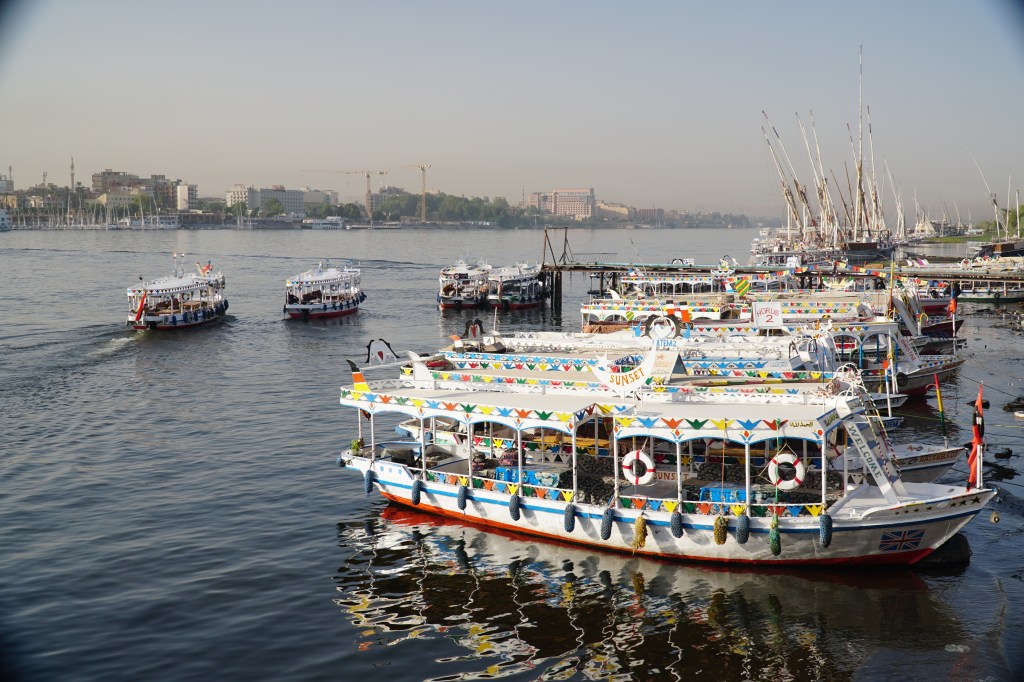
On the west side of the Nile in a hot, dry desert valley are the tombs of many of the kings of Egypt. That is our destination this morning. We cross the Nile on a boat and then drive toward the Valley of the Kings. It is already very, very hot!

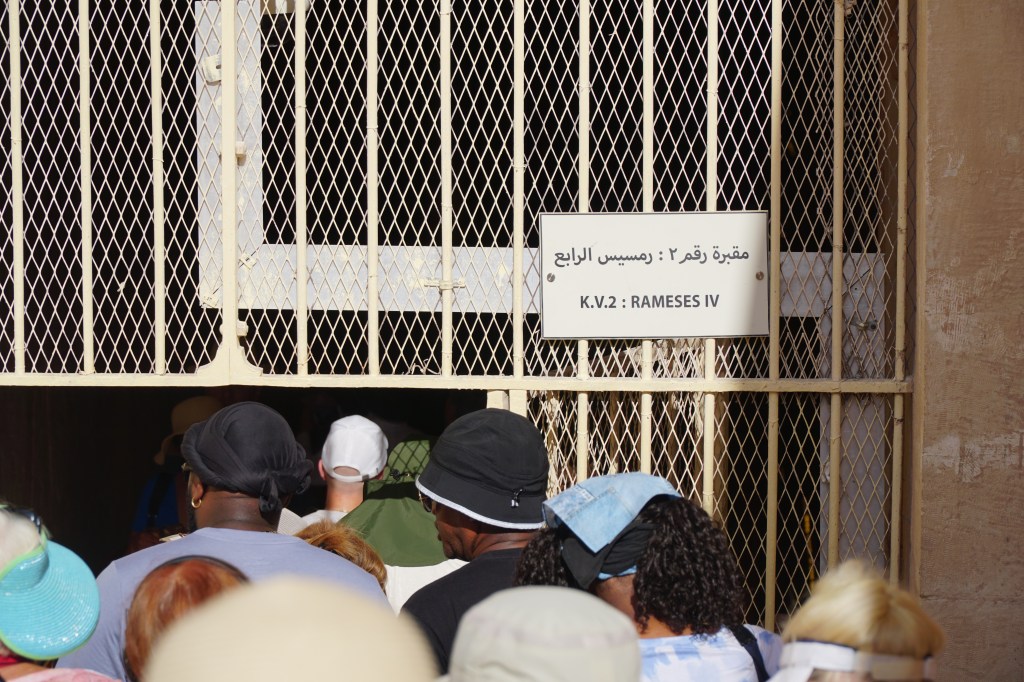
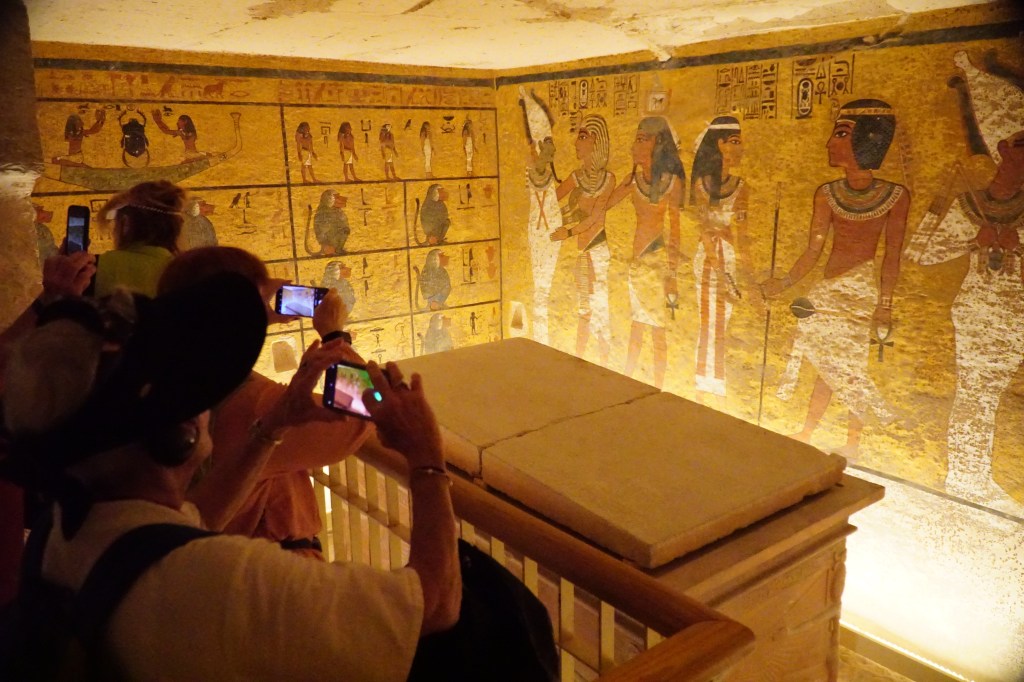
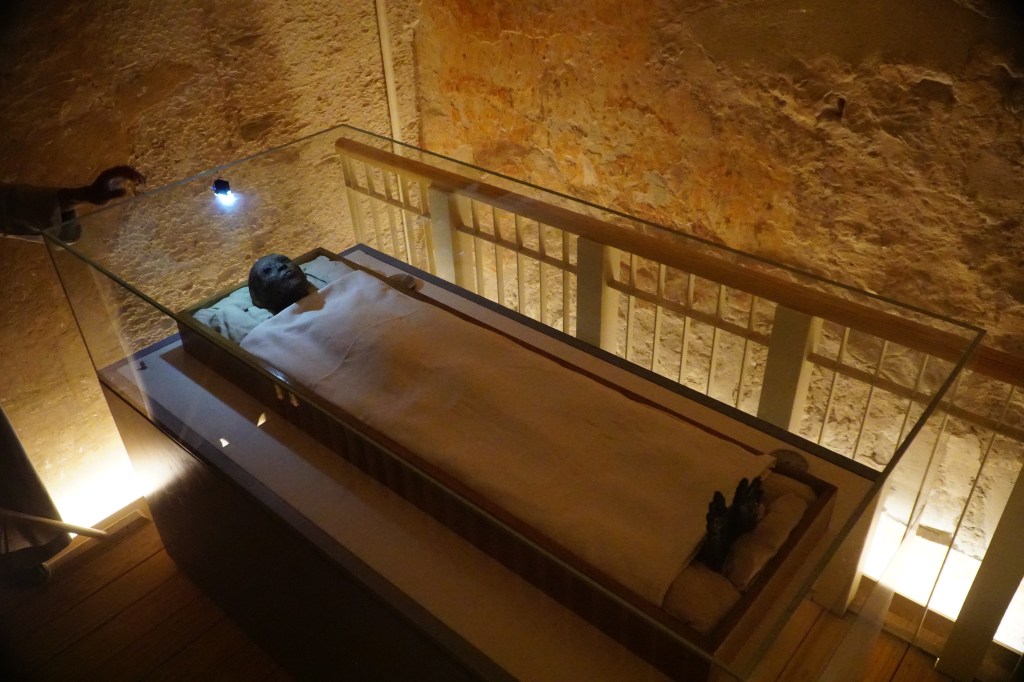
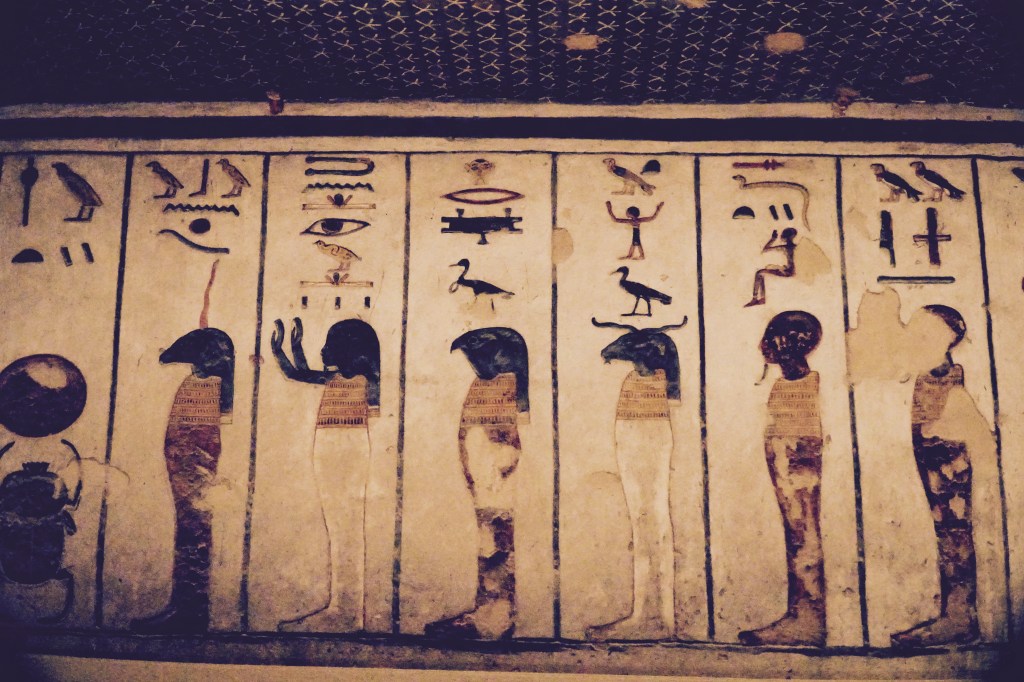
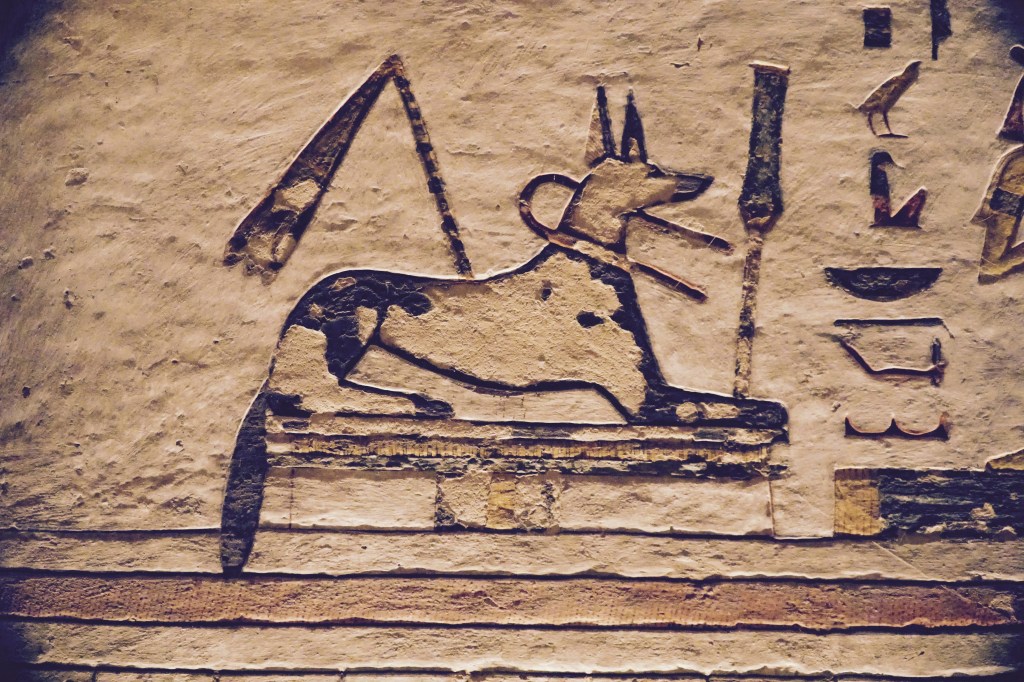
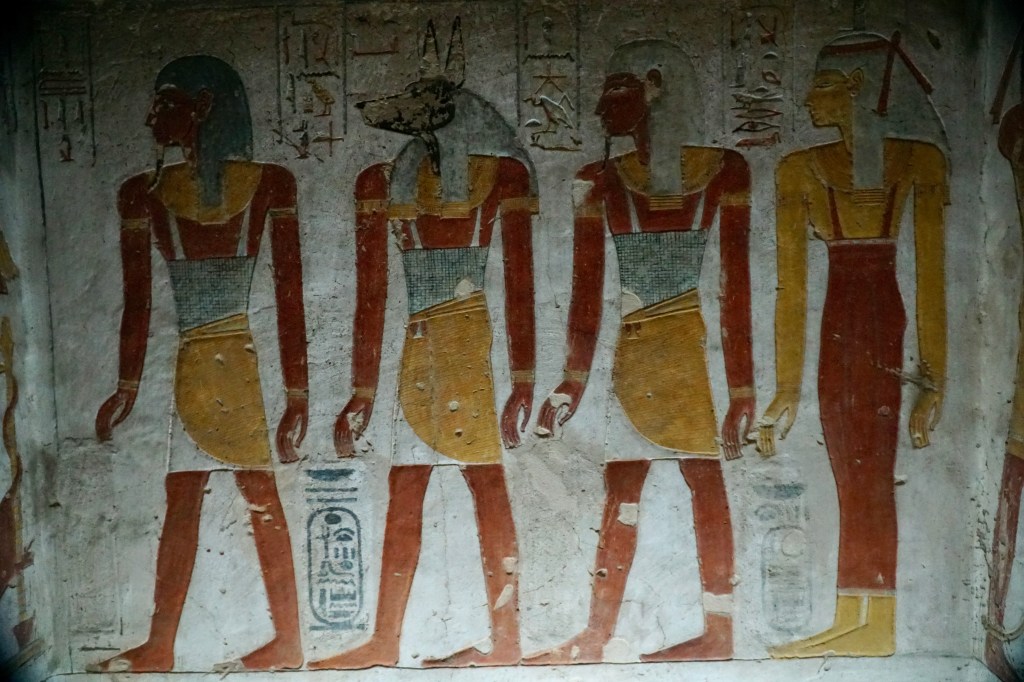
Our ticket allowed us to visit three tombs. It was an extra ticket for King Tut.

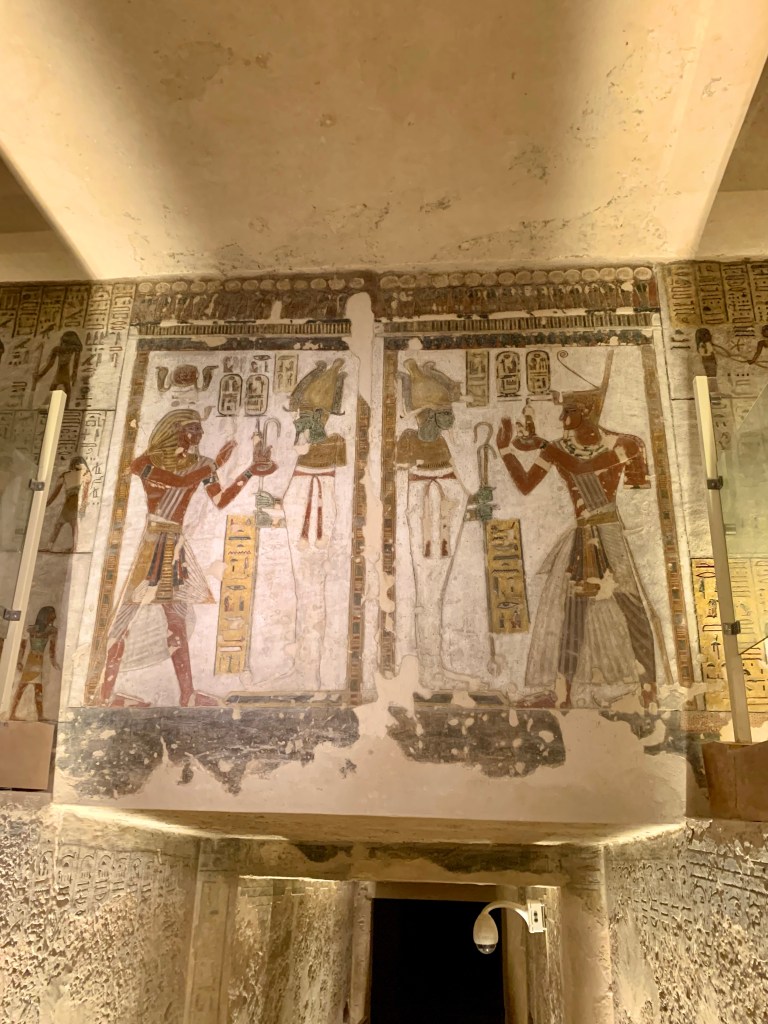
The next is King Ramses III

And finally, the queen Tausert

Next stop is the temple of the only woman Pharoah, Hatshepsut. It is so vey hot!! It contains many statues of her. Egypt was peaceful under reign and she accomplished many building projects.

Queen Hatshepsut’s Temple
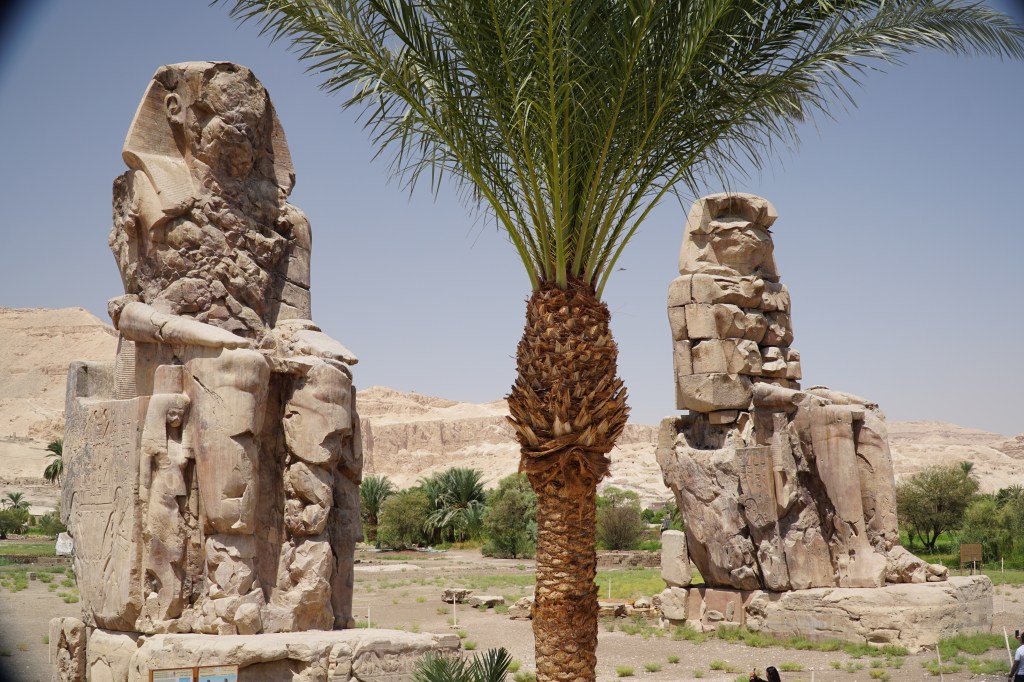
Colossal Pharoahs